How We Rank Portable Power Stations
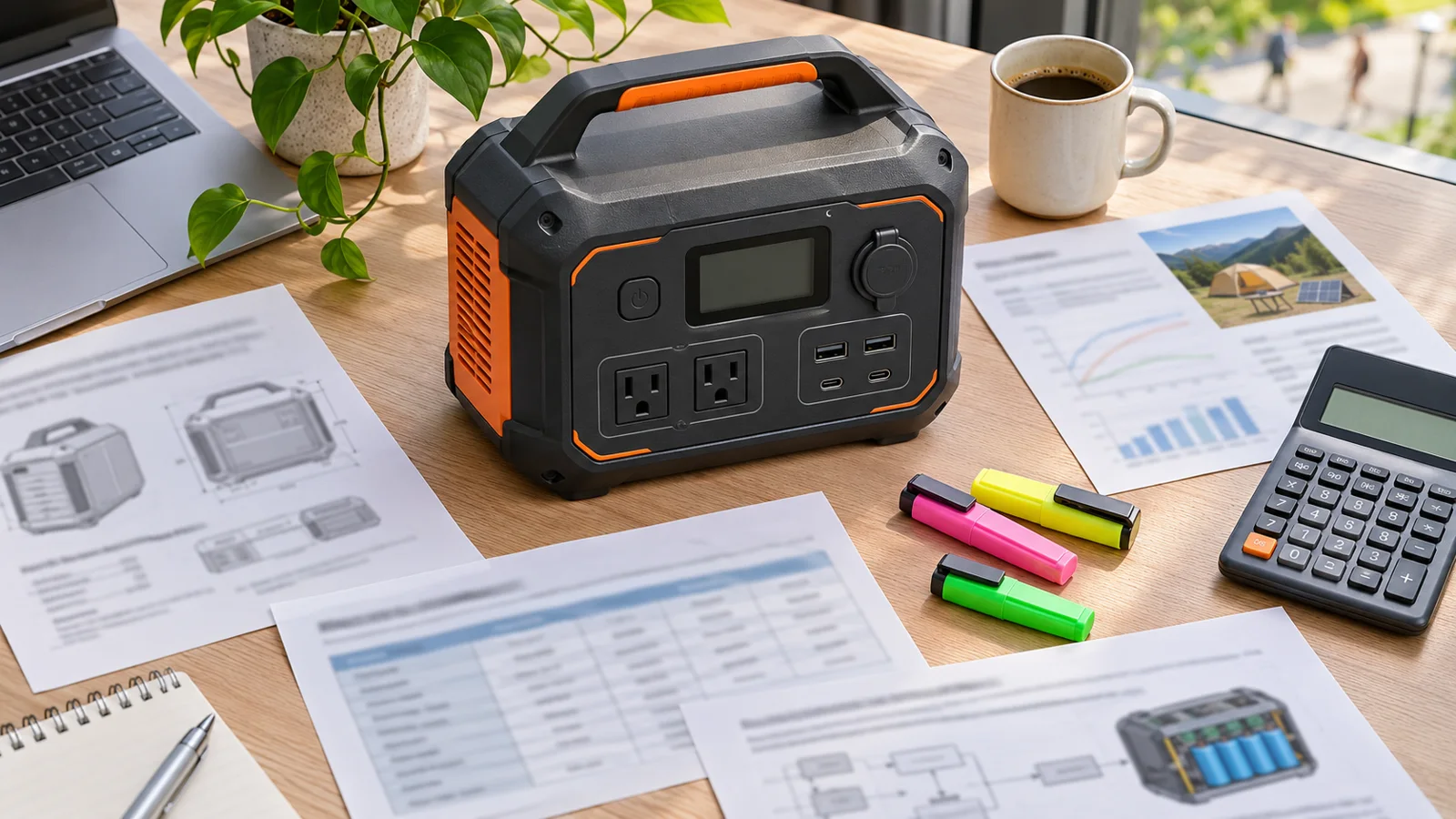
Every list on this site comes from the same transparent recipe. Here is exactly what goes in, what stays out and how the numbers become a recommendation.
What we measure
We build each comparison from information anyone can check: manufacturer specifications shown on the Amazon listing, the battery chemistry stated in the listing, and the average score and number of Amazon buyer ratings. Those inputs become six yardsticks that appear on every model page.
- Capacity (Wh): the size of the fuel tank. It decides how long a device runs.
- Rated AC output (W): the biggest load the unit can power at once. It decides what you can run.
- Battery chemistry: LiFePO4 (LFP) is flagged whenever the listing states it, because it is widely associated with longer battery life.
- Value for its size: each model is compared with others in the same size class (small, mid-size, large) and labeled Excellent value, Good value, Fair value or Premium price. We use the label instead of printing a price because Amazon prices change constantly.
- Buyer feedback: the average rating and, just as important, how many buyers left one. A 4.6 from 11,000 ratings tells you more than a 4.9 from 14.
- Solar and recharging: mentioned only when the listing states it. If a detail is not on the listing, we point you to the Amazon page rather than guess.
The runtime math
Every runtime table uses the same formula: usable energy = capacity in Wh × 0.85, then divide by the device’s draw in watts. The 85% factor accounts for inverter and conversion losses that every power station has. Example: a 1,000 Wh unit running a 50 W mini fridge gives 1,000 × 0.85 ÷ 50 = 17 hours of continuous draw. Real fridges cycle on and off, so reality often looks better, while cold weather and an aging battery push it the other way.
How a ranking is built
- We start with the models that have meaningful buyer feedback on Amazon.
- We filter for the page’s purpose, for example 150–1,300 Wh for camping or 2,000 W and up for the high-output list.
- We order the candidates by how well their specifications match the job, then use value and rating volume to break ties.
- We write the recommendation in plain English and show the numbers behind it.
Our sources
Specifications and ratings come from the Amazon listings and the manufacturers’ own published specs. We are an independent comparison site: no brand pays to be listed or ranked, and rankings are never sold. If a number changes, we update the page.
How we make money
When you click an Amazon button and buy, we may earn a small commission at no extra cost to you. That is how the site is funded. The commission rate does not change how we rank products. Details are in our affiliate disclosure.
Found a mistake?
Tell us at contact@powerstationcompared.com and we will check it.
Our score out of 10
This spec- and buyer-rating-based score is not a measure of independently measured performance. Value: Excellent 3, Good 2.2, Fair 1.4, Premium 0.6 points. Amazon rating: 4.0 earns 0, 5.0 earns 2.5, proportional in between. Rating volume: 1.5 × ln(1 + ratings) / ln(5,001), capped at 1.5. Output: 1.5 × rated W / Wh, capped at 1.5; unknown output earns 0.75. Stated LiFePO4: 1 point. Stated cycles, weight and solar input: 0.5/3 each, rounded together to three decimals. Missing value, rating, volume or listing details earn 0 for that criterion. The total is rounded to one decimal.