Buying guide
Best Portable Power Stations for Home Backup & Power Outages
Storm-ready power for refrigerators, medical devices, Wi-Fi, sump pumps and the essential circuits that keep your home running.
Quick picks


Best under $1,000 for essentials
BLUETTI
BLUETTI AC180
- 1,152 Wh
- 1,800 W
- LiFePO4
Excellent value

Amazon prices change constantly: tap the button for today's price.
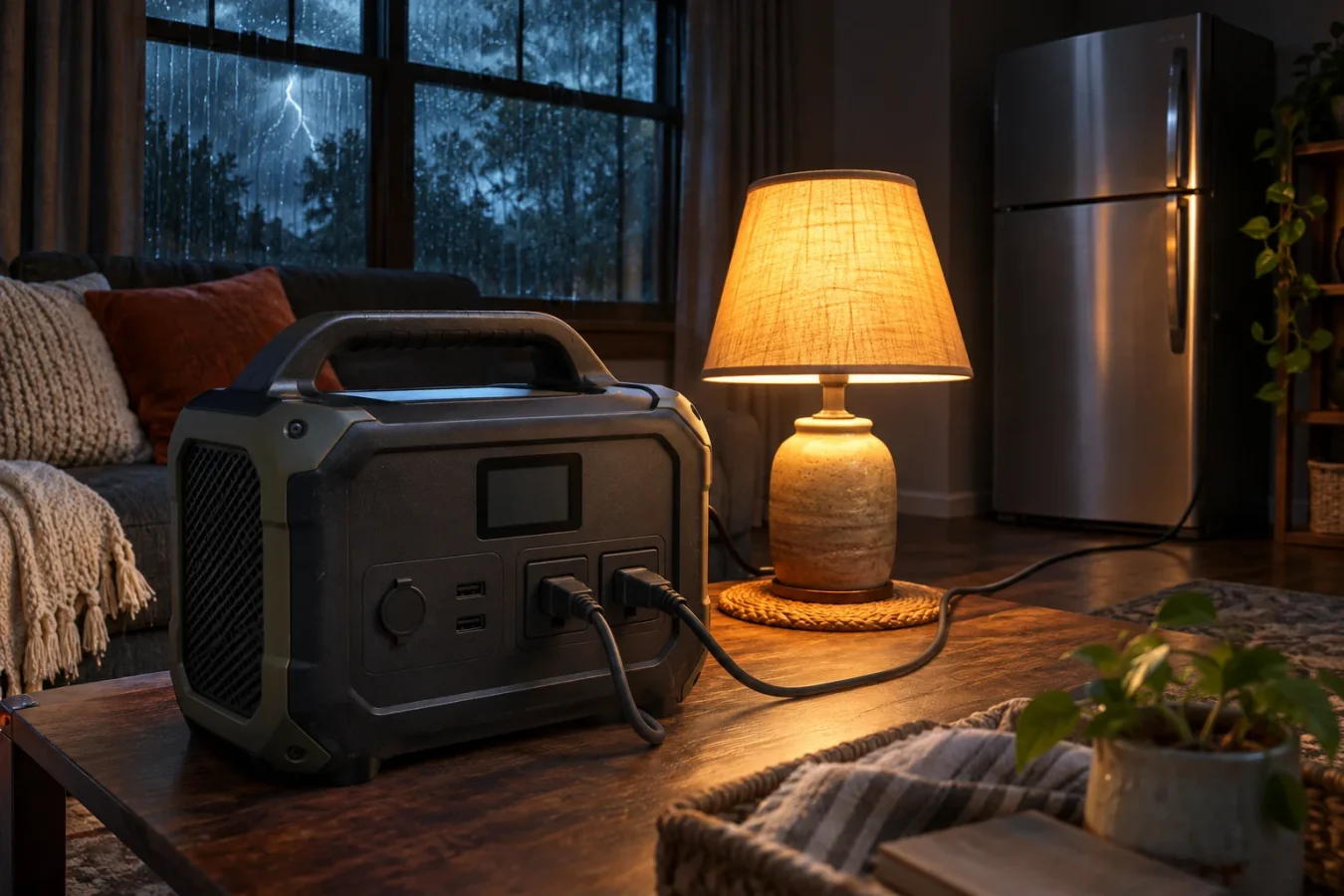
A hurricane knocks out the grid. A winter storm pulls down lines overnight. The refrigerator is warming, the basement sump pump is silent, and your Wi-Fi router has become an expensive paperweight. A portable power station cannot run every circuit in a house, but the right one can keep the most important loads alive without gasoline, fumes or engine noise.
This guide ranks the strongest options for outage preparation, from compact 1,000 Wh units for Wi-Fi, lights and medical devices to 3,600 Wh systems built around refrigeration and longer blackouts. You will find a clear pick for each use case, realistic runtime math, guidance on 120V versus 240V, and a practical way to size a station around essential circuits rather than wishful thinking.
We selected these models from their published capacity, AC output, charging features, battery chemistry, expansion options, stated backup functions, value label and the volume and quality of Amazon buyer ratings. Runtime estimates use the standard calculation of watt-hours × 0.85 ÷ device watts. They are not promises: refrigerator compressors, pumps and medical equipment cycle unpredictably, and startup loads can exceed running watts. For broader comparisons, see our best portable power stations ranking and complete buying guide.
1. Anker SOLIX C2000 Gen 2: Best Overall for Outages
The Anker SOLIX C2000 Gen 2 is the most complete match for typical outage duty. Its 2,048 Wh battery and 2,400 W rated AC output cover the loads people actually worry about: a refrigerator, lights, router, phones, television and selected small appliances. Its published 4,000 W peak output gives motor-driven equipment more startup headroom, although you should still check the surge requirements of a particular sump pump or refrigerator.
Anker states that the C2000 Gen 2 can run a refrigerator for up to 30.5 hours and maintain standby power for up to 230 hours at a 9 W load. Those are unusually useful figures for storm planning because they describe recognizable household scenarios rather than just battery size. The unit can recharge fully through AC in 58 minutes, and the listing also describes solar, dual-input and 800 W alternator charging. Its 18.9kg weight and compact dimensions make storage more manageable than many 2kWh alternatives.
Add an expansion battery and the system reaches 4kWh, with Anker stating that it can power a dual-door refrigerator for up to 64 hours. Value for its size class is Fair, but the 4.7 rating from 746 Amazon ratings and the unusually complete outage feature set strengthen its case. For hurricane season, this is the best all-rounder. Check the current price on Amazon.
2. EcoFlow DELTA Pro: Best for Long Blackouts and Heavy Loads
The EcoFlow DELTA Pro is the serious choice when your essential-load list is longer than a refrigerator and a few USB devices. Its 3,600 Wh LFP battery is the largest in this roundup, while its 3,600 W AC output is enough for many demanding 120V appliances. EcoFlow says X-Boost can raise output to 4,500 W, and two units can be paired for 7,200 W. That is a substantial step toward whole-home resilience, though it does not automatically make the unit a 240V source for a house circuit.
At a theoretical 100 W continuous load, the standard estimate is about 30.6 hours: 3,600 × 0.85 ÷ 100. At 500 W, it is about 6.1 hours. Real refrigerators cycle, while sump pumps may run only intermittently, so a carefully managed load can last much longer than a constant-wattage calculation suggests. The DELTA Pro can recharge from a 120V wall outlet in 2.7 hours, from a 240V 3,000 W outlet in 1.8 hours, or from four 400 W solar panels in 2.8 hours, according to the listing.
Expansion support, app control and five charging methods make it attractive for storm shelters, workshops and extended outages. Value for its size class is Fair, and its Amazon rating is 4.6 from 681 ratings. It is overkill for router-only backup, but the strongest pick here for a refrigerator-plus-pump-plus-freezer plan. Check the current price on Amazon.
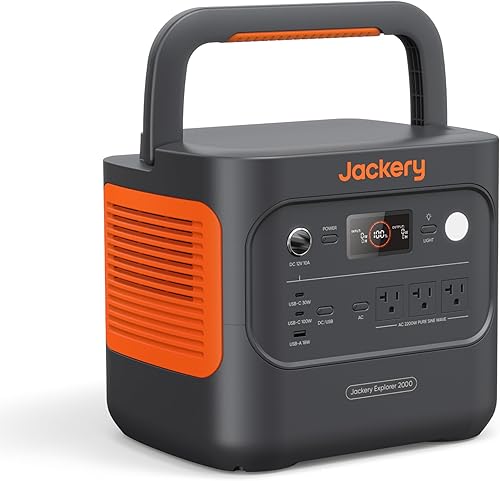
3. Jackery Explorer 2000 v2: Best Refrigerator Backup
The Jackery Explorer 2000 v2 puts 2,042 Wh behind a 2,200 W AC output, a sensible combination for refrigerator duty. Compressor appliances draw modest power while running but can demand a sharp burst when they start. A 2kWh-class battery gives you a much wider buffer than a 1,000 Wh station, and the 2,200 W inverter leaves room for lights, networking equipment and chargers alongside the refrigerator.
Jackery lists three AC ports, 20ms uninterrupted switching, UL1778 certification for uninterruptible power systems and a noise level below 30dB in silent charging mode. The stated 0-to-80% AC charge time is 66 minutes, with a full charge in 102 minutes using Emergency Supercharge mode through the app. Solar charging can take as little as six hours, according to the listing. Its published weight is 40 pounds, useful context if you expect to move it from a storage room to a garage or shelter.
For a constant 100 W load, the standard estimate is about 17.4 hours: 2,042 × 0.85 ÷ 100. A refrigerator will not behave like a constant 100 W load, so actual runtime depends heavily on room temperature, door openings and compressor cycles. Value for its size class is Fair, and the rating is 4.4 from 899 Amazon ratings. Choose it when food preservation is the priority. Check the current price on Amazon.
4. BLUETTI AC180: Best Under $1,000 for Essential Circuits
The BLUETTI AC180 is the value standout for a focused outage plan. Its 1,152 Wh LiFePO4 battery and 1,800 W rated AC output are enough for a refrigerator, router, lights and small electronics when you operate them selectively rather than simultaneously. BLUETTI lists two 1,800 W AC outlets, nine total outlets, a 2,700 W boost mode and a 20ms UPS response. That fast switching is useful for a Wi-Fi router, computer or other sensitive equipment that should not reboot during a brief interruption.
The AC180 can charge from AC at up to 1,440 W and reach a full charge in one hour, according to the listing. Its built-in MPPT controller accepts up to 500 W of solar input, with a stated solar charge time of 2.8 to 3.3 hours. Those details matter after a storm, when the grid may remain down but daylight is available. BLUETTI also lists a five-year warranty, although buyers should confirm the current Amazon listing for the exact US package and terms.
At 50 W, the physics-based estimate is about 19.6 hours; at 200 W, about 4.9 hours. A sump pump’s motor startup and run pattern can change the result dramatically. Value for its size class is Excellent, and the Amazon rating is 4.5 from 1,900 ratings. It is the clearest under-$1,000 choice for essential circuits rather than whole-home ambitions. Check the current price on Amazon.
5. BLUETTI Elite 100 V2: Best Quiet Backup for CPAP and Wi-Fi
The BLUETTI Elite 100 V2 is built around the overnight and home-office problems that make outages miserable: CPAP equipment, a router, a laptop, phones and lighting. Its 1,024 Wh battery and 1,800 W AC output provide more than enough inverter capacity for those loads, while the published 30dB operating level is closer to a quiet room than a conventional generator. BLUETTI also lists instant outage switching for Wi-Fi routers and PCs.
The Elite 100 V2 has 11 ports and weighs 25 pounds, with a compact 17-liter form factor and a hidden handle. That makes it easier to position beside a bed, desk or networking shelf than a large 2kWh machine. BLUETTI lists a 70-minute full charge using 1,200 W TurboBoost AC charging and says 1,000 W solar charging can also reach a full charge in 70 minutes. Because the solar claim appears in the listing details rather than the product title, verify the exact US charging configuration on Amazon before buying panels.
At a combined 50 W load, the standard runtime estimate is about 17.4 hours: 1,024 × 0.85 ÷ 50. CPAP power varies with pressure, humidifier and heated tubing, so disable heat only if medically appropriate and follow your equipment provider’s guidance. Value for its size class is Good, with a 4.5 rating from 1,800 Amazon ratings. For medical-device planning, also see our CPAP and small medical devices guide. Check the current price on Amazon.
The other strong contenders: Delta 3, Delta 3 Classic and OUPES Mega 1
Three 1,024 Wh-class stations deserve a place on an outage shortlist. The EcoFlow Delta 3 delivers 1,800 W, 500 W solar input, 1,500 W maximum AC input and expansion up to 5kWh. EcoFlow lists a 56-minute full charge, a 30-minute 80% charge, 13-device operation, IP65 battery protection and 4,000 cycles at 80% capacity. Value for its size class is Premium price; its Amazon rating is 4.7 from 1,300 ratings.
The EcoFlow Delta 3 Classic also provides 1,024 Wh and 1,800 W. Its listing identifies it as a solar generator, and its value for its size class is Excellent. With a 4.7 rating from 1,300 Amazon ratings, it is worth comparing directly with the Delta 3, especially if current pricing makes the Classic the better fit. Verify the exact charging and expansion features on Amazon before ordering.
The OUPES Mega 1 steps up to 2,000 W from a 1,024 Wh battery, with a stated 4,500 W peak and 13 outputs. It can expand to 5,120 Wh with the OUPES B2 battery, and the listing describes 0-to-80% charging in 36 minutes. Value for its size class is Fair; the Amazon rating is 4.5 from 1,500 ratings. Its expansion path makes it appealing for a growing backup system. Check the current price on Amazon.
| Model | Capacity | Rated AC output | Best fit |
|---|---|---|---|
| EcoFlow Delta 3 | 1,024 Wh | 1,800 W | Fast, expandable essentials backup |
| EcoFlow Delta 3 Classic | 1,024 Wh | 1,800 W | Value-focused home essentials |
| OUPES Mega 1 | 1,024 Wh | 2,000 W | High output and future expansion |
How to size a power station around essential circuits
Start with a load list, not the number on the front of the box. Write down the devices you need during a blackout: refrigerator, freezer, sump pump, CPAP, router, modem, phone chargers, lights, television and perhaps a medical oxygen concentrator. Separate running watts from startup watts. Motors in refrigerators and pumps may briefly demand more than their normal draw, so a station’s rated AC output must cover the largest expected combination.
Then estimate energy. Add the watts of devices that run continuously and multiply by hours. A 20 W router running for 24 hours uses 480 Wh before conversion losses; the standard station estimate is 1,024 × 0.85 ÷ 20, or about 43.5 hours for a 1,024 Wh unit. A 100 W constant load would reduce that to about 8.7 hours. Refrigerators are different because their compressors cycle, and sump pumps may run only after rain. Use appliance labels or manufacturer data where possible, then leave margin.
A 1,000 Wh station suits Wi-Fi, phones, lights, laptops and many CPAP setups. A 2,000 Wh station is more comfortable for a refrigerator plus communications and lighting. Around 3,600 Wh gives you room for refrigeration, a freezer, a pump and longer intervals between recharging. For more detailed calculations, read how many watt-hours you need and what a 1,000 Wh station can run.
Most products here provide 120V AC output. A 120V station generally cannot power a hardwired 240V well pump, electric range, central air conditioner or electric dryer. Some 240V-capable systems require two compatible stations and approved equipment. Never backfeed a home through a wall outlet. Use a properly installed transfer switch or have an electrician identify safe essential circuits.
Common mistakes during storm and outage preparation
The first mistake is assuming battery capacity equals available runtime. Inverter losses, startup surges and intermittent loads all matter. A refrigerator rated at a certain wattage may not draw that amount continuously, while a pump that looks modest on its label may need a strong startup burst. Confirm both running and surge requirements before connecting motor-driven equipment.
The second is trying to run too much at once. A station rated at 1,800 W can run a refrigerator and coffee maker only if their combined draw and startup behavior stay within the limit. Electric heaters, kettles, hair dryers and hot plates consume energy rapidly. They may work electrically, but they can empty a medium station in a hurry. During a storm, reserve capacity for food, medical equipment, communications and water management.
The third is treating a portable station as a whole-home electrical panel. Plug appliances directly into the station unless a qualified electrician has installed a compatible transfer arrangement. Do not connect a 120V output to a 240V circuit, and do not improvise with double-ended cords. Keep the station dry, ventilated and accessible; a power station has no combustion fumes, but it still contains high-energy batteries and electronics.
Finally, do not wait for the forecast to charge it. Store it according to the manufacturer’s guidance, keep cables together and confirm that your CPAP, refrigerator cord, sump-pump plug and medical equipment can physically reach the station. For a printable preparation plan, use our hurricane and blackout power checklist.
Final recommendation: choose the outage you actually expect
For most households, the Anker SOLIX C2000 Gen 2 is the best balance of capacity, output, charging speed, compactness and refrigerator-focused specifications. It has enough reserve for a serious essential-load plan without jumping straight to the size and complexity of a large system. Add its expansion battery later if your outage strategy grows.
Choose the EcoFlow DELTA Pro when extended outages, a sump pump, multiple refrigeration appliances or heavier tools are central to the plan. Choose the Jackery Explorer 2000 v2 when food preservation is your first concern and you want 2kWh-class capacity with UPS features. For a focused under-$1,000 setup, the BLUETTI AC180 offers excellent value for its size class and unusually fast AC and solar charging. For bedside medical devices, CPAP and Wi-Fi, the quiet BLUETTI Elite 100 V2 is the more convenient fit.
Before buying, check the current price on Amazon, the exact US outlet configuration, the included cables, the current expansion-battery compatibility and the return terms. Prices and package contents can change. If you need 240V service for a well pump or other hardwired load, involve an electrician rather than forcing a portable 120V station into a job it was not designed to do. For a broader technology comparison, see portable power stations versus gas generators and our LiFePO4 buying guide.
Every model mentioned, at a glance
| Value for its size | Availability | |||||||||
|---|---|---|---|---|---|---|---|---|---|---|
| Anker SOLIX C2000 Gen 2 Best for home backup | 6.0 | 2,048 | 2,400 | Not stated | See listing | See listing | 41.7 | 4.7746 ratings | Fair value | Check price on Amazon |
| EcoFlow DELTA Pro | 5.7 | 3,600 | 3,600 | Not stated | See listing | 400 | See listing | 4.6681 ratings | Fair value | Check price on Amazon |
| BLUETTI AC180 Best overall | 8.2 | 1,152 | 1,800 | Yes | See listing | 500 | See listing | 4.51,900 ratings | Excellent value | Check price on Amazon |
| Jackery Explorer 2000 v2 | 5.3 | 2,042 | 2,200 | Not stated | See listing | See listing | 40 | 4.4899 ratings | Fair value | Check price on Amazon |
| BLUETTI Elite 100 V2 Best for camping | 6.6 | 1,024 | 1,800 | Not stated | See listing | 1000 | 25 | 4.51,800 ratings | Good value | Check price on Amazon |
Specifications as stated in the Amazon listing. Missing details: see listing. Scores use specifications and buyer ratings. How we rank.
Frequently asked questions
Can a portable power station run a refrigerator during a blackout?
Yes, if its rated AC output and surge capability cover the refrigerator and its battery is large enough for the expected outage. A 2,000Wh-class station is a more comfortable refrigerator choice than a 1,000Wh model. Actual runtime depends on compressor cycling, room temperature, door openings and other connected loads. Keep the refrigerator closed and avoid sharing the station with high-wattage heating appliances.
How much battery capacity do I need for a sump pump?
There is no universal answer because sump pumps vary in running watts, startup demand and total operating time during a storm. Find the pump's electrical requirements, including surge information, then compare them with the station's rated and peak output. Estimate energy as watt-hours × 0.85 ÷ watts, while allowing extra capacity for repeated starts. A qualified electrician can help identify a safe backup arrangement.
Can these power stations run 240V appliances?
Most stations in this roundup provide 120V AC output and should not be connected to a 240V appliance or home circuit. Some systems can produce 240V when compatible units and approved equipment are paired, but that is different from a single 120V station. Hardwired loads such as central air, electric dryers and many well pumps require proper transfer equipment and professional installation.
Will a power station keep my Wi-Fi running during an outage?
Usually, yes. A router and modem are relatively small loads, so even a 1,000Wh station can provide substantial runtime. Use the station's AC outlets or appropriate DC connections, and include any fiber terminal or network switch in your load list. Models with UPS or fast outage switching are preferable if you need the connection to remain active without a reboot. Confirm your internet provider's local equipment also has power.
Can a power station run a CPAP all night?
It often can, but CPAP energy use changes with pressure, humidification and heated tubing. A 1,000Wh-class station provides a large theoretical reserve for low-power operation, but the actual runtime will be lower when AC conversion and heated accessories are included. Check your machine's power data, bring the correct cable and follow your medical provider's advice before disabling humidification or heated tubing.
Should I buy a 1,000Wh or 2,000Wh power station for storm prep?
Choose 1,000Wh for communications, lighting, phones, laptops and many CPAP setups. Choose 2,000Wh when you want a refrigerator, freezer or pump alongside those essentials, or when recharging opportunities may be limited. Capacity is only half the decision: compare rated output and surge capability for motor loads, then check whether the station can expand. Buy for your essential-load list, not a generalized whole-house expectation.