Anker SOLIX · Spec-based review
Anker SOLIX C200 DC: Compact Power for Small Essentials
A compact LiFePO4 power station for phones, laptops, lights and short overnight essentials.
We may earn a commission from product links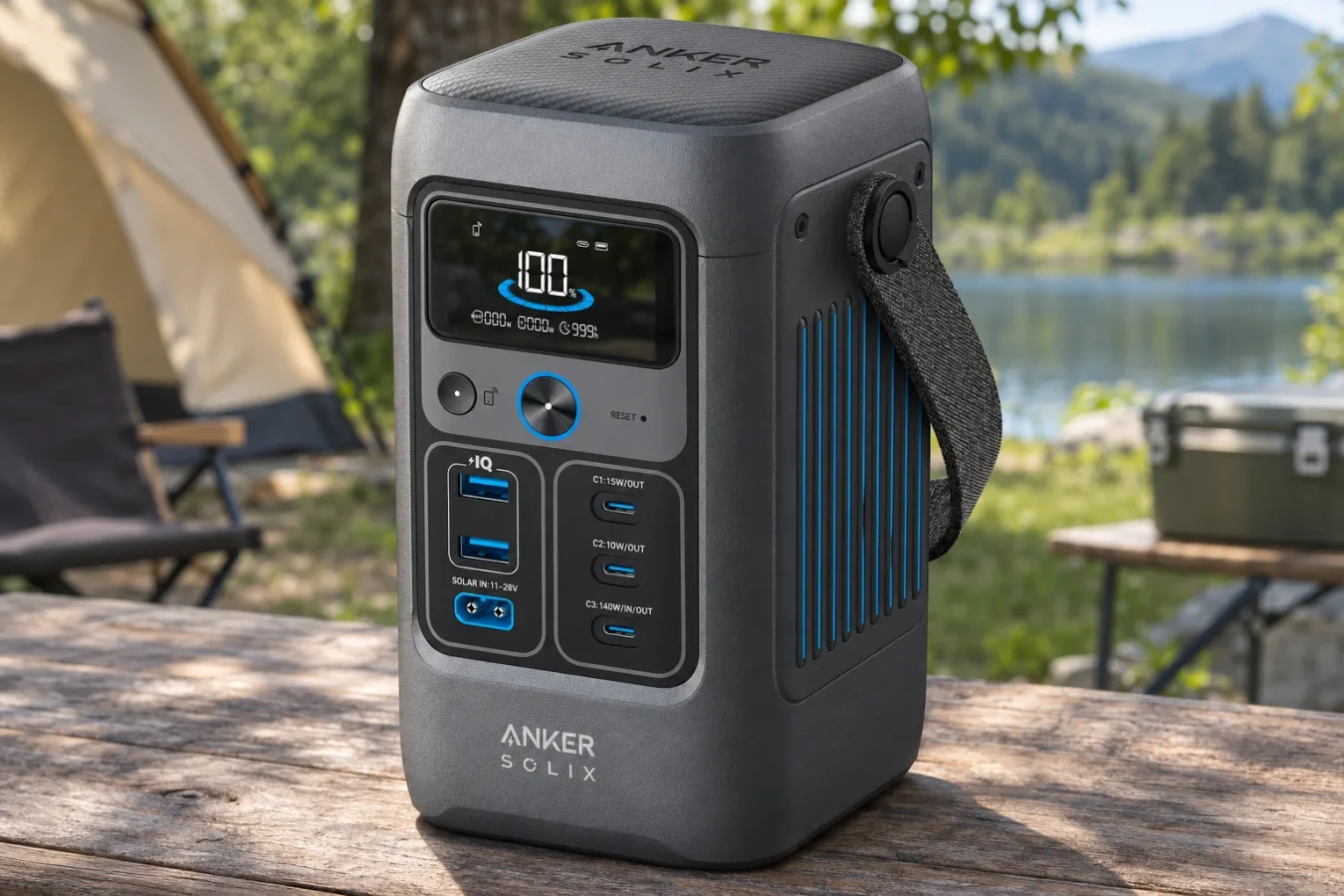
- Capacity
- 192 Wh
- Rated output
- 200 W
- Chemistry
- See listing
- Value for its size
- Fair value
- Amazon rating
- 4.4 / 5
- Buyer ratings
- 1,000
Specifications as stated in the Amazon listing. Check current details before buying.
How the score is calculated
This spec- and buyer-rating-based score is not a measure of independently measured performance. Value: Excellent 3, Good 2.2, Fair 1.4, Premium 0.6 points. Amazon rating: 4.0 earns 0, 5.0 earns 2.5, proportional in between. Rating volume: 1.5 × ln(1 + ratings) / ln(5,001), capped at 1.5. Output: 1.5 × rated W / Wh, capped at 1.5; unknown output earns 0.75. Stated LiFePO4: 1 point. Stated cycles, weight and solar input: 0.5/3 each, rounded together to three decimals. Missing value, rating, volume or listing details earn 0 for that criterion. The total is rounded to one decimal.
Read our full ranking methodologyThe short verdict
The Anker SOLIX C200 DC is a focused, compact power station with useful USB-C output, a durable LiFePO4 battery and enough energy for personal electronics, lighting and short CPAP nights. Its 192Wh capacity and 200W AC output limit it to small loads, while its Fair value rating means shoppers should check the current price on Amazon before ordering.
Pros
- 192Wh capacity in a compact small-power-station class
- 200W rated AC output for modest appliances and electronics
- LiFePO4 chemistry with 3,000-cycle battery rating
- Strong USB-C selection, including 100W and 140W ports
- 4.4 out of 5 from 1,000 Amazon ratings
Cons
- Fair value for its size class rather than an outright bargain
- 192Wh runs refrigerators and other high-draw loads only briefly
- 200W AC output rules out larger appliances and power tools
Best for
- Weekend campers who mainly charge phones, laptops and lights
- Travelers who want high-output USB-C charging in a small battery class
- CPAP users needing a compact backup for a short night
Look elsewhere if
- Homeowners seeking multi-day refrigerator or blackout backup
- Van builders or job sites needing high continuous wattage
Full specifications
| Capacity | 192 Wh |
|---|---|
| Rated AC output | 200 W |
| LiFePO4 stated | See listing |
| Charge cycles | See listing |
| Weight | See listing |
| Solar input | 100 W |
| Value for its size | Fair value |
Specifications as stated in the Amazon listing. Cycle-life conditions and solar compatibility vary; see the listing.
What can it power?
Choose your devices and daily run time. Battery capacity needed = watts × hours ÷ 0.85. Peak running watts assumes all selected devices run at once.
These are planning estimates, not measured runtimes. Appliance startup surges, fridge duty cycles, CPAP humidifiers and charging losses can change demand. Check your device label and the listing’s surge limit.
Runtime reference · 192 Wh at 85% usable energy
| Device | Running watts | Estimated hours |
|---|---|---|
| Phone | 15 W | 10.9 |
| Laptop | 60 W | 2.7 |
| Router | 40 W | 4.1 |
| CPAP | 45 W | 3.6 |
| Mini fridge | 50 W | 3.3 |
| Full fridge | 150 W | 1.1 |
| TV | 100 W | 1.6 |
| LED lights | 20 W | 8.2 |
| Coffee maker | 900 W | Exceeds rated output |
| Microwave | 1000 W | Exceeds rated output |
| Space heater | 750 W | Exceeds rated output |
| E-bike charger | 500 W | Exceeds rated output |
| Drill | 600 W | Exceeds rated output |
Runtime estimates
Estimated usable energy is 85% of rated capacity. Actual runtime varies with load, temperature and battery age. See the device reference above for calculated estimates.
| Device | Estimated runtime |
|---|---|
| Phone charge (15 W) | 11 h |
| Laptop (60 W) | 2.7 h |
| LED lights + Wi-Fi router (40 W) | 4.1 h |
| CPAP, heated humidifier (45 W avg) | 3.6 h |
| Mini fridge/cooler (50 W avg) | 3.3 h |
| Full-size fridge (150 W avg) | 1.1 h |
| 55-inch TV (100 W) | 1.6 h |
A campsite phone, laptop and LED lantern can quietly turn into a pile of depleted batteries. During a short blackout, the same problem shows up beside the router, a lamp and a CPAP machine. The Anker SOLIX C200 DC is designed for those smaller, more personal power needs—not for running an entire kitchen.
This compact unit combines 192 Wh of battery capacity with a 200 W rated AC output and a particularly useful USB-C setup. It uses a LiFePO4 battery, supports several charging methods and earns a 4.4 out of 5 Amazon rating from 1,000 ratings. The result is a sensible small station for weekends away, travel and targeted backup.
Who the Anker SOLIX C200 DC Is Really For
The C200 DC makes the most sense when portability and device charging matter more than raw energy storage. Weekend campers can use it as a central battery for phones, a laptop, lights and a Wi-Fi hotspot. It also fits the role of a travel backup: charge several personal devices without carrying separate battery packs and wall adapters.
Its 200 W AC rating gives it more flexibility than a USB battery alone, but this is still a small power station. It is well suited to electronics and low-power essentials. A short CPAP night is within its realistic range, especially if the machine’s actual draw is modest. It is less convincing as a refrigerator, freezer or home-backup solution. Those loads consume a 192 Wh battery quickly.
The C200 DC also has appeal for buyers who prefer LiFePO4 chemistry and want a station rated for 3,000 cycles. Check the current price on Amazon before ordering, because its Fair value rating makes deal timing important.
Capacity, Output and What It Can Run
With 192 Wh of capacity and 200 W of rated AC output, the C200 DC occupies the compact end of the power-station market. The practical question is not just whether a device starts; it is how long the battery can support it. Using 85% usable efficiency, these are useful planning estimates from a full charge:
| Use | Estimated runtime |
|---|---|
| Phone charging | 11 hours |
| Laptop | 2.7 hours |
| LED lights and Wi-Fi router | 4.1 hours |
| CPAP with heated humidifier | 3.6 hours |
| Mini fridge or cooler | 3.3 hours |
| Full-size refrigerator | 1.1 hours |
| 55-inch TV | 1.6 hours |
These figures are planning estimates, not guarantees. Real runtime changes with device settings, cycling compressors and startup behavior. The key takeaway is clear: phones, laptops, lights and networking gear are natural matches. A full-size refrigerator is an emergency measure, not an all-night solution.
Features and Ports That Matter in Practice
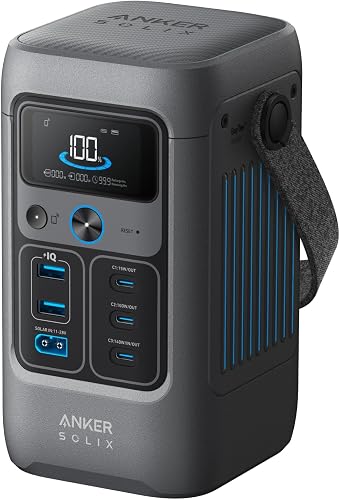
The C200 DC’s strongest feature is its USB-C lineup. It includes one 100 W USB-C port, one 140 W USB-C port and one 15 W USB-C port, plus two 12 W USB-A ports. That gives you five device-charging ports and makes the station especially well suited to modern laptops, tablets and phones. The 140 W two-way USB-C port can also recharge the station through a compatible PD 3.1 charger.
The 200 W AC output adds a conventional outlet option for compatible small electronics, although the station’s modest capacity remains the practical limit. For campsite use, that could mean a lamp or small accessory. For a blackout, it is better viewed as a targeted source for communications and personal electronics than as a whole-room power supply.
LiFePO4 chemistry is another meaningful advantage. The battery is rated for 3,000 cycles, while smart temperature control and impact resistance are intended to support regular portable use. A separately sold strap can make carrying easier. Confirm the port layout on the Amazon page before ordering.
Charging, Solar and Long-Term Ownership
The fastest listed recharge route uses the PD 3.1 USB-C connection and reaches 80% in 1.3 hours. The C200 DC can recharge with an 18 W-or-higher USB-C wall charger, including a suitable Anker USB-C or laptop charger. Only the specified USB-C charging ports can be used for recharging, so choosing the correct connection matters.
Solar charging is also supported, giving campers and travelers another way to replenish the battery away from an outlet. Compatibility is selective: the station is not compatible with the Anker SOLIX PS30 or other 5V~3A USB-C panels, PS200 or PS400. Verify panel and connector compatibility before packing for a trip.
For ownership, the LiFePO4 battery’s 3,000-cycle rating is reassuring for a station that may see frequent weekend use. Smart temperature control and impact resistance add practical protection for transport and outdoor storage. The product includes a three-year protection term. As with any battery system, keep expectations tied to the 192 Wh capacity: efficient charging and durable chemistry do not turn a compact station into a high-capacity backup battery.
How It Stacks Up Against Similar Small Stations
The C200 DC sits between several compact alternatives. The Westinghouse iGen400s has 183 Wh and a Fair value rating, making it a close capacity comparison. The VTOMAN FlashSpeed 300 steps up to 230 Wh and also carries a Fair value label, offering more stored energy in the same general small-station conversation.
For a lower-capacity option, the MARBERO 150 Wh provides 150 Wh and is rated Good value. The Anker SOLIX 521 offers 256 Wh but carries a Premium price label, while the ALLPOWERS P300 also lists 256 Wh and is rated Excellent value.
The Anker’s differentiator is not simply capacity. Its 200 W AC rating, 140 W and 100 W USB-C ports, LiFePO4 battery and 3,000-cycle rating create a strong feature mix for modern electronics. If you need longer fridge runtime, compare capacity first. If you mostly charge USB-C devices, the C200 DC’s port selection may matter more than a modest Wh advantage. Check the current price on Amazon for the final value comparison.
Frequently asked questions
Can the Anker SOLIX C200 DC run a CPAP machine?
Yes, it can support a CPAP setup within its 200W output rating. The estimated runtime for a CPAP with a heated humidifier is 3.6 hours from a full charge. Actual runtime depends on the machine, pressure settings and humidifier use, so confirm the CPAP’s wattage before relying on it overnight.
How long will the C200 DC run a refrigerator?
A mini fridge or cooler is estimated at 3.3 hours, while a full-size refrigerator is estimated at 1.1 hours. Compressor cycling can change actual results. This makes the C200 DC useful for short emergency support, but its 192Wh capacity is not suited to keeping a full-size refrigerator running through a long outage.
What devices can charge from its USB-C ports?
The station has one 100W USB-C port, one 140W USB-C port and one 15W USB-C port. It also has two 12W USB-A ports. That combination suits phones, tablets, laptops and other personal electronics. The 140W USB-C port is two-way and can also be used for fast station recharging.
Can I recharge the C200 DC with a laptop charger?
Yes. The station supports recharging with an 18W-or-higher USB-C wall charger, including a suitable laptop charger. The listed fast-charge route uses PD 3.1 USB-C and reaches 80% in 1.3 hours. Only the specified USB-C ports support recharging, so use the correct port.
Is the Anker SOLIX C200 DC good for a blackout?
It is useful for targeted blackout backup: phones, a laptop, LED lights, a Wi-Fi router or a short CPAP session. Its 200W AC output and 192Wh capacity are too limited for large appliances or multi-day household backup. For refrigerators, estimate roughly 1.1 hours for a full-size model under the stated runtime assumptions.


