VTOMAN · Spec-based review
VTOMAN FlashSpeed 300: Compact Backup Power
A 7.4-pound LiFePO4 power station for phones, laptops, lights and short emergency outages.
We may earn a commission from product links

- Capacity
- 230 Wh
- Rated output
- 300 W
- Chemistry
- LiFePO4
- Value for its size
- Fair value
- Amazon rating
- 4.4 / 5
- Buyer ratings
- 548
Specifications as stated in the Amazon listing. Check current details before buying.
How the score is calculated
This spec- and buyer-rating-based score is not a measure of independently measured performance. Value: Excellent 3, Good 2.2, Fair 1.4, Premium 0.6 points. Amazon rating: 4.0 earns 0, 5.0 earns 2.5, proportional in between. Rating volume: 1.5 × ln(1 + ratings) / ln(5,001), capped at 1.5. Output: 1.5 × rated W / Wh, capped at 1.5; unknown output earns 0.75. Stated LiFePO4: 1 point. Stated cycles, weight and solar input: 0.5/3 each, rounded together to three decimals. Missing value, rating, volume or listing details earn 0 for that criterion. The total is rounded to one decimal.
Read our full ranking methodologyThe short verdict
The VTOMAN FlashSpeed 300 is a compact, easy-to-carry power station with a 230Wh LiFePO4 battery and 300W rated AC output. It makes sense for light camping, communications gear and short backup duties, but its Fair value rating means shoppers should compare it closely with similarly sized alternatives before ordering.
Pros
- LiFePO4 battery chemistry
- 300W rated AC output
- Compact 230Wh capacity for personal electronics
- 7.4-pound portable design
- Strong 4.4 out of 5 Amazon rating from 548 ratings
Cons
- 230Wh capacity limits refrigerator and heater runtimes
- Fair value in its size class
- Solar charging capability should be confirmed before purchase
Best for
- Weekend campers who need phone, laptop and lighting power
- Apartment dwellers preparing for short outages
- Travelers who want a 7.4-pound emergency power source
Look elsewhere if
- Whole-home backup or high-wattage appliances
- Long CPAP nights with heavy humidifier use
Full specifications
| Capacity | 230 Wh |
|---|---|
| Rated AC output | 300 W |
| LiFePO4 stated | Yes |
| Charge cycles | See listing |
| Weight | 7.4 lb |
| Solar input | See listing |
| Value for its size | Fair value |
Specifications as stated in the Amazon listing. Cycle-life conditions and solar compatibility vary; see the listing.
What can it power?
Choose your devices and daily run time. Battery capacity needed = watts × hours ÷ 0.85. Peak running watts assumes all selected devices run at once.
These are planning estimates, not measured runtimes. Appliance startup surges, fridge duty cycles, CPAP humidifiers and charging losses can change demand. Check your device label and the listing’s surge limit.
Runtime reference · 230 Wh at 85% usable energy
| Device | Running watts | Estimated hours |
|---|---|---|
| Phone | 15 W | 13.0 |
| Laptop | 60 W | 3.3 |
| Router | 40 W | 4.9 |
| CPAP | 45 W | 4.3 |
| Mini fridge | 50 W | 3.9 |
| Full fridge | 150 W | 1.3 |
| TV | 100 W | 2.0 |
| LED lights | 20 W | 9.8 |
| Coffee maker | 900 W | Exceeds rated output |
| Microwave | 1000 W | Exceeds rated output |
| Space heater | 750 W | Exceeds rated output |
| E-bike charger | 500 W | Exceeds rated output |
| Drill | 600 W | Exceeds rated output |
Runtime estimates
Estimated usable energy is 85% of rated capacity. Actual runtime varies with load, temperature and battery age. See the device reference above for calculated estimates.
| Device | Estimated runtime |
|---|---|
| Phone charge (15 W) | 13 h |
| Laptop (60 W) | 3.3 h |
| LED lights + Wi-Fi router (40 W) | 4.9 h |
| CPAP, heated humidifier (45 W avg) | 4.3 h |
| Mini fridge/cooler (50 W avg) | 3.9 h |
| Full-size fridge (150 W avg) | 1.3 h |
| 55-inch TV (100 W) | 2.0 h |
A blackout does not need to last long to cause trouble. A router goes dark, phones drop into low-power mode, and a laptop battery becomes a deadline. At a campsite, the same small reserve can keep lights, a phone and essential electronics going after sunset. The VTOMAN FlashSpeed 300 is aimed at exactly those short, focused jobs.
This is a 230 Wh portable power station with a 300 W rated AC output and a LiFePO4 battery. At 7.4 pounds, it sits in the grab-and-go category rather than the home-backup class. Its 4.4 out of 5 Amazon rating from 548 ratings is encouraging, while its Fair value label makes comparison shopping worthwhile. Check the current price on Amazon before ordering.
Who the VTOMAN FlashSpeed 300 Is Really For
The FlashSpeed 300 is for people who want backup power without carrying a large battery box. Its 7.4-pound weight suits weekend camping, road trips, apartment emergency kits and quick moves between a living room and a work area. The 300 W AC rating is appropriate for personal electronics and modest loads, not for demanding heating, cooking or workshop equipment.
It is also a sensible fit for communications backup. A router and LED lights can run for an estimated 4.9 hours, giving a short outage a much less disruptive shape. A laptop has an estimated 3.3-hour runtime, while a phone charge is estimated at 13 hours under the stated efficiency assumption. Those figures make the unit useful when the priority is staying connected rather than powering an entire room.
For camping, the compact capacity is the main appeal. For hurricane preparation, treat it as one layer of a broader plan: charge phones, run lights and preserve internet access, but do not expect it to replace a larger home-backup station.
Capacity, Output and What It Can Run
The 230 Wh battery gives the VTOMAN FlashSpeed 300 a practical middle ground among small power stations. The rated AC output is 300 W, so the connected load must stay within that rating. Actual runtime varies with device draw, conversion losses and cycling, but the following estimates use 85% usable efficiency and provide a useful planning baseline.
| Device or load | Estimated runtime |
|---|---|
| Phone charge | 13 hours |
| Laptop | 3.3 hours |
| LED lights and Wi-Fi router | 4.9 hours |
| CPAP with heated humidifier | 4.3 hours |
| Mini fridge or cooler | 3.9 hours |
| Full-size refrigerator | 1.3 hours |
| 55-inch TV | 2.0 hours |
These are estimated hours from full to empty, not guaranteed operating times. Refrigerators cycle, while CPAP settings and humidifier demand can vary. For more sizing guidance, see our watt-hour sizing guide.
Features, Battery Chemistry and Everyday Portability
The standout hardware choice is the LiFePO4 battery chemistry. LFP cells are widely valued for their stable chemistry and durability characteristics compared with many conventional lithium-ion designs. In practical terms, that makes the FlashSpeed 300 a reassuring candidate for an emergency kit or camping bin that may sit between uses. It does not remove the need for sensible storage and regular charge checks.
The 230 Wh capacity keeps the station small enough to move easily, while the 300 W rated AC output supports the kinds of electronics most owners are likely to pair with it: phones, laptops, routers, lights and a television. The 7.4-pound weight is a useful distinction when the station must travel from a vehicle to a campsite or from storage to a bedside table.
This is not a feature-rich substitute for a larger station. Its value is concentrated in portable energy storage rather than extended high-load operation. Confirm the port layout on the Amazon page before ordering, particularly if you have a specific mix of USB, AC or other connections in mind.
Charging, Solar and Long-Term Ownership
The FlashSpeed 300 is easiest to understand as a compact reserve: charge it ahead of a trip or storm, then spend that stored energy on the most important devices. Because the battery holds 230 Wh, every watt matters. A 50 W load would theoretically consume the usable reserve faster than a 20 W load, and the 85% runtime estimates already account for typical conversion losses.
Solar charging deserves particular attention for buyers planning extended off-grid use. Solar is not identified as a feature here, so confirm solar compatibility, input limits and the required accessories on the Amazon page before ordering. Without a confirmed replenishment method, plan around the station’s stored capacity rather than assuming it can run indefinitely during a sunny weekend.
For ownership, LiFePO4 chemistry is a strong foundation for a unit intended for recurring emergency readiness. Keep it accessible, maintain a useful charge before severe weather and avoid treating a 230 Wh station as a continuous refrigerator or medical-device solution without calculating the exact load. CPAP users should allow extra margin, especially when a heated humidifier is enabled.
How It Stacks Up Against Similar-Size Alternatives
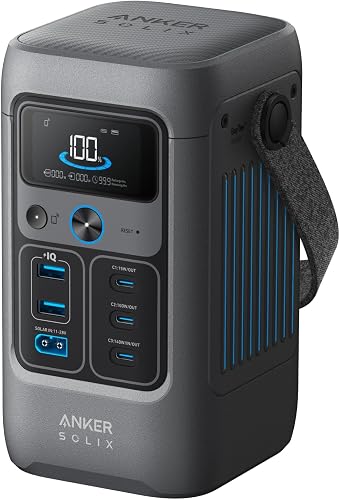
The VTOMAN FlashSpeed 300 sits among compact stations with roughly 180 Wh to 256 Wh of storage. Its 230 Wh capacity and 300 W rated output put it close to the Anker SOLIX 521, which has 256 Wh and a Premium price label. The ALLPOWERS P300 and ALLPOWERS Volix P300 each offer 256 Wh and are labeled Excellent value, giving them a modest capacity advantage on paper.
The Anker SOLIX C200 DC has 192 Wh and a Fair value label, while the Westinghouse iGen400s has 183 Wh and is also labeled Fair value. Those models may appeal to shoppers focused on a particular form factor or connection setup, but the VTOMAN’s 300 W AC rating and LiFePO4 chemistry are important comparison points.
In short, this VTOMAN is neither the largest nor the strongest value proposition in its size class. Its case rests on the combination of portable weight, LFP chemistry and a useful 300 W rating. For a wider shortlist, browse the best portable power stations under $300.
Frequently asked questions
How long can the VTOMAN FlashSpeed 300 run a laptop?
The estimated laptop runtime is 3.3 hours from a full battery to empty, using 85% usable efficiency. Actual time depends on the laptop's charging rate, screen brightness, processor activity and whether the computer continues drawing power after reaching full charge.
Can it power a CPAP machine overnight?
The estimated runtime for a CPAP with a heated humidifier is 4.3 hours. That is shorter than a typical full night, so CPAP owners should calculate their exact machine settings and consider disabling the heated humidifier only if medically appropriate. Confirm compatibility with your equipment before relying on it.
Is the VTOMAN FlashSpeed 300 good for refrigerator backup?
It can provide short refrigerator support, but expectations should stay modest. The estimated runtime is 1.3 hours for a full-size refrigerator and 3.9 hours for a mini fridge or cooler. Startup surges and cycling behavior also matter, so confirm the appliance's requirements.
What battery chemistry does this power station use?
The VTOMAN FlashSpeed 300 uses a LiFePO4, or LFP, battery. This chemistry is valued for stable operation and durability characteristics. The station stores 230Wh, so its total energy reserve remains suited to compact electronics and short backup periods rather than extended high-load use.
Does the VTOMAN FlashSpeed 300 support solar charging?
Solar charging should be confirmed before purchase. Plan around the station's 230Wh stored capacity unless the required solar input, connector and accessory setup are clearly compatible with your intended panel. For emergency use, charge the station in advance and prioritize phones, lighting, networking and other essential loads.