ALLPOWERS · Spec-based review
ALLPOWERS P300: Compact Backup for Everyday Essentials
A 256Wh LiFePO4 power station for phones, laptops, lights, routers, and short backup duty.
We may earn a commission from product links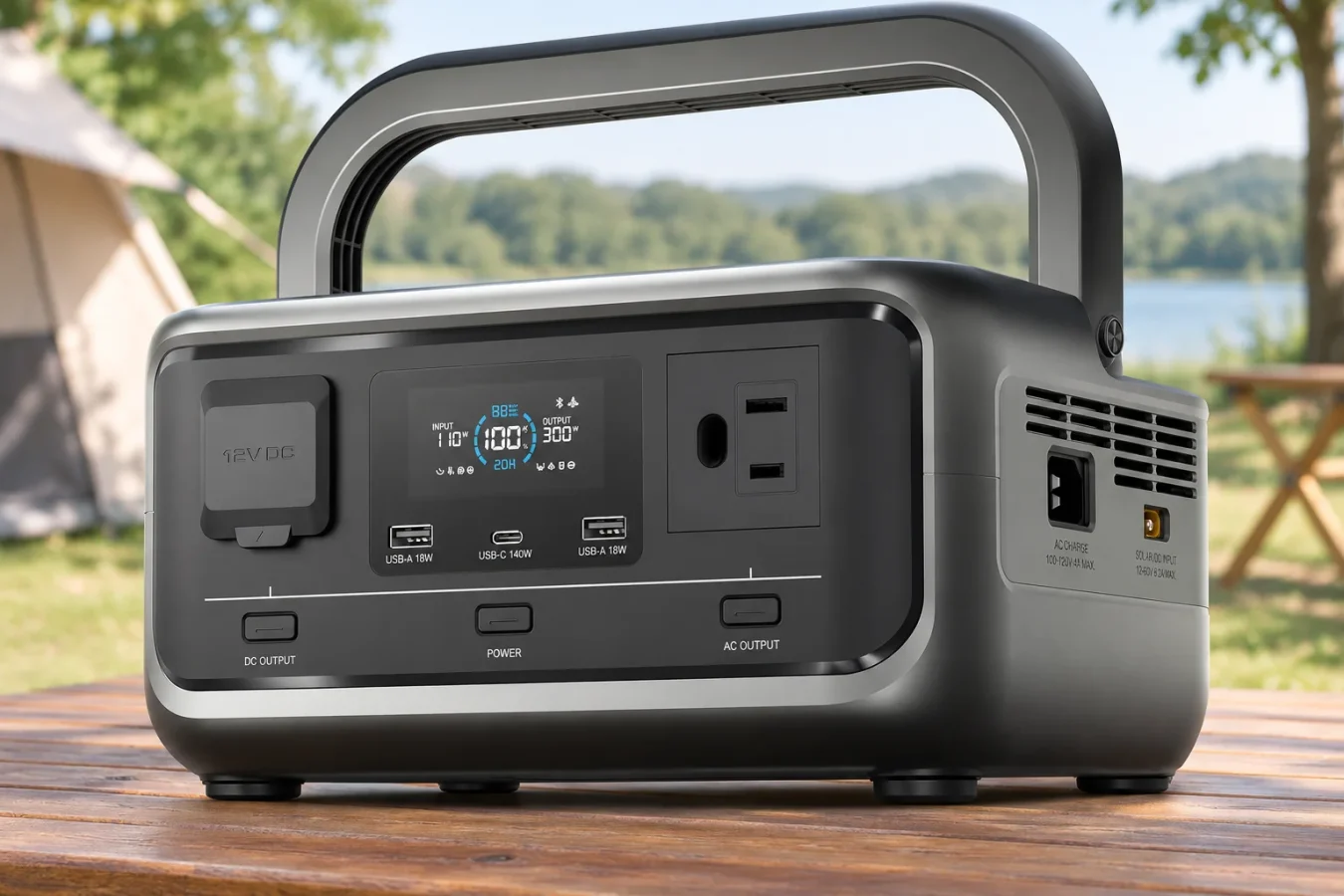

- Capacity
- 256 Wh
- Rated output
- 300 W
- Chemistry
- LiFePO4
- Value for its size
- Excellent value
- Amazon rating
- 4.2 / 5
- Buyer ratings
- 241
Specifications as stated in the Amazon listing. Check current details before buying.
How the score is calculated
This spec- and buyer-rating-based score is not a measure of independently measured performance. Value: Excellent 3, Good 2.2, Fair 1.4, Premium 0.6 points. Amazon rating: 4.0 earns 0, 5.0 earns 2.5, proportional in between. Rating volume: 1.5 × ln(1 + ratings) / ln(5,001), capped at 1.5. Output: 1.5 × rated W / Wh, capped at 1.5; unknown output earns 0.75. Stated LiFePO4: 1 point. Stated cycles, weight and solar input: 0.5/3 each, rounded together to three decimals. Missing value, rating, volume or listing details earn 0 for that criterion. The total is rounded to one decimal.
Read our full ranking methodologyThe short verdict
The ALLPOWERS P300 is a sensible small power station with an efficient-size 256Wh battery, a 300W AC rating, and LiFePO4 chemistry. It makes the most sense for weekend camping, communications backup, and short CPAP or electronics sessions—not refrigerators, heaters, or whole-home outage coverage.
Pros
- LiFePO4 battery chemistry for a durability-focused design
- 300W rated AC output suits common small electronics
- 256Wh capacity delivers useful short-term emergency power
- Solar charging is included in the product positioning
- Excellent value for its size class
Cons
- Limited capacity for refrigerators, CPAP humidifiers, and multi-day outages
- 300W output rules out most high-draw appliances
- Amazon rating is 4.2 out of 5 from 241 ratings, a solid but not flawless result
Best for
- Weekend campers who need quiet power for electronics and lights
- Apartment dwellers who want short blackout backup for Wi-Fi and phones
- Travelers who need a compact LiFePO4 station for laptops and small devices
Look elsewhere if
- Households seeking overnight refrigerator or whole-home backup
- Users running heating appliances, kettles, microwaves, or other high-watt loads
Full specifications
| Capacity | 256 Wh |
|---|---|
| Rated AC output | 300 W |
| LiFePO4 stated | Yes |
| Charge cycles | See listing |
| Weight | See listing |
| Solar input | 220 W |
| Value for its size | Excellent value |
Specifications as stated in the Amazon listing. Cycle-life conditions and solar compatibility vary; see the listing.
What can it power?
Choose your devices and daily run time. Battery capacity needed = watts × hours ÷ 0.85. Peak running watts assumes all selected devices run at once.
These are planning estimates, not measured runtimes. Appliance startup surges, fridge duty cycles, CPAP humidifiers and charging losses can change demand. Check your device label and the listing’s surge limit.
Runtime reference · 256 Wh at 85% usable energy
| Device | Running watts | Estimated hours |
|---|---|---|
| Phone | 15 W | 14.5 |
| Laptop | 60 W | 3.6 |
| Router | 40 W | 5.4 |
| CPAP | 45 W | 4.8 |
| Mini fridge | 50 W | 4.4 |
| Full fridge | 150 W | 1.5 |
| TV | 100 W | 2.2 |
| LED lights | 20 W | 10.9 |
| Coffee maker | 900 W | Exceeds rated output |
| Microwave | 1000 W | Exceeds rated output |
| Space heater | 750 W | Exceeds rated output |
| E-bike charger | 500 W | Exceeds rated output |
| Drill | 600 W | Exceeds rated output |
Runtime estimates
Estimated usable energy is 85% of rated capacity. Actual runtime varies with load, temperature and battery age. See the device reference above for calculated estimates.
| Device | Estimated runtime |
|---|---|
| Phone charge (15 W) | 15 h |
| Laptop (60 W) | 3.6 h |
| LED lights + Wi-Fi router (40 W) | 5.4 h |
| CPAP, heated humidifier (45 W avg) | 4.8 h |
| Mini fridge/cooler (50 W avg) | 4.4 h |
| Full-size fridge (150 W avg) | 1.5 h |
| 55-inch TV (100 W) | 2.2 h |
A storm knocks out power just as your phone reaches 8 percent. The router is dark, the laptop needs one more hour, and the campsite still needs light after sunset. This is the kind of small, focused job the ALLPOWERS P300 is built to handle. Its 256 Wh battery is large enough for essential electronics, while its 300 W rated AC output keeps the mission realistic: communications, screens, lights, and modest medical equipment rather than heating or kitchen appliances.
The P300 uses LiFePO4 battery chemistry and is marketed with solar capability, giving it a practical role in both weekend travel and short outages. It is also in the under-$300 tier and earns an Excellent value rating for its size class. Check the current price on Amazon before ordering, since pricing can change.
Who the ALLPOWERS P300 Is Really For
The P300 is a good fit when your priority is keeping small essentials alive, not recreating household electricity. Weekend campers can use its 256 Wh reserve for phones, laptops, LED lighting, and a small cooler for limited periods. In an apartment or dorm, it can keep communications equipment and personal electronics running through a brief interruption without the noise or fuel handling of a gas generator.
It also has a credible CPAP use case, especially if you can reduce the machine’s power demand and avoid a heated humidifier. The calculated runtime for a CPAP with heated humidifier is 4.8 hours, so a full night is not a safe assumption for that setup. For blackout preparation, pair it with charged phones, battery lighting, and a plan for refrigeration. The P300 is a compact essentials unit. It is not a substitute for a larger home-backup station.
Capacity, Output and What It Can Run
The central numbers are straightforward: 256 Wh of stored energy and 300 W of rated AC output. Those figures define the P300’s lane. A device must stay within the station’s output rating, and actual runtime varies with conversion losses and the device’s real draw. The estimates below use 85 percent usable efficiency, making them more practical than dividing the battery capacity by the appliance’s label alone.
| Device or load | Estimated runtime |
|---|---|
| Phone charge | 15 hours |
| Laptop | 3.6 hours |
| LED lights plus Wi-Fi router | 5.4 hours |
| CPAP with heated humidifier | 4.8 hours |
| Mini fridge or cooler | 4.4 hours |
| Full-size refrigerator | 1.5 hours |
| 55-inch TV | 2.2 hours |
Fridge runtimes are especially variable because compressors cycle. Treat the figures as planning estimates, not guarantees.
Features, Ports and Battery Chemistry
The P300’s most important feature is its balance of capacity and output. A 300 W AC rating is appropriate for laptops, displays, chargers, lights, routers, and other modest loads. It is not a sensible match for hair dryers, space heaters, coffee makers, microwaves, or similar appliances that can demand hundreds or thousands of watts.
LiFePO4 chemistry is a meaningful advantage for buyers who value a durability-oriented battery design. Compared with treating the unit as a disposable emergency purchase, LFP makes more sense for recurring camping trips, travel, and seasonal blackout preparation. The 256 Wh capacity also keeps expectations clear: there is enough energy for several small devices, but not enough to run every household essential at once.
Solar capability adds flexibility when wall power is unavailable, particularly at a campsite or after a storm. Confirm the port layout on the Amazon page before ordering so the connection options match your devices and charging setup.
Charging, Solar and Long-Term Ownership
Solar charging gives the P300 a useful off-grid angle. During a sunny camping day, a compatible panel can help replenish energy while the station supports low-draw electronics. Actual solar charge time depends on panel output, sun angle, temperature, shading, and charging limits, so a panel’s headline wattage should not be treated as a guaranteed charging speed.
The 256 Wh battery is best managed as a finite reserve. Use it for the loads that matter most during an outage: phones, networking equipment, lights, and selected medical electronics. Turning off unnecessary AC devices saves energy because the inverter itself consumes power. For a refrigerator, expect compressor cycling and startup behavior to affect results.
LiFePO4 chemistry supports the P300’s long-term ownership case, while the Excellent value label makes the capacity attractive within its class. Keep the station charged according to the manufacturer’s guidance, store it in a suitable environment, and verify the charging accessories and solar connection before a trip or hurricane season. Check the current price on Amazon before buying.
How the P300 Stacks Up Against Similar-Size Alternatives
The closest comparison is the ALLPOWERS Volix P300, which also lists 256 Wh and carries an Excellent value label. The P300 therefore belongs in the same compact-capacity conversation, with its own 300 W rated AC output clearly suited to small electronics.
The Anker SOLIX 521 also lists 256 Wh but is positioned at a Premium price, so the P300 is the more value-oriented option by class label. The VTOMAN FlashSpeed 300 offers 230 Wh and Fair value, giving the P300 a 26 Wh capacity advantage. Moving up slightly, the Anker SOLIX C300 lists 288 Wh and Premium price, while the Anker SOLIX C300 DC also lists 288 Wh with Good value.
Those alternatives may suit buyers prioritizing a larger energy buffer, but the P300 remains compelling when 256 Wh is enough and value matters. Compare port layouts and output ratings carefully before choosing.
Frequently asked questions
Can the ALLPOWERS P300 run a refrigerator?
It can support a full-size refrigerator for an estimated 1.5 hours under the stated runtime calculation, but compressor cycling and startup demand can change results. A mini fridge or cooler is estimated at 4.4 hours. Treat the P300 as short-term refrigerator support, not extended food-storage backup.
How long will the P300 run a CPAP machine?
The calculated runtime for a CPAP with heated humidifier is 4.8 hours. That may be shorter than a full night, and real results depend on pressure settings and the humidifier. Buyers who need dependable overnight medical backup should plan around their exact equipment draw and consider a larger station.
Is the ALLPOWERS P300 good for camping?
Yes, especially for weekend trips centered on phones, laptops, lights, and small coolers. Its 256Wh capacity provides a useful reserve without pushing into the larger-station category. Solar capability can help replenish energy outdoors when conditions are favorable.
What can the 300W output handle?
The 300W rated AC output is appropriate for common electronics, LED lights, networking equipment, chargers, and many laptops. It is not intended for high-draw appliances such as space heaters, microwaves, hair dryers, or electric kettles. Check each device’s running and startup wattage before connecting it.
Is the P300 a good blackout power station?
It is a good compact backup for phones, Wi-Fi equipment, lights, laptops, and selected small devices during a short outage. Its 256Wh capacity is limited for refrigerators, heated CPAP use, and multi-day emergencies. For longer blackouts, combine it with solar and a broader household power plan.


