Anker SOLIX · Spec-based review
Anker SOLIX C300 DC: Compact Power for Tech
A compact LiFePO4 power station built to keep phones, laptops, lights and small essentials running.
We may earn a commission from product links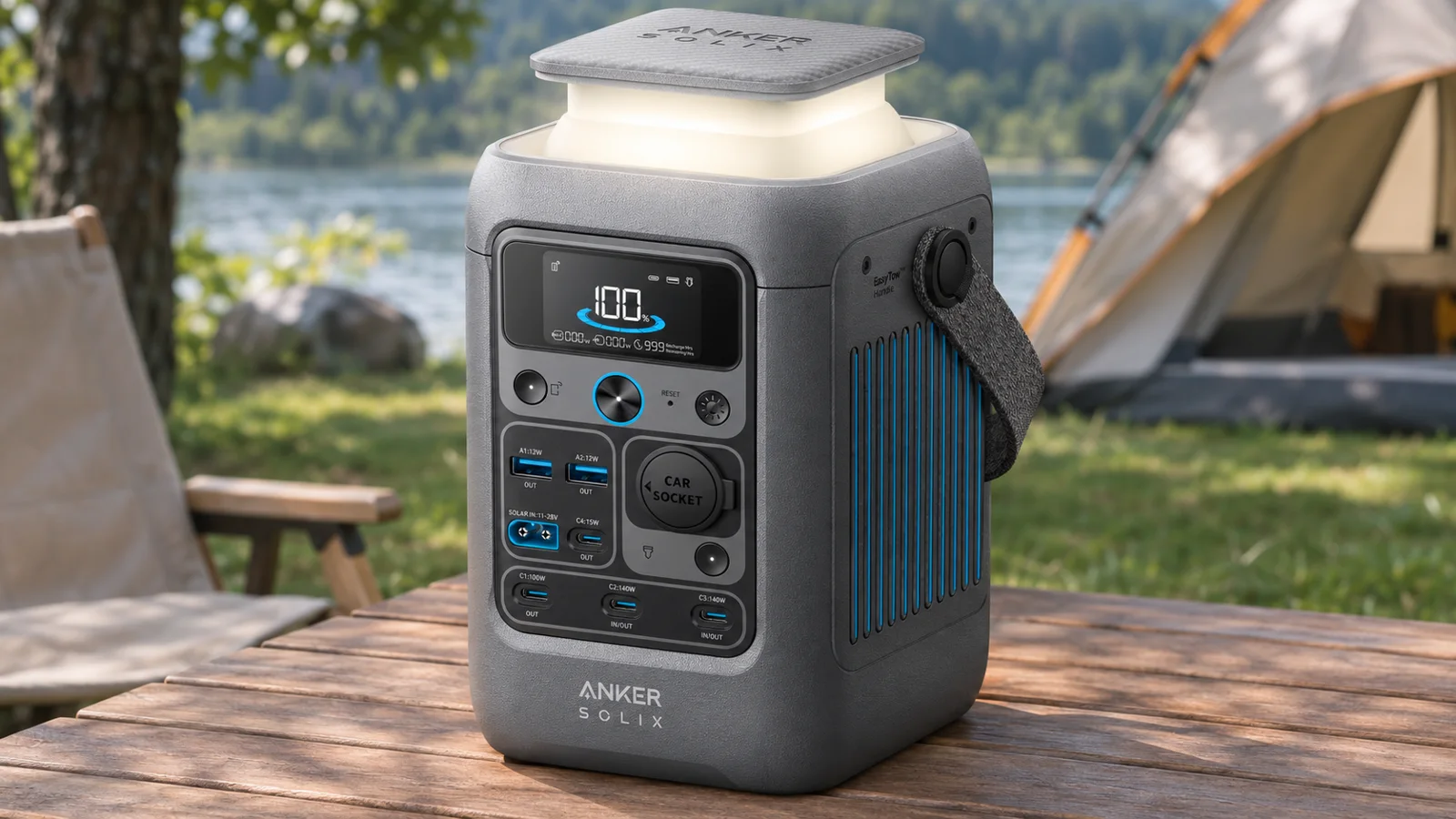

- Capacity
- 288 Wh
- Rated output
- 300 W
- Chemistry
- See listing
- Value for its size
- Good value
- Amazon rating
- 4.5 / 5
- Buyer ratings
- 1,700
Specifications as stated in the Amazon listing. Check current details before buying.
How the score is calculated
This spec- and buyer-rating-based score is not a measure of independently measured performance. Value: Excellent 3, Good 2.2, Fair 1.4, Premium 0.6 points. Amazon rating: 4.0 earns 0, 5.0 earns 2.5, proportional in between. Rating volume: 1.5 × ln(1 + ratings) / ln(5,001), capped at 1.5. Output: 1.5 × rated W / Wh, capped at 1.5; unknown output earns 0.75. Stated LiFePO4: 1 point. Stated cycles, weight and solar input: 0.5/3 each, rounded together to three decimals. Missing value, rating, volume or listing details earn 0 for that criterion. The total is rounded to one decimal.
Read our full ranking methodologyThe short verdict
The Anker SOLIX C300 DC is a strong fit for campers, mobile workers and emergency tech backup when portability matters more than running appliances. Its 288Wh battery, 300W output and excellent USB-C selection make it especially useful for modern electronics, while its Good value rating and 4.5-star Amazon score strengthen the case.
Pros
- LiFePO4 battery chemistry with smart temperature control
- Two 140W two-way USB-C ports for fast charging
- Seven charging ports, including a 120W car socket
- Useful 288Wh capacity in a compact size class
- Good value rating and a 4.5/5 Amazon rating from 1,700 ratings
Cons
- The 300W AC output limits it to smaller appliances
- No wall charger is included in the box
- Its compact battery cannot provide long refrigerator or whole-home backup
Best for
- Weekend campers who mainly charge phones, laptops, lights and small electronics
- Remote workers who need USB-C power away from an outlet
- CPAP users who can operate without relying on a heated humidifier all night
Look elsewhere if
- Homeowners seeking multi-day refrigerator or outage backup
- Users who need to run high-wattage appliances above its 300W AC rating
Full specifications
| Capacity | 288 Wh |
|---|---|
| Rated AC output | 300 W |
| LiFePO4 stated | See listing |
| Charge cycles | See listing |
| Weight | See listing |
| Solar input | 100 W |
| Value for its size | Good value |
Specifications as stated in the Amazon listing. Cycle-life conditions and solar compatibility vary; see the listing.
What can it power?
Choose your devices and daily run time. Battery capacity needed = watts × hours ÷ 0.85. Peak running watts assumes all selected devices run at once.
These are planning estimates, not measured runtimes. Appliance startup surges, fridge duty cycles, CPAP humidifiers and charging losses can change demand. Check your device label and the listing’s surge limit.
Runtime reference · 288 Wh at 85% usable energy
| Device | Running watts | Estimated hours |
|---|---|---|
| Phone | 15 W | 16.3 |
| Laptop | 60 W | 4.1 |
| Router | 40 W | 6.1 |
| CPAP | 45 W | 5.4 |
| Mini fridge | 50 W | 4.9 |
| Full fridge | 150 W | 1.6 |
| TV | 100 W | 2.4 |
| LED lights | 20 W | 12.2 |
| Coffee maker | 900 W | Exceeds rated output |
| Microwave | 1000 W | Exceeds rated output |
| Space heater | 750 W | Exceeds rated output |
| E-bike charger | 500 W | Exceeds rated output |
| Drill | 600 W | Exceeds rated output |
Runtime estimates
Estimated usable energy is 85% of rated capacity. Actual runtime varies with load, temperature and battery age. See the device reference above for calculated estimates.
| Device | Estimated runtime |
|---|---|
| Phone charge (15 W) | 16 h |
| Laptop (60 W) | 4.1 h |
| LED lights + Wi-Fi router (40 W) | 6.1 h |
| CPAP, heated humidifier (45 W avg) | 5.4 h |
| Mini fridge/cooler (50 W avg) | 4.9 h |
| Full-size fridge (150 W avg) | 1.6 h |
| 55-inch TV (100 W) | 2.4 h |
A campsite goes quiet after sunset, a laptop drops to 10% before a deadline, or a blackout cuts the Wi-Fi router just when you need storm updates. The Anker SOLIX C300 DC is designed for those smaller but consequential power gaps. It focuses on portable electronics rather than heavy appliances, with strong USB-C charging and a battery sized for short trips or targeted emergency backup.
This model combines a 288 Wh battery with a 300 W rated AC output. It uses LiFePO4 cells, offers seven device-charging ports, and can recharge through USB-C, solar panels or a vehicle. The Amazon listing earns 4.5 out of 5 from 1,700 ratings. Check the current price on Amazon, but its listed position is Good value for its size class.
Who the Anker SOLIX C300 DC Is Really For
The C300 DC makes the most sense when your power needs are compact, portable and electronics-heavy. Weekend campers can use it for phones, laptops, LED lighting and a small cooler. Remote workers get a practical USB-C hub for a laptop and accessories without carrying a much larger station. It also suits van-life setups where space is limited and the priority is keeping personal technology charged.
It is a reasonable CPAP candidate, too, provided your setup and sleep routine match the available energy. The listed estimate for a CPAP with heated humidifier is 5.4 hours, so users expecting a full night should verify their machine’s actual draw and consider whether the humidifier can be switched off. During an outage, this is targeted backup for communications, lighting and small devices—not a replacement for a large home-backup station.
Its 4.5-star Amazon rating from 1,700 ratings suggests broad buyer satisfaction, while the Good value label makes it appealing in this capacity class. Check the current price on Amazon before buying.
Capacity, Output and What It Can Run
The 288 Wh battery is enough for a productive stretch with personal electronics, but it is not a deep-reserve power bank. Applying an 85% usable-efficiency estimate gives the following approximate runtimes from full to empty:
| Device or load | Estimated runtime |
|---|---|
| Phone charging | 16 hours |
| Laptop | 4.1 hours |
| LED lights and Wi-Fi router | 6.1 hours |
| CPAP with heated humidifier | 5.4 hours |
| Mini fridge or cooler | 4.9 hours |
| Full-size refrigerator | 1.6 hours |
| 55-inch TV | 2.4 hours |
The 300 W rated AC output is the key limit. It is well matched to small electronics and modest loads, but buyers should check an appliance’s running and startup wattage before connecting it. Refrigerator estimates are particularly dependent on cycling behavior, while the figures above are useful planning numbers rather than guarantees.
Features and Ports: Built Around Modern Electronics
The C300 DC’s strongest feature is its port mix. It has two 140 W two-way USB-C ports, plus one 100 W USB-C port, one 15 W USB-C port and two 12 W USB-A ports. There is also a 120 W car socket. In total, the station provides seven device-charging ports, giving it plenty of flexibility for a campsite, mobile workstation or family road trip.
The two 140 W USB-C ports can both accept and deliver power, which is useful when fast-charging compatible laptops or recharging the station through USB-C. The 100 W and 15 W USB-C ports broaden compatibility for smaller electronics, while USB-A remains handy for older cables and accessories.
Anker lists a LiFePO4 battery, smart temperature control and an impact-resistant design. LiFePO4 chemistry is a sensible choice for a frequently transported station because it is generally associated with durable, stable battery construction. The 288 Wh capacity keeps the unit in a compact class, but it also means the C300 DC is better at supporting a collection of devices than powering large household loads for long periods.
Charging, Solar and Long-Term Ownership
The C300 DC can recharge through its dual PD 3.1 USB-C arrangement, with Anker listing an 80% recharge in one hour. It can also recharge from a vehicle or solar panels. The product information recommends a 100 W Anker Solar Panel, but solar charging naturally varies with sunlight, panel orientation, shading and the station’s charging behavior. Treat solar as a way to extend an outdoor trip, not as a guaranteed clockwork recharge schedule.
Compatibility matters here. Anker specifically says the station is not compatible with the SOLIX PS30 or other 5V~3A USB-C solar panels. Confirm the panel and connection requirements on the Amazon page before ordering. The box includes the power station, a USB-C-to-C charging cable, safety manual and warranty information; no wall charger is included.
The LiFePO4 battery, smart temperature control and impact-resistant design are encouraging for regular transport. Anker lists a three-year warranty. For ownership planning, remember that every conversion costs energy: runtime estimates use 85% usable efficiency, and actual results vary with device draw, battery condition and operating temperature.
How It Stacks Up Against Similar Portable Stations
The closest comparison is the Anker SOLIX C300, which also offers 288 Wh but carries a Premium price label. The BLUETTI Elite 30 V2 matches the C300 DC at 288 Wh and is also labeled Premium price. Those models deserve a closer feature-by-feature check if their charging layouts better suit your gear.
The Jackery Explorer 300 provides slightly more capacity at 292 Wh and is labeled Fair value. The MARBERO 296 Wh 350 W steps up to 296 Wh and 350 W, with an Excellent value label. That extra output may matter for loads near the C300 DC’s 300 W ceiling, though port selection and recharge features should guide the final choice.
Finally, the Anker SOLIX 521 has 256 Wh and a Premium price label, making the C300 DC the larger-capacity option within this comparison. The C300 DC stands out through its two 140 W USB-C ports, seven-port layout, LiFePO4 chemistry and Good value rating. Check current Amazon pricing and each listing’s exact configuration before choosing.
Frequently asked questions
Can the Anker SOLIX C300 DC run a refrigerator?
It can support a full-size refrigerator for an estimated 1.6 hours under the listed planning assumptions, but refrigerator startup and cycling loads vary. Its 300W AC rating may also limit compatibility. Check the refrigerator's running and startup wattage before relying on it during an outage.
How long can it run a CPAP machine?
The estimated runtime for a CPAP with a heated humidifier is 5.4 hours. Actual runtime depends on the machine, pressure settings, humidifier use and temperature. If you need a full night, verify your CPAP's draw and consider testing the setup according to the manufacturer's guidance.
Does the C300 DC include a wall charger?
No. The listed box contents include the Anker SOLIX C300 DC, a USB-C-to-C charging cable, safety manual and warranty information. A wall charger is not included, so verify the charging equipment you need on the Amazon page before ordering.
Can I use the Anker SOLIX PS30 solar panel?
No. Anker states that the C300 DC is not compatible with the SOLIX PS30 or other 5V~3A USB-C solar panels. The listing recommends a 100W Anker Solar Panel. Confirm the exact panel and connector requirements before purchasing a solar setup.
How many devices can it charge at once?
The C300 DC lists seven device-charging ports: one 120W car socket, two 140W USB-C ports, one 100W USB-C port, one 15W USB-C port and two 12W USB-A ports. Total available performance depends on the connected devices and their individual power requirements.


