Anker SOLIX · Spec-based review
Anker SOLIX C300: Compact Power for Weekend Escapes
A quiet, feature-rich 288Wh power station for personal electronics, CPAP nights, and short off-grid trips.
We may earn a commission from product links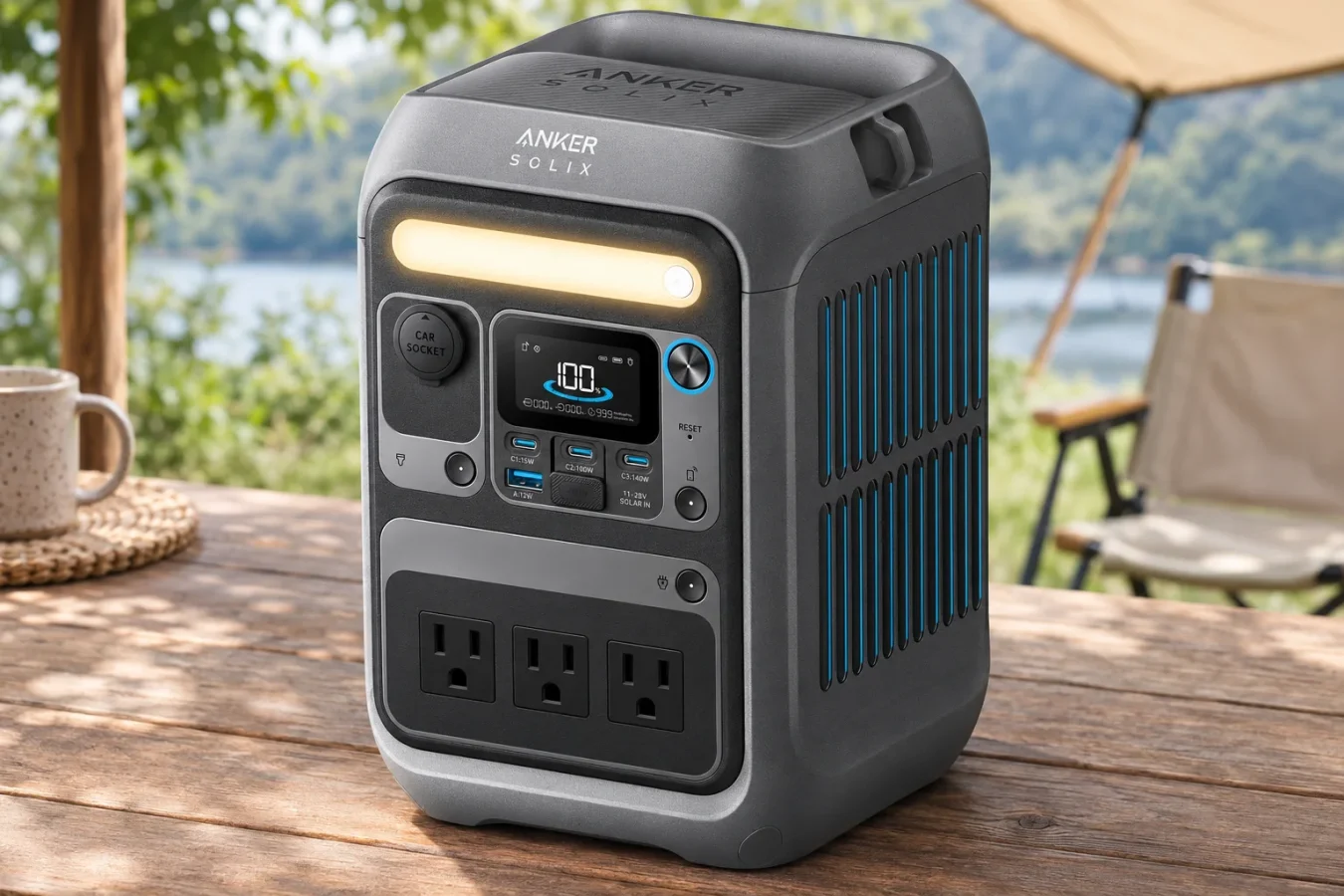

- Capacity
- 288 Wh
- Rated output
- See listing
- Chemistry
- See listing
- Value for its size
- Premium price
- Amazon rating
- 4.6 / 5
- Buyer ratings
- 1,900
Specifications as stated in the Amazon listing. Check current details before buying.
How the score is calculated
This spec- and buyer-rating-based score is not a measure of independently measured performance. Value: Excellent 3, Good 2.2, Fair 1.4, Premium 0.6 points. Amazon rating: 4.0 earns 0, 5.0 earns 2.5, proportional in between. Rating volume: 1.5 × ln(1 + ratings) / ln(5,001), capped at 1.5. Output: 1.5 × rated W / Wh, capped at 1.5; unknown output earns 0.75. Stated LiFePO4: 1 point. Stated cycles, weight and solar input: 0.5/3 each, rounded together to three decimals. Missing value, rating, volume or listing details earn 0 for that criterion. The total is rounded to one decimal.
Read our full ranking methodologyThe short verdict
The Anker SOLIX C300 is a polished small power station with useful USB-C output, fast wall charging, LiFePO4 chemistry, and enough capacity for a weekend of personal electronics. Its 300W inverter and 288Wh battery are not suited to serious home backup, while its Premium price makes the value question important. Check the current price on Amazon before buying.
Pros
- Useful 300W output with 600W surge capability
- Two-way 140W USB-C charging for modern laptops and devices
- LiFePO4 battery rated for 3,000 cycles and a 5-year warranty
- Recharges to 80% in 50 minutes from a wall outlet
- Quiet 25dB operation and a strong 4.6/5 Amazon rating from 1,900 ratings
Cons
- Premium price for a 288Wh power station
- Limited 300W inverter output rules out high-draw appliances
- Small capacity means short runtimes for refrigerators, microwaves, and heaters
Best for
- Weekend campers who need quiet charging for phones, laptops, lights, and a router
- CPAP users who want a compact overnight backup with a heated humidifier
- Travelers who value fast USB-C charging and a small 288Wh footprint
Look elsewhere if
- Homeowners seeking refrigerator, heater, or blackout power for long outages
- Buyers who want the most watt-hours per dollar in this size class
Full specifications
| Capacity | 288 Wh |
|---|---|
| Rated AC output | See listing |
| LiFePO4 stated | See listing |
| Charge cycles | 3000 |
| Weight | See listing |
| Solar input | 100 W |
| Value for its size | Premium price |
Specifications as stated in the Amazon listing. Cycle-life conditions and solar compatibility vary; see the listing.
What can it power?
Choose your devices and daily run time. Battery capacity needed = watts × hours ÷ 0.85. Peak running watts assumes all selected devices run at once.
These are planning estimates, not measured runtimes. Appliance startup surges, fridge duty cycles, CPAP humidifiers and charging losses can change demand. Check your device label and the listing’s surge limit.
Runtime reference · 288 Wh at 85% usable energy
| Device | Running watts | Estimated hours |
|---|---|---|
| Phone | 15 W | 16.3 |
| Laptop | 60 W | 4.1 |
| Router | 40 W | 6.1 |
| CPAP | 45 W | 5.4 |
| Mini fridge | 50 W | 4.9 |
| Full fridge | 150 W | 1.6 |
| TV | 100 W | 2.4 |
| LED lights | 20 W | 12.2 |
| Coffee maker | 900 W | 0.3 |
| Microwave | 1000 W | 0.2 |
| Space heater | 750 W | 0.3 |
| E-bike charger | 500 W | 0.5 |
| Drill | 600 W | 0.4 |
Runtime estimates
Estimated usable energy is 85% of rated capacity. Actual runtime varies with load, temperature and battery age. See the device reference above for calculated estimates.
| Device | Estimated runtime |
|---|---|
| Phone charge (15 W) | 16 h |
| Laptop (60 W) | 4.1 h |
| LED lights + Wi-Fi router (40 W) | 6.1 h |
| CPAP, heated humidifier (45 W avg) | 5.4 h |
| Mini fridge/cooler (50 W avg) | 4.9 h |
| Full-size fridge (150 W avg) | 1.6 h |
| 55-inch TV (100 W) | 2.4 h |
| Drip coffee maker (900 W) | 16 min |
| Microwave (1,000 W) | 15 min |
| Space heater, low (750 W) | 20 min |
A campsite goes quiet after dark, a CPAP needs power through the night, or a brief outage knocks out the Wi-Fi. In those moments, the Anker SOLIX C300 is aimed at the devices people actually carry: phones, laptops, lights, routers, and small medical equipment. It is compact, quiet, and built around easy charging rather than heavy-duty home backup.
The C300 stores 288 Wh and delivers 300 W through its AC output, with 600 W surge capability. It also brings a particularly useful 140 W two-way USB-C connection, seven charging ports, LiFePO4 chemistry, and solar compatibility. The trade-off is straightforward: this is a premium small power station, not a refrigerator-running substitute for a generator.
Who the Anker SOLIX C300 Is Really For
The C300 makes sense for people who need portable electricity without building a full emergency-power setup. Weekend campers can run phones, laptops, LED lights, and a Wi-Fi router while keeping the campsite quiet. The 25dB noise rating from 3.3 feet away is especially appealing when the station sits inside a tent, van, or bedroom during a short outage.
It is also a sensible CPAP candidate. The listed estimate is 5.4 hours with a CPAP and heated humidifier, so buyers should compare that figure with their actual sleep duration and settings. For travel, the 140 W USB-C output is more relevant than raw inverter power: it can serve compatible laptops and other demanding USB-C devices without relying on the AC outlets.
This is less convincing as a whole-home blackout battery. A full-size refrigerator is estimated at 1.6 hours, and a space heater on low at 20 minutes. Those numbers make the C300 a short-term bridge for essentials, not an all-night appliance bank.
Capacity, Output and What It Can Run
With 288 Wh of capacity, the C300 sits in the small portable power station class. Its 300 W AC output handles personal electronics and modest appliances, while the 600 W surge rating provides temporary headroom for startup demands. It cannot turn a small battery into a high-wattage system, though: a microwave, coffee maker, or heater will consume its stored energy quickly.
| Device | Estimated runtime |
|---|---|
| Phone charge | 16 hours |
| Laptop | 4.1 hours |
| LED lights + Wi-Fi router | 6.1 hours |
| CPAP with heated humidifier | 5.4 hours |
| Mini fridge/cooler | 4.9 hours |
| 55-inch TV | 2.4 hours |
High-draw devices are brief-use tools here: a drip coffee maker is estimated at 16 minutes, a microwave at 15 minutes, and a low space heater at 20 minutes. These estimates use 85% usable efficiency, so actual results vary with device draw and cycling behavior.
Features and Ports That Matter
The C300 offers seven charging ports: two AC outlets rated for 300 W, one 120 W car socket, two 140 W USB-C ports, one 15 W USB-C port, and one 12 W USB-A port. That mix is well suited to a group at a campsite or a work session with several phones, cameras, tablets, and laptops charging at once. The two 140 W USB-C ports are the standout feature for modern gear.
Anker lists the unit as 15% smaller than similar designs and says it can be carried directly or paired with a separately sold strap. The capacity is modest enough for personal-power duty, while the seven-port layout reduces the need for splitters and extra adapters. The station also includes smart temperature control and impact resistance.
Its LiFePO4 battery is listed for 3,000 cycles and a decade of power, backed by a 5-year warranty. Those claims describe the platform’s intended longevity, not a promise that every battery will behave identically. The Amazon listing includes the power station, AC charging cable, safety manual, and warranty information.
Charging, Solar and Long-Term Ownership
Wall charging is the fastest listed option: Anker says the C300 reaches 80% in 50 minutes. That is useful before a last-minute departure or after a short outage. It can also recharge from a car, solar panels, or the PD 3.1 USB-C port, giving campers and van travelers several ways to restore the battery away from an outlet.
Solar input is designed around a 100 W panel, with Anker specifically naming its SOLIX 100 W Solar Panel. The listing says the C300 is not compatible with the SOLIX PS30 or other 5V~3A USB-C solar panels. That compatibility warning matters: verify the panel and connection requirements on Amazon before assembling a solar kit.
At 288 Wh, solar replenishment is best viewed as a way to extend a trip or maintain essential electronics, not as an instant refill. LiFePO4 chemistry and the listed 3,000-cycle rating support frequent use, while the 5-year warranty adds useful ownership reassurance. Check the current price on Amazon because the C300 carries a Premium price for its size class.
How It Stacks Up Against Similar Small Stations
The C300’s closest comparison is the Anker SOLIX C300 DC, which also stores 288 Wh and carries a Good value label. The standard C300 is the more useful choice if its AC outlets and 300 W inverter fit your plans. Against the BLUETTI Elite 30 V2, capacity is identical at 288 Wh, but both listings are labeled Premium price, so ports and charging preferences should decide.
The Jackery Explorer 300 offers 292 Wh and is rated Fair value, while the MARBERO 296 Wh 350 W has 296 Wh, 350 W output, and an Excellent value label. Those alternatives offer slightly more capacity or output on paper. The Anker SOLIX 521 drops to 256 Wh and is also labeled Premium price.
The C300’s case is its combination of 140 W USB-C charging, fast 80% wall recharge, LiFePO4 battery, seven ports, and quiet operation. If maximum watt-hours per dollar comes first, compare the alternatives carefully and check current Amazon pricing.
Frequently asked questions
Can the Anker SOLIX C300 run a refrigerator?
It can power a mini fridge or cooler for an estimated 4.9 hours. A full-size refrigerator is estimated at 1.6 hours, and cycling behavior can change the result. The 300W AC output also means you should confirm the refrigerator’s running and startup requirements before relying on it during an outage.
How long will the C300 run a CPAP?
The listed estimate is 5.4 hours for a CPAP with a heated humidifier. That may not cover a full night for every user. Actual runtime depends on pressure, humidifier settings, mask leaks, and whether the CPAP uses an AC adapter or a more efficient DC connection.
Can I charge the C300 with any USB-C solar panel?
No. The listing specifically says it is not compatible with the Anker SOLIX PS30 or other 5V~3A USB-C solar panels. Anker identifies its 100W SOLIX Solar Panel as the compatible solar pairing. Verify current solar-input requirements on Amazon before purchasing accessories.
What is the C300’s maximum output?
The C300 provides 300W through its AC output and supports a 600W surge. Its car socket is rated at 120W, while the two primary USB-C ports support 140W. High-draw appliances such as heaters and microwaves will use the 288Wh battery very quickly.
Is the Anker SOLIX C300 good for camping?
Yes, especially for short trips centered on personal electronics. It can charge phones, laptops, lights, and a router, operates at a listed 25dB, and supports solar charging. Its small capacity is less suitable for extended camps, large refrigerators, cooking appliances, or electric heating.


