EcoFlow · Spec-based review
EcoFlow Delta 3 Ultra: Big Backup Power, Clear Value
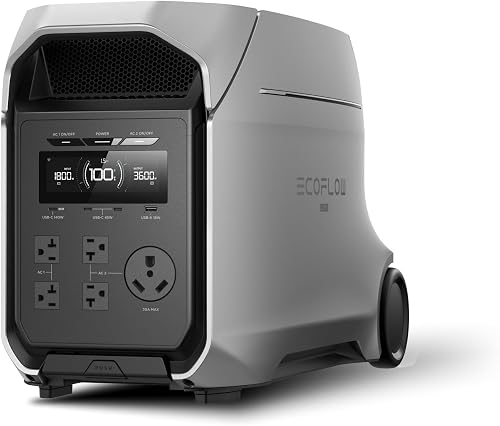
A 3,072Wh reserve with 3,600W of AC output for serious outages, campsites and mobile power.
We may earn a commission from product links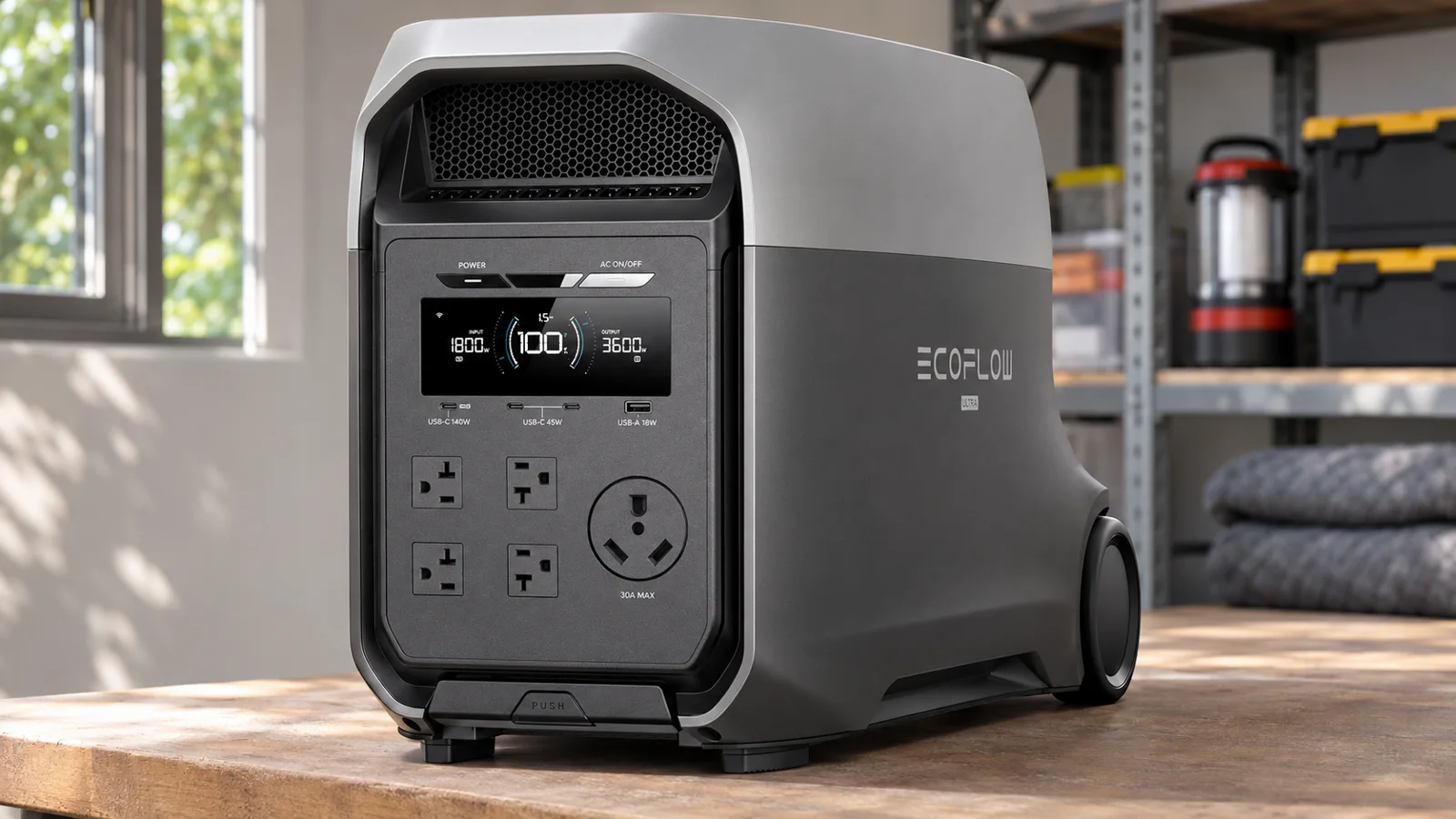

- Capacity
- 3,072 Wh
- Rated output
- 3,600 W
- Chemistry
- See listing
- Value for its size
- Good value
- Amazon rating
- 4.6 / 5
- Buyer ratings
- 171
Specifications as stated in the Amazon listing. Check current details before buying.
How the score is calculated
This spec- and buyer-rating-based score is not a measure of independently measured performance. Value: Excellent 3, Good 2.2, Fair 1.4, Premium 0.6 points. Amazon rating: 4.0 earns 0, 5.0 earns 2.5, proportional in between. Rating volume: 1.5 × ln(1 + ratings) / ln(5,001), capped at 1.5. Output: 1.5 × rated W / Wh, capped at 1.5; unknown output earns 0.75. Stated LiFePO4: 1 point. Stated cycles, weight and solar input: 0.5/3 each, rounded together to three decimals. Missing value, rating, volume or listing details earn 0 for that criterion. The total is rounded to one decimal.
Read our full ranking methodologyThe short verdict
The EcoFlow Delta 3 Ultra is a strong fit when you need substantial energy storage and enough AC output for demanding appliances. Its Good value rating for this size class and 4.6-out-of-5 Amazon rating from 171 ratings make it compelling, although buyers should confirm the exact port layout and solar-input compatibility before ordering.
Pros
- Large 3,072Wh capacity for extended outages and off-grid trips
- 3,600W rated AC output handles demanding household appliances
- Useful projected runtimes for refrigerators, CPAP equipment, networking and entertainment
- Good value for its size class
- Strong 4.6-out-of-5 Amazon rating from 171 ratings
Cons
- Its large capacity puts it in a substantial, less grab-and-go size class
- The coffee maker, microwave and space-heater runtimes are measured in hours, not days
- Confirm the port layout and solar-input compatibility before ordering
Best for
- Homeowners who want several hours of refrigerator and Wi-Fi backup
- Campers and van owners who need multi-day device and appliance power
- CPAP users who want a large overnight energy buffer
Look elsewhere if
- Shoppers seeking a compact, lightweight power station for occasional phone charging
- Buyers who need documented solar-input numbers or a detailed port list before purchase
Full specifications
| Capacity | 3,072 Wh |
|---|---|
| Rated AC output | 3,600 W |
| LiFePO4 stated | See listing |
| Charge cycles | See listing |
| Weight | See listing |
| Solar input | See listing |
| Value for its size | Good value |
Specifications as stated in the Amazon listing. Cycle-life conditions and solar compatibility vary; see the listing.
What can it power?
Choose your devices and daily run time. Battery capacity needed = watts × hours ÷ 0.85. Peak running watts assumes all selected devices run at once.
These are planning estimates, not measured runtimes. Appliance startup surges, fridge duty cycles, CPAP humidifiers and charging losses can change demand. Check your device label and the listing’s surge limit.
Runtime reference · 3,072 Wh at 85% usable energy
| Device | Running watts | Estimated hours |
|---|---|---|
| Phone | 15 W | 174.1 |
| Laptop | 60 W | 43.5 |
| Router | 40 W | 65.3 |
| CPAP | 45 W | 58.0 |
| Mini fridge | 50 W | 52.2 |
| Full fridge | 150 W | 17.4 |
| TV | 100 W | 26.1 |
| LED lights | 20 W | 130.6 |
| Coffee maker | 900 W | 2.9 |
| Microwave | 1000 W | 2.6 |
| Space heater | 750 W | 3.5 |
| E-bike charger | 500 W | 5.2 |
| Drill | 600 W | 4.4 |
Runtime estimates
Estimated usable energy is 85% of rated capacity. Actual runtime varies with load, temperature and battery age. See the device reference above for calculated estimates.
| Device | Estimated runtime |
|---|---|
| Phone charge (15 W) | 174 h |
| Laptop (60 W) | 44 h |
| LED lights + Wi-Fi router (40 W) | 65 h |
| CPAP, heated humidifier (45 W avg) | 58 h |
| Mini fridge/cooler (50 W avg) | 52 h |
| Full-size fridge (150 W avg) | 17 h |
| 55-inch TV (100 W) | 26 h |
| Drip coffee maker (900 W) | 2.9 h |
| Microwave (1,000 W) | 2.6 h |
| Space heater, low (750 W) | 3.5 h |
A blackout starts with small inconveniences: the Wi-Fi router drops, the refrigerator goes quiet, and the phone battery starts its fast slide toward zero. Then the coffee maker, microwave or CPAP machine turns backup power into a real capacity question. The EcoFlow Delta 3 Ultra is built for that bigger question. With 3,072 Wh of stored energy and 3,600 W of rated AC output, it has the reserve for extended essentials rather than just emergency phone charging.
This is a large portable power station aimed at home backup, camping, RV and van use, and emergency preparedness. Its projected runtimes cover everything from 174 hours of phone charging to 17 hours for a full-size refrigerator. EcoFlow also positions it as a solar generator, while its value rating is Good for the 3,072 Wh class. Check the current price on Amazon, then compare the power needs of your must-run devices with the figures below.
Who the EcoFlow Delta 3 Ultra Is Really For
The Delta 3 Ultra makes sense for people planning around interruptions that last longer than an afternoon. During a blackout, its 3,072 Wh reservoir can keep a full-size refrigerator running for a projected 17 hours, while a refrigerator or cooler is estimated at 52 hours. Add a router and LED lights, and the combined setup is projected at 65 hours. Those are the kinds of loads that make a large station worthwhile: food preservation, communications, lighting and a little comfort.
It also suits campsite and van-life routines where several devices share one energy reserve. A laptop has a projected 44 hours, a 55-inch TV 26 hours, and a CPAP with heated humidifier 58 hours. That gives a CPAP user considerable breathing room for overnight use and travel delays. The trade-off is scale. A 3,072 Wh station is far beyond the casual weekend phone charger, and the capacity implies a substantial unit to transport. For smaller loads, a compact station will be easier to handle. For an outage kit or appliance-heavy base camp, the Delta 3 Ultra’s reserve is the point.
3,072Wh Capacity, 3,600W Output: What Can It Run?
The central specification is the combination of 3,072 Wh capacity and 3,600 W rated AC output. Capacity determines how long your devices can run; output determines whether the station can power a device in the first place. In practical terms, that output rating gives this model a serious appliance brief, including a microwave, drip coffee maker and low space heater. Actual runtime varies with cycling, thermostat behavior and the device’s real draw.
| Load | Projected runtime |
|---|---|
| Phone charge | 174 hours |
| Laptop | 44 hours |
| LED lights + Wi-Fi router | 65 hours |
| CPAP with heated humidifier | 58 hours |
| Mini fridge/cooler | 52 hours |
| Full-size fridge | 17 hours |
| 55-inch TV | 26 hours |
| Drip coffee maker | 2.9 hours |
| Microwave | 2.6 hours |
| Space heater, low | 3.5 hours |
These estimates use 85% usable efficiency. High-wattage heating and cooking devices drain the battery quickly, while networking, lighting and electronics stretch the stored energy much further.
Features and Ports: What Matters in Daily Use
The most important practical feature here is scale. A 3,072 Wh energy reserve changes how you plan a trip or outage. Instead of choosing one phone, one light or one appliance at a time, you can build a small priority circuit around refrigeration, communications and medical equipment. The 3,600 W AC rating also gives the Delta 3 Ultra room for higher-demand household devices that smaller stations may not support.
EcoFlow identifies this model for home use, power outages, camping, RVs and emergencies, and describes it as a solar generator. That broad positioning matches the capacity: it can serve as a central power source at a campsite or a backup reserve in a utility room. The buying decision still comes down to the connections you need. Confirm the port layout on the Amazon page before ordering, especially if you plan to power a CPAP, refrigerator, microwave or a mixed group of AC and personal electronics. Also confirm that the included or compatible connections suit your US setup. The energy and output figures are impressive, but convenience depends on having the right outlets and charging connections for your gear.
Charging, Solar and Long-Term Ownership
Charging strategy matters more with a station this large. A 3,072 Wh battery can support long runtimes, but replacing that energy also requires a suitable charging setup and enough time. Wall charging is the straightforward option for preparing before a storm or leaving for a trip. For longer off-grid stays, solar charging can reduce dependence on a wall outlet, and EcoFlow positions the Delta 3 Ultra as a solar generator.
Solar performance depends on panel wattage, sunlight, temperature, wiring and the station’s input limits. Those details determine whether recovery takes part of a day or much longer, so confirm the solar-input specifications and compatible accessories on Amazon before building a panel setup. Do not assume that a larger battery automatically charges quickly from any panel. The same principle applies to appliances: the 85% runtime figures already account for normal conversion losses, but motors, compressors and thermostats can change real-world results.
For ownership, the sensible approach is to reserve the station for priority loads, keep a charging plan for storm season and identify the startup needs of refrigerator or pump motors in advance. A large reserve is most useful when you know which devices matter first.
How It Stacks Up Against Similar-Size Alternatives
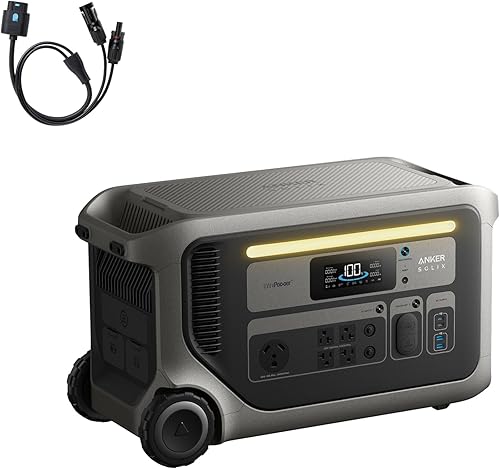
The Delta 3 Ultra sits in a crowded 3,072 Wh class, so its 3,600 W AC output is an important differentiator. The Anker SOLIX F3000 matches the 3,072 Wh capacity and carries a Premium price label. The Jackery HomePower 3000 also matches 3,072 Wh and is rated Good value, making it a direct comparison for buyers prioritizing a familiar capacity tier.
The EcoFlow DELTA 3 Ultra Plus matches the same 3,072 Wh capacity but carries a Fair value label, while the DABBSSON 3000L matches the capacity with an Excellent value label. Those alternatives may appeal if value ranking matters more than the Delta 3 Ultra’s stated output figure. Stepping up in stored energy, the Jackery HomePower 3600 Plus offers 3,584 Wh and carries a Premium price label. That is only 512 Wh more capacity, so compare the extra reserve with the specific output and connectivity you need.
For this model, the case is straightforward: substantial storage, strong AC output and Good value in its class.
Frequently asked questions
How long can the EcoFlow Delta 3 Ultra run a refrigerator?
The projected runtime is 17 hours for a full-size refrigerator and 52 hours for a mini fridge or cooler. Refrigerator compressors cycle rather than drawing their maximum continuously, so actual results depend on temperature, ventilation, door openings and the appliance's real energy use.
Can the Delta 3 Ultra run a microwave?
Yes, its 3,600W rated AC output is designed for demanding appliances, and the projected microwave runtime is 2.6 hours. That is cumulative operating time, not several hours of continuous cooking. Short heating cycles can therefore cover many meals during an outage.
Is it suitable for CPAP use?
The projected runtime for a CPAP with heated humidifier is 58 hours. That gives a substantial overnight buffer, but your machine's settings and accessories affect consumption. Confirm that the available connections match your CPAP power arrangement before ordering.
Does the EcoFlow Delta 3 Ultra support solar charging?
EcoFlow positions it as a solar generator, making solar charging part of its intended use. Solar recovery depends on panel wattage, sunlight and the station's input limits. Confirm the compatible panels, solar-input rating and required cables on Amazon before purchasing a solar setup.
Is the Delta 3 Ultra good for home backup?
It is a strong fit for priority backup loads such as refrigeration, Wi-Fi, lighting, phones, laptops and medical equipment. The 3,072Wh capacity provides meaningful endurance, while the 3,600W AC output supports larger appliances. It is not a whole-home replacement for every circuit or load.