EcoFlow · Spec-based review
EcoFlow DELTA Pro Ultra: Serious Whole-Home Backup
A 6,144Wh battery and 7,200W output built for demanding home backup.
We may earn a commission from product links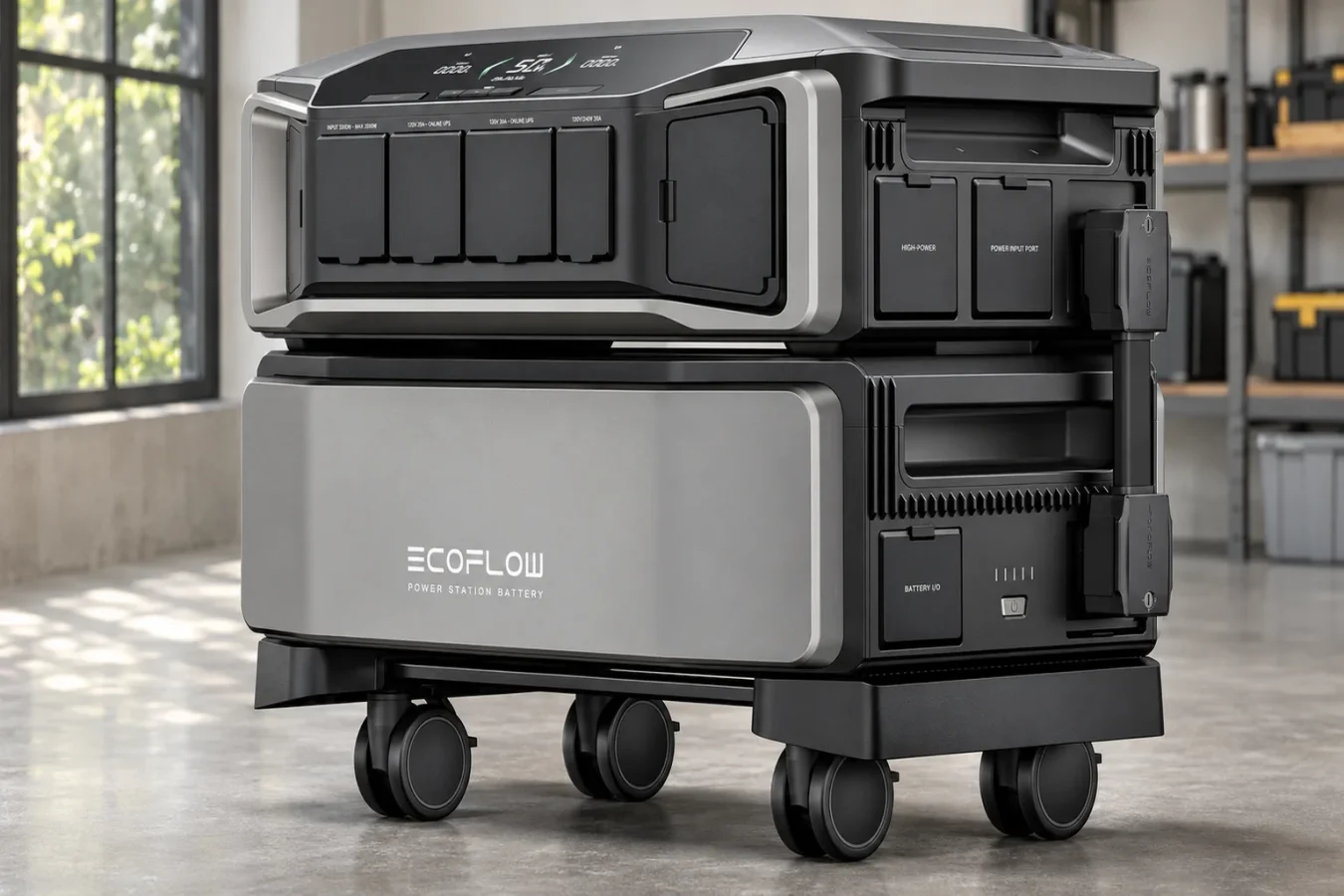

- Capacity
- 6,144 Wh
- Rated output
- 7,200 W
- Chemistry
- See listing
- Value for its size
- Premium price
- Amazon rating
- 4.1 / 5
- Buyer ratings
- 376
Specifications as stated in the Amazon listing. Check current details before buying.
How the score is calculated
This spec- and buyer-rating-based score is not a measure of independently measured performance. Value: Excellent 3, Good 2.2, Fair 1.4, Premium 0.6 points. Amazon rating: 4.0 earns 0, 5.0 earns 2.5, proportional in between. Rating volume: 1.5 × ln(1 + ratings) / ln(5,001), capped at 1.5. Output: 1.5 × rated W / Wh, capped at 1.5; unknown output earns 0.75. Stated LiFePO4: 1 point. Stated cycles, weight and solar input: 0.5/3 each, rounded together to three decimals. Missing value, rating, volume or listing details earn 0 for that criterion. The total is rounded to one decimal.
Read our full ranking methodologyThe short verdict
The EcoFlow DELTA Pro Ultra is a high-capacity backup system for households that need more than phone charging and a few lights. Its 120/240V, 7,200W output and expandable design are compelling, but its Premium price and 4.1-star rating make it a deliberate investment rather than an automatic recommendation.
Pros
- Large 6,144Wh battery for extended essential-load backup
- 7,200W AC output with 120V and 240V capability
- Can scale from one battery to as much as 90kWh
- Online UPS protection with a claimed 0ms transfer time
- Multiple charging paths, including wall, solar, EV charging and generators
Cons
- Premium price for its size class
- Large capacity makes it a substantial choice for casual camping
- 4.1 out of 5 stars from 376 Amazon ratings is solid but not exceptional
Best for
- Homeowners who need powerful blackout backup
- Families running refrigerators, communications and medical equipment
- Van and job-site users who value substantial energy reserves
Look elsewhere if
- Campers who only need compact, occasional power
- Shoppers seeking the strongest value per watt-hour
Full specifications
| Capacity | 6,144 Wh |
|---|---|
| Rated AC output | 7,200 W |
| LiFePO4 stated | See listing |
| Charge cycles | See listing |
| Weight | See listing |
| Solar input | See listing |
| Value for its size | Premium price |
Specifications as stated in the Amazon listing. Cycle-life conditions and solar compatibility vary; see the listing.
What can it power?
Choose your devices and daily run time. Battery capacity needed = watts × hours ÷ 0.85. Peak running watts assumes all selected devices run at once.
These are planning estimates, not measured runtimes. Appliance startup surges, fridge duty cycles, CPAP humidifiers and charging losses can change demand. Check your device label and the listing’s surge limit.
Runtime reference · 6,144 Wh at 85% usable energy
| Device | Running watts | Estimated hours |
|---|---|---|
| Phone | 15 W | 348.2 |
| Laptop | 60 W | 87.0 |
| Router | 40 W | 130.6 |
| CPAP | 45 W | 116.1 |
| Mini fridge | 50 W | 104.4 |
| Full fridge | 150 W | 34.8 |
| TV | 100 W | 52.2 |
| LED lights | 20 W | 261.1 |
| Coffee maker | 900 W | 5.8 |
| Microwave | 1000 W | 5.2 |
| Space heater | 750 W | 7.0 |
| E-bike charger | 500 W | 10.4 |
| Drill | 600 W | 8.7 |
Runtime estimates
Estimated usable energy is 85% of rated capacity. Actual runtime varies with load, temperature and battery age. See the device reference above for calculated estimates.
| Device | Estimated runtime |
|---|---|
| Phone charge (15 W) | 348 h |
| Laptop (60 W) | 87 h |
| LED lights + Wi-Fi router (40 W) | 131 h |
| CPAP, heated humidifier (45 W avg) | 116 h |
| Mini fridge/cooler (50 W avg) | 104 h |
| Full-size fridge (150 W avg) | 35 h |
| 55-inch TV (100 W) | 52 h |
| Drip coffee maker (900 W) | 5.8 h |
| Microwave (1,000 W) | 5.2 h |
| Space heater, low (750 W) | 7.0 h |
When a storm knocks out power, the useful question is not whether a battery can charge your phone. It is whether the refrigerator stays cold, the Wi-Fi stays alive, the CPAP runs through the night and the coffee maker still works in the morning. The EcoFlow DELTA Pro Ultra is aimed at that larger problem. Its 6,144 Wh capacity gives it a deep reserve, while its 7,200 W AC output is designed for demanding household equipment.
This is a serious home-backup platform rather than a small campsite companion. It combines an inverter and battery in one unit, supports 120V and 240V output, and can expand from a single 6kWh battery to as much as 90kWh. The 4.1-star Amazon rating from 376 ratings offers useful buyer perspective, while its Premium price for the size class means you should check the current price on Amazon before ordering.
Who the EcoFlow DELTA Pro Ultra Is Really For
The DELTA Pro Ultra makes the most sense for people planning around outages, not just looking for occasional portable power. A homeowner can use it for essential circuits during a blackout, with enough output headroom for major appliances and enough stored energy for extended interruptions. It also fits a prepared household that wants quiet, indoor-friendly backup instead of relying exclusively on a fuel-burning generator.
Its scale is useful for hurricane season, winter storms and areas with unreliable grid service. A CPAP user can plan around overnight operation, while a family can keep refrigeration, lighting, networking and entertainment going at the same time. It is also relevant to van builds, demanding job sites and remote work setups where a large energy reserve matters more than a featherweight package.
This is not the natural choice for a weekend camper who only needs a cooler, lights and device charging. Smaller units are easier to justify for light loads. The DELTA Pro Ultra earns its place when the backup plan includes high-wattage appliances, multiple people or several days of essential usage.
6,144Wh Capacity, 7,200W Output and What It Can Run
The headline combination is substantial: 6,144 Wh of stored energy and 7,200 W of rated AC output. That output, with 120V and 240V support, gives the system a wide operating range for household equipment. Actual runtime depends on the appliance’s draw, conversion losses and cycling behavior. The estimates below use 85% usable efficiency and represent continuous equivalent use from full to empty.
| Load | Estimated runtime |
|---|---|
| CPAP with heated humidifier | 116 hours |
| LED lights and Wi-Fi router | 131 hours |
| Full-size refrigerator | 35 hours |
| 55-inch TV | 52 hours |
| Drip coffee maker | 5.8 hours |
| Microwave | 5.2 hours |
| Space heater, low | 7.0 hours |
Those figures show the trade-off clearly. A fridge cycles, so real calendar time can exceed its equivalent runtime, while a heater consumes energy quickly. Phone charging is estimated at 348 hours and laptop use at 87 hours, making this far more energy than most personal electronics require.
Features, Ports and Everyday Power Management
The central feature is the integrated inverter-and-battery design. One inverter supports both 120V and 240V and delivers 7,200 W of AC output, a combination aimed at heavy household appliances rather than only low-draw electronics. That makes the unit relevant to whole-home essential-load planning, although the exact circuits and installation approach should be handled according to local electrical requirements.
EcoFlow also describes an online UPS with a claimed 0ms transfer time. In practical terms, that is intended to keep sensitive electronics protected during disturbances or grid failure without a noticeable interruption. For a home office, networking equipment or other always-on electronics, that is a more purposeful feature than simply having an AC outlet available.
The EcoFlow app can prioritize specific home circuits and analyze power usage. That lets owners concentrate stored energy on essentials instead of spending it indiscriminately. The system also has a quiet operating detail: all fans remain off for the first half hour while outputting 2,000 W. Confirm the port layout and circuit-integration requirements on the Amazon page before ordering.
Charging, Solar and Long-Term Ownership
EcoFlow lists several charging routes: wall outlets, solar, electric-vehicle charging equipment and outdoor generators. A single 6kWh battery is stated to recharge fully in two hours under the company’s specified charging conditions. That is useful after an outage if grid power returns briefly, and it gives users more than one way to replenish the system away from home.
Solar is part of the broader charging approach, but charging speed depends on available sunlight, panel configuration and the system’s accepted input. There is no sensible universal solar runtime or recharge promise without those variables. For emergency planning, treat solar as a way to extend independence rather than assume it will restore a depleted battery on a fixed schedule.
The expandable architecture is the larger ownership story. One battery starts at 6kWh, while the platform can scale to 15 batteries and 90kWh. That creates a path from occasional outage backup to a much deeper household reserve. The trade-off is commitment: a system this large deserves a clear load plan, appropriate storage space and a realistic decision about which circuits truly need backup.
How It Stacks Up Against the Alternatives
The closest alternatives vary considerably in capacity. The Jackery Explorer 5000 Plus offers 5,040 Wh and carries a Premium price label, so the DELTA Pro Ultra brings more stored energy and higher listed AC output at 6,144 Wh and 7,200 W. For a smaller step down, the AFERIY P310 3840 Wh provides 3,840 Wh and Excellent value, while the EcoFlow DELTA Pro offers 3,600 Wh with Fair value.
The Growatt Helios 3600 also has 3,600 Wh and Good value, making it a more economical capacity class for buyers whose loads do not justify a 6kWh platform. The Jackery HomePower 3600 Plus comes in at 3,584 Wh and Premium price, so its appeal depends on its own feature set and current Amazon pricing.
In short, the DELTA Pro Ultra is the heavyweight option here. Its advantage is reserve and output, not bargain value. Buyers focused on extended outages should compare it with the larger Jackery; buyers focused on value should examine the AFERIY or Growatt alternatives and check the current price on Amazon.
Frequently asked questions
Can the EcoFlow DELTA Pro Ultra run a refrigerator during a blackout?
Yes, its 6,144Wh capacity is suited to refrigerator backup, and the estimated equivalent runtime for a full-size refrigerator is 35 hours. Because refrigerators cycle rather than draw continuously, calendar time can vary. Keep other loads, startup behavior and any home circuit requirements in the plan.
Can it power 240V appliances?
The DELTA Pro Ultra is listed with 120V and 240V support and a rated AC output of 7,200W. That makes it relevant to larger household equipment. Confirm the exact connection method, circuit requirements and appliance compatibility before using it as part of a home backup setup.
How long can it run a CPAP machine?
The estimated runtime for a CPAP with a heated humidifier is 116 hours, using 85% usable efficiency. Actual duration varies with pressure settings, humidifier use and other connected loads. A CPAP user should reserve capacity for a full night rather than planning around a bare minimum.
Does the DELTA Pro Ultra support solar charging?
Solar charging is included among the listed charging options. Actual recharge time depends on sunlight, panel arrangement and accepted input. The platform can also charge from wall outlets, electric-vehicle charging equipment and outdoor generators, giving outage planners several replenishment options.
Can the battery capacity be expanded?
Yes. The system is described as scalable from one 6kWh battery to 15 batteries, reaching as much as 90kWh. That expansion potential is useful for longer outages and larger essential-load plans, but it also makes careful load selection and installation planning increasingly important.


