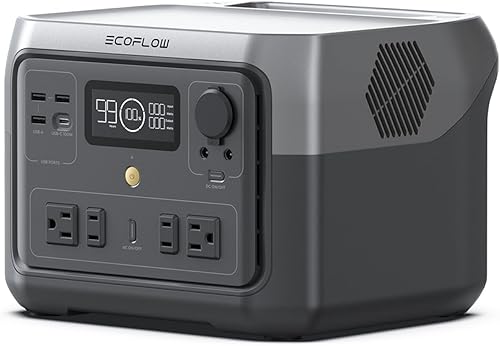
EcoFlow · Spec-based review
EcoFlow River 3 Max: Compact Power for Outages and Campsites
A 572Wh LiFePO4 power station with 990W AC output and unusually fast UPS switching.
We may earn a commission from product links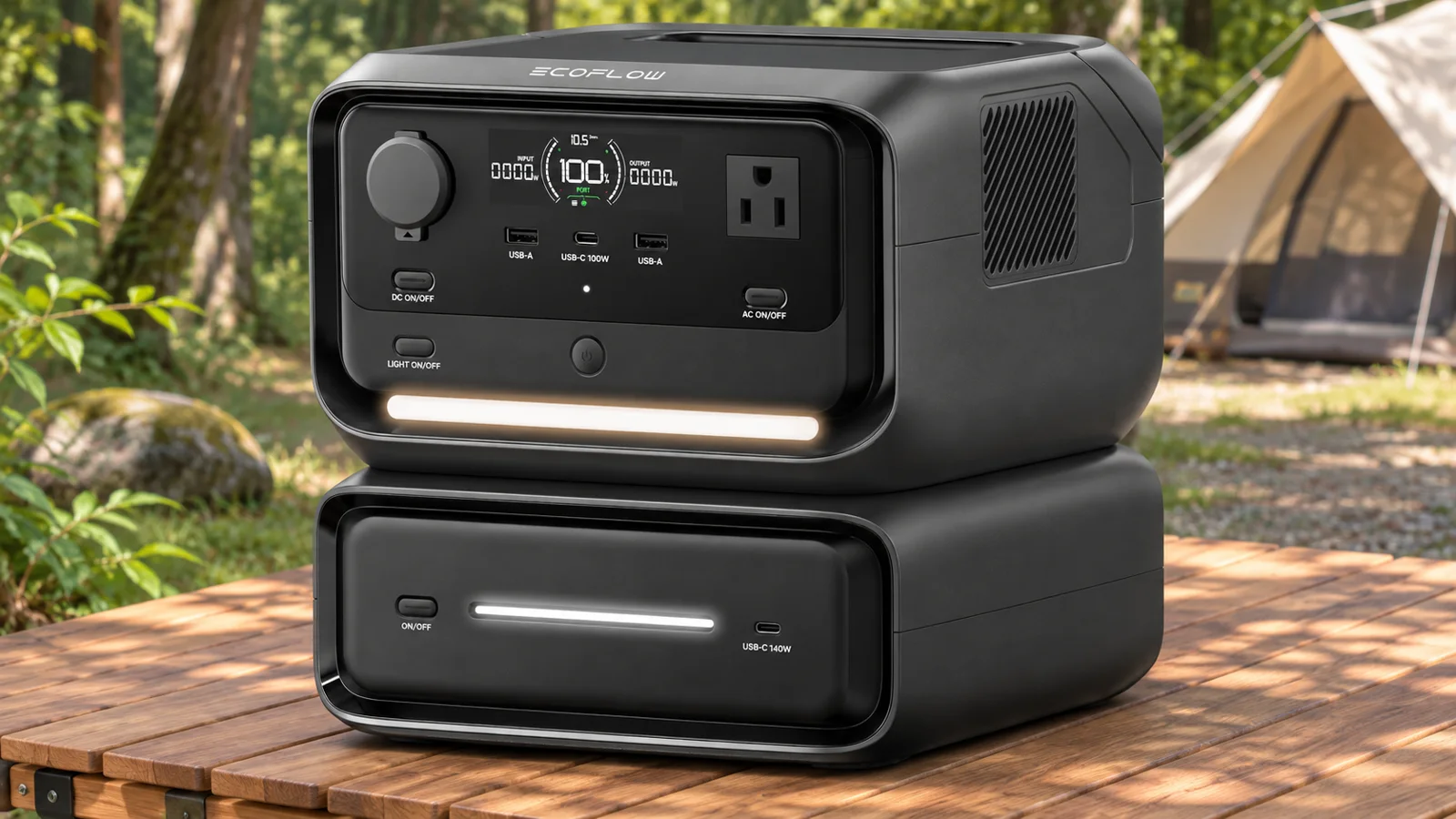

- Capacity
- 572 Wh
- Rated output
- 990 W
- Chemistry
- See listing
- Value for its size
- Good value
- Amazon rating
- 4.5 / 5
- Buyer ratings
- 31
Specifications as stated in the Amazon listing. Check current details before buying.
How the score is calculated
This spec- and buyer-rating-based score is not a measure of independently measured performance. Value: Excellent 3, Good 2.2, Fair 1.4, Premium 0.6 points. Amazon rating: 4.0 earns 0, 5.0 earns 2.5, proportional in between. Rating volume: 1.5 × ln(1 + ratings) / ln(5,001), capped at 1.5. Output: 1.5 × rated W / Wh, capped at 1.5; unknown output earns 0.75. Stated LiFePO4: 1 point. Stated cycles, weight and solar input: 0.5/3 each, rounded together to three decimals. Missing value, rating, volume or listing details earn 0 for that criterion. The total is rounded to one decimal.
Read our full ranking methodologyThe short verdict
The EcoFlow River 3 Max is a well-rounded mid-size power station for camping, CPAP nights, home-office backup and short outages. Its 572Wh capacity, 990W rated AC output, fast charging and LiFePO4 battery make it versatile, while the 4.5-star Amazon rating from 31 ratings supports its appeal. Check the current price on Amazon.
Pros
- Useful 572Wh capacity without stepping into a large home-backup unit
- 990W rated AC output handles many everyday devices
- LiFePO4 battery rated for 3,000 charge cycles
- Sub-10ms UPS switching is valuable for computers and networking gear
- Good value for its size class
Cons
- A space heater drains the battery in about 39 minutes at low power
- Full-size refrigerator runtime is only about 3.2 hours
- Amazon rating is based on 31 ratings, a relatively small sample
Best for
- Weekend campers who need laptop, lighting and cooler power
- Home-office users who want sub-10ms UPS protection
- CPAP owners planning overnight backup during outages
Look elsewhere if
- Households needing multi-day refrigerator or heating backup
- Users who need high-power appliances running for several hours
Full specifications
| Capacity | 572 Wh |
|---|---|
| Rated AC output | 990 W |
| LiFePO4 stated | See listing |
| Charge cycles | See listing |
| Weight | 9.9 lb |
| Solar input | 220 W |
| Value for its size | Good value |
Specifications as stated in the Amazon listing. Cycle-life conditions and solar compatibility vary; see the listing.
What can it power?
Choose your devices and daily run time. Battery capacity needed = watts × hours ÷ 0.85. Peak running watts assumes all selected devices run at once.
These are planning estimates, not measured runtimes. Appliance startup surges, fridge duty cycles, CPAP humidifiers and charging losses can change demand. Check your device label and the listing’s surge limit.
Runtime reference · 572 Wh at 85% usable energy
| Device | Running watts | Estimated hours |
|---|---|---|
| Phone | 15 W | 32.4 |
| Laptop | 60 W | 8.1 |
| Router | 40 W | 12.2 |
| CPAP | 45 W | 10.8 |
| Mini fridge | 50 W | 9.7 |
| Full fridge | 150 W | 3.2 |
| TV | 100 W | 4.9 |
| LED lights | 20 W | 24.3 |
| Coffee maker | 900 W | 0.5 |
| Microwave | 1000 W | Exceeds rated output |
| Space heater | 750 W | 0.6 |
| E-bike charger | 500 W | 1.0 |
| Drill | 600 W | 0.8 |
Runtime estimates
Estimated usable energy is 85% of rated capacity. Actual runtime varies with load, temperature and battery age. See the device reference above for calculated estimates.
| Device | Estimated runtime |
|---|---|
| Phone charge (15 W) | 32 h |
| Laptop (60 W) | 8.1 h |
| LED lights + Wi-Fi router (40 W) | 12 h |
| CPAP, heated humidifier (45 W avg) | 11 h |
| Mini fridge/cooler (50 W avg) | 9.7 h |
| Full-size fridge (150 W avg) | 3.2 h |
| 55-inch TV (100 W) | 4.9 h |
| Drip coffee maker (900 W) | 32 min |
| Space heater, low (750 W) | 39 min |
A summer blackout hits just as the storm rolls in. The River 3 Max can keep a Wi-Fi router and LED lights running for about 12 hours, give a CPAP with heated humidifier roughly 11 hours, or keep a laptop going for about 8.1 hours. That is the sweet spot for a compact emergency unit: enough energy to make an uncomfortable night manageable, without moving into the largest and least convenient class of power stations.
The EcoFlow River 3 Max stores 572 Wh and delivers 990 W of rated AC output. It combines a LiFePO4 battery, sub-10ms UPS switching, app connectivity and a seven-outlet configuration. The result is a flexible station for campsites, van weekends, job-site electronics and short home power interruptions.
Who the EcoFlow River 3 Max Is Really For
This is a strong fit for people who want one portable unit to cover several modest-power jobs. Weekend campers can run lights, phones, laptops and a small cooler without reaching for a gas generator. Remote workers get a useful buffer for a router and computer, and the UPS function adds protection against a sudden interruption. The sub-10ms switching figure is especially relevant when a desktop, monitor or networking setup needs time to save work and stay connected.
It also makes sense for CPAP users. The estimated runtime for a CPAP and heated humidifier is about 11 hours, enough to cover a typical night on paper, though actual results vary with pressure, humidifier settings and inverter losses. During a blackout, the River 3 Max is best viewed as a targeted backup for essential electronics rather than a whole-home power source. Its 572 Wh capacity is substantial for portable use, but it is not designed to run electric heating or major kitchen appliances for long.
Capacity, Output and What It Can Run
The 572 Wh battery gives the River 3 Max useful endurance, while the 990 W rated AC output covers many devices that are too demanding for small phone-sized power banks. Runtime estimates below use 85% usable efficiency, so they are practical planning figures rather than wall-outlet guarantees.
| Device | Estimated runtime |
|---|---|
| Phone charge | 32 hours |
| Laptop | 8.1 hours |
| LED lights and Wi-Fi router | 12 hours |
| CPAP with heated humidifier | 11 hours |
| Mini fridge or cooler | 9.7 hours |
| Full-size refrigerator | 3.2 hours |
| 55-inch TV | 4.9 hours |
| Drip coffee maker | 32 minutes |
| Space heater on low | 39 minutes |
Those numbers show the trade-off clearly. Electronics and lighting are excellent matches. Refrigeration is possible, but compressor cycling makes real duration variable. High-draw heat-producing appliances consume the stored energy quickly, even when their running wattage is within the station’s output rating.
Features and Ports That Matter in Practice
The River 3 Max offers seven power connections: three AC outlets with UPS compatibility, two USB-A ports, a high-speed USB-C output and a car-charger output. That arrangement covers the usual campsite and blackout kit: phones, tablets, laptops, lights, routers, camera batteries and selected small appliances. The 990 W AC rating gives it more headroom than many entry-level stations, but motor startup surges and appliance-specific requirements still deserve attention before connecting a device.
UPS switching under 10ms is the standout feature for a home office or network corner. It is designed to transfer quickly enough to help keep connected equipment operating through a brief interruption. Bluetooth and Wi-Fi support allow remote control through the EcoFlow app, including charging options, speed control and scheduled charging. The unit is also specified to operate at about 30dB, a useful characteristic beside a bed or desk.
The LiFePO4 chemistry is another practical advantage. It is rated for 3,000 charge cycles before reaching 80% capacity, giving frequent users a stronger long-term ownership case than a station intended only for occasional emergencies.
Charging, Solar and Long-Term Ownership
AC charging is listed at 0% to 100% in one hour, which is a major convenience after an outage or before leaving for a weekend trip. Fast replenishment matters because a power station is only useful when it is ready to go. If you use it for a laptop-and-router setup during a daytime interruption, a short charging window can restore the reserve quickly once grid power returns.
The battery uses LiFePO4 cells and carries a 3,000-cycle rating to 80% capacity. For occasional emergency use, that is more endurance than most owners will consume quickly. For regular camping, van use or job-site electronics, it supports a much more active charging routine. The stated IP54 battery protection provides some resistance to dust and water exposure, but sensible placement away from rain and standing water remains important.
Solar charging is part of the River 3 family feature set, but panel compatibility and charging performance depend on the exact configuration. Confirm the charging inputs and port layout on the Amazon page before ordering. Wi-Fi and Bluetooth control add useful visibility when the station is stored or operating across a room.
How It Stacks Up Against the Alternatives
The River 3 Max lands in a competitive middle ground. The EcoFlow River 2 Max 500 offers 499 Wh and is rated Excellent value, so it is the simpler choice if you can accept less stored energy. The EcoFlow River 2 Pro steps up to 768 Wh, but carries a Premium price label and is better suited to longer refrigeration or appliance demands. Check the current price on Amazon for each model before deciding.
Several smaller options trade endurance for a lighter-duty role. The MARBERO 296 Wh 350 W is rated Excellent value, while the Jackery Explorer 300 provides 292 Wh and is rated Fair value. Both are more focused on phones, lights and smaller electronics than the River 3 Max. The Anker SOLIX C300 has 288 Wh and a Premium price label, making the EcoFlow’s 572 Wh capacity especially compelling when runtime matters.
The River 3 Max’s 990 W output also separates it from these smaller-capacity choices. It will not turn a portable station into a whole-home generator, but it gives more flexibility for a TV, refrigerator, coffee maker or other moderate-load device. Its best balance is capacity, output, UPS behavior and battery longevity rather than maximum backup duration.
Frequently asked questions
How long can the EcoFlow River 3 Max run a CPAP?
The estimated runtime for a CPAP with heated humidifier is about 11 hours, using 85% usable battery efficiency. Actual duration depends on pressure settings, humidifier demand and whether the CPAP is connected through AC power or another output.
Can the River 3 Max run a refrigerator during a blackout?
Yes, within its output limits, but duration varies with compressor cycling and startup demand. The estimated runtime is about 9.7 hours for a mini fridge or cooler and about 3.2 hours for a full-size refrigerator.
Is the EcoFlow River 3 Max suitable for a home office?
Yes. It offers sub-10ms UPS switching, 990W rated AC output and enough capacity for a laptop, router and LED lighting. The estimated laptop runtime is about 8.1 hours, while laptop-and-router setups vary with actual power draw.
How quickly does the River 3 Max charge?
AC charging is specified from 0% to 100% in one hour. That fast recharge is useful after a blackout or camping trip. Confirm the charging inputs and compatible accessories on the Amazon page before ordering.
Is the River 3 Max a good value?
It is rated Good value for its size class. The combination of 572Wh capacity, 990W rated output, LiFePO4 chemistry, UPS switching and app control gives it a broad feature set. Check the current price on Amazon because value changes with promotions and availability.