EcoFlow · Spec-based review
EcoFlow River 2 Max 500: Compact Power That Lasts
A 499Wh LFP power station with fast charging and enough output for everyday essentials.
We may earn a commission from product links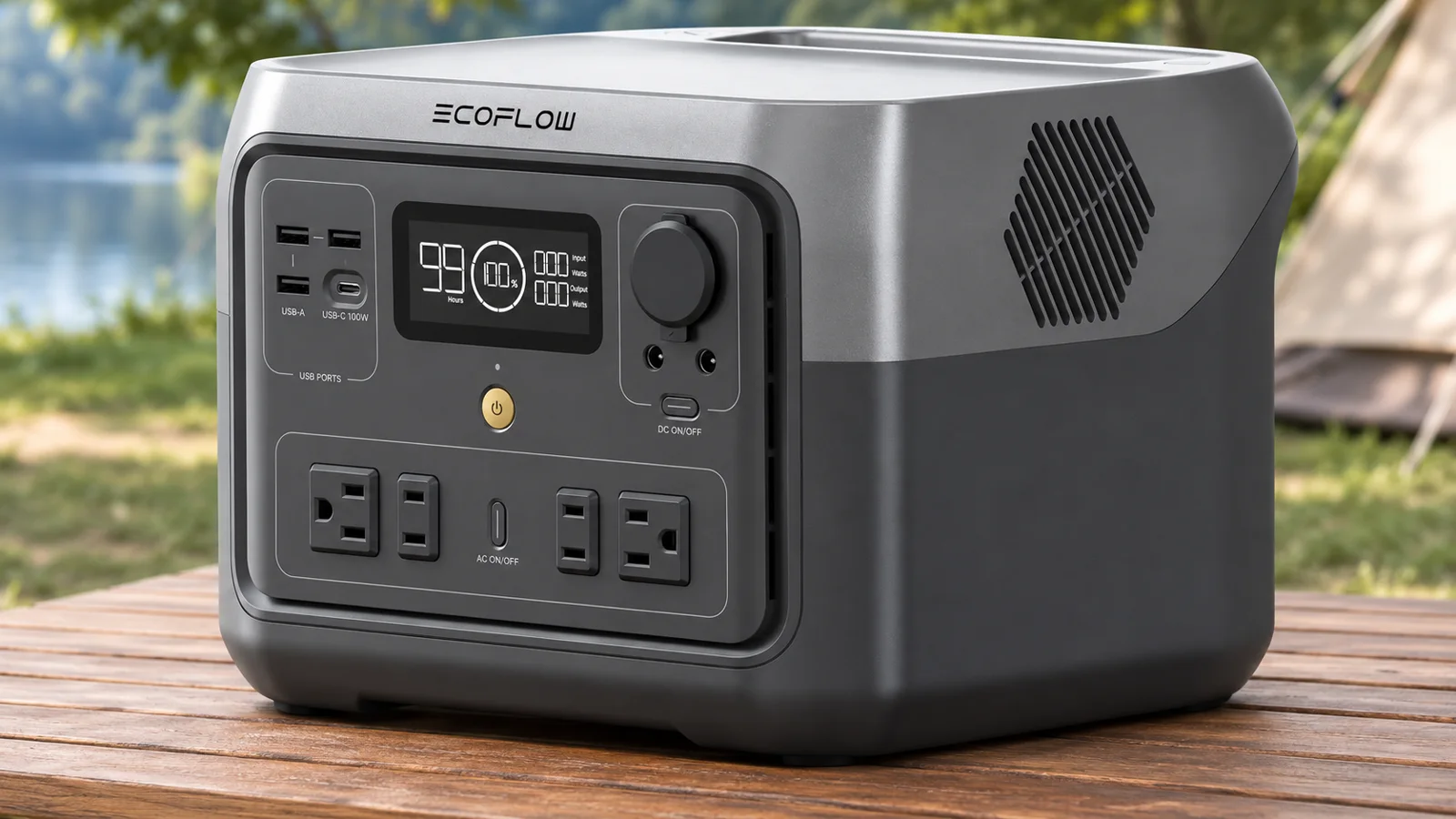
- Capacity
- 499 Wh
- Rated output
- See listing
- Chemistry
- LiFePO4
- Value for its size
- Excellent value
- Amazon rating
- 4.6 / 5
- Buyer ratings
- 1,400
Specifications as stated in the Amazon listing. Check current details before buying.
How the score is calculated
This spec- and buyer-rating-based score is not a measure of independently measured performance. Value: Excellent 3, Good 2.2, Fair 1.4, Premium 0.6 points. Amazon rating: 4.0 earns 0, 5.0 earns 2.5, proportional in between. Rating volume: 1.5 × ln(1 + ratings) / ln(5,001), capped at 1.5. Output: 1.5 × rated W / Wh, capped at 1.5; unknown output earns 0.75. Stated LiFePO4: 1 point. Stated cycles, weight and solar input: 0.5/3 each, rounded together to three decimals. Missing value, rating, volume or listing details earn 0 for that criterion. The total is rounded to one decimal.
Read our full ranking methodologyThe short verdict
The EcoFlow River 2 Max 500 is a well-balanced mid-size power station for camping, short outages, CPAP nights and mobile work. Its 499Wh LiFePO4 battery, up to 1000W output and excellent value for its size class make it especially appealing when you want more endurance than a tiny unit without moving into a much larger class.
Pros
- 499Wh LiFePO4 battery chemistry
- Up to 1000W output for a broad range of essentials
- One-hour AC charging
- Useful runtimes for CPAP, networking and small appliances
- Excellent value for its size class
Cons
- A 499Wh capacity cannot sustain major appliances for long
- High-draw heating and cooking devices quickly drain the battery
- The 4.6 rating is strong, but based on 1,400 ratings rather than a massive review base
Best for
- Weekend campers who need lights, phones, laptops and a cooler covered
- Homeowners who want quiet backup for Wi-Fi, lighting and small essentials
- CPAP users who need a portable overnight power option
Look elsewhere if
- Running high-draw heaters, microwaves or refrigerators for long periods
- Buyers who need whole-home backup or multi-day refrigeration
Full specifications
| Capacity | 499 Wh |
|---|---|
| Rated AC output | See listing |
| LiFePO4 stated | Yes |
| Charge cycles | See listing |
| Weight | 13.2 lb |
| Solar input | 220 W |
| Value for its size | Excellent value |
Specifications as stated in the Amazon listing. Cycle-life conditions and solar compatibility vary; see the listing.
What can it power?
Choose your devices and daily run time. Battery capacity needed = watts × hours ÷ 0.85. Peak running watts assumes all selected devices run at once.
These are planning estimates, not measured runtimes. Appliance startup surges, fridge duty cycles, CPAP humidifiers and charging losses can change demand. Check your device label and the listing’s surge limit.
Runtime reference · 499 Wh at 85% usable energy
| Device | Running watts | Estimated hours |
|---|---|---|
| Phone | 15 W | 28.3 |
| Laptop | 60 W | 7.1 |
| Router | 40 W | 10.6 |
| CPAP | 45 W | 9.4 |
| Mini fridge | 50 W | 8.5 |
| Full fridge | 150 W | 2.8 |
| TV | 100 W | 4.2 |
| LED lights | 20 W | 21.2 |
| Coffee maker | 900 W | 0.5 |
| Microwave | 1000 W | 0.4 |
| Space heater | 750 W | 0.6 |
| E-bike charger | 500 W | 0.8 |
| Drill | 600 W | 0.7 |
Runtime estimates
Estimated usable energy is 85% of rated capacity. Actual runtime varies with load, temperature and battery age. See the device reference above for calculated estimates.
| Device | Estimated runtime |
|---|---|
| Phone charge (15 W) | 28 h |
| Laptop (60 W) | 7.1 h |
| LED lights + Wi-Fi router (40 W) | 11 h |
| CPAP, heated humidifier (45 W avg) | 9.4 h |
| Mini fridge/cooler (50 W avg) | 8.5 h |
| Full-size fridge (150 W avg) | 2.8 h |
| 55-inch TV (100 W) | 4.2 h |
| Drip coffee maker (900 W) | 28 min |
| Microwave (1,000 W) | 25 min |
| Space heater, low (750 W) | 34 min |
A storm knocks out the power at dinner. Your phone is low, the Wi-Fi router is dark, and the refrigerator has started warming. Or you are at a campsite with a laptop, lights and a small cooler to keep alive. The EcoFlow River 2 Max 500 is built for that middle ground: considerably more capable than a pocket-sized battery, but still aimed at portable, everyday backup rather than whole-home power.
It combines a 499 Wh LiFePO4 battery with up to 1000 W of output, USB-C connectivity, AC outlets and a claimed one-hour AC recharge. The result is a flexible power station for short blackouts, weekend trips, van setups and CPAP nights. Its Amazon rating is 4.6 out of 5 from 1,400 ratings, and its value for the size class is Excellent.
Who the EcoFlow River 2 Max 500 Is Really For
This is a strong fit for people who want practical backup without jumping to a bulky, high-capacity system. A 499 Wh station can keep a phone, laptop, lights and networking gear going through a short outage, while also handling a CPAP night or a cooler at camp. It is the sort of capacity that feels useful in a car, tent, RV or home office.
Weekend campers get enough reserve for several small electronics at once. Remote workers can protect a laptop and router during a brief interruption. During hurricane season, it can cover communication essentials and lighting while larger appliances remain off. The up-to-1000 W output also gives it more flexibility than many smaller stations, although the battery still favors short bursts for demanding appliances.
It is not a substitute for a large emergency battery system. A full-size refrigerator, microwave or space heater draws energy quickly. For those jobs, consider a larger option in our home-backup ranking.
Capacity, Output and What It Can Run
The 499 Wh capacity is the key number. Using 85% usable efficiency, runtime is approximately watt-hours multiplied by 0.85, divided by the device’s draw. Real runtime varies with the appliance, but the figures below show how this unit fits common situations:
| Use | Approximate runtime |
|---|---|
| Phone charge | 28 hours |
| Laptop | 7.1 hours |
| LED lights plus Wi-Fi router | 11 hours |
| CPAP with heated humidifier | 9.4 hours |
| Mini fridge or cooler | 8.5 hours |
| Full-size refrigerator | 2.8 hours |
| 55-inch TV | 4.2 hours |
| Drip coffee maker | 28 minutes |
| Microwave | 25 minutes |
| Space heater on low | 34 minutes |
The station can power up to 1000 W, so short appliance bursts are within its intended output range. But output capability is not the same as endurance. Cooking and heating devices consume the battery fast; electronics, lights and medical equipment make much better use of the stored energy.
Features and Ports: The Practical Setup
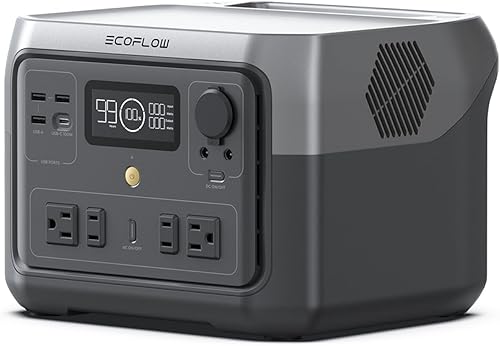
EcoFlow positions the River 2 Max 500 as a multi-device power source, with enough output to power up to 11 important devices at the same time. Its port mix includes 300 W AC outlets and USB-C, along with a broader range of connections intended to cover common camping, travel and home-office equipment.
That flexibility matters more than having a large battery alone. You can keep a phone charging while powering a laptop, router or lights, rather than relying on a single outlet or carrying several separate battery packs. USB-C is particularly useful for newer electronics, while AC outlets handle conventional plugs.
The LiFePO4 chemistry is another meaningful feature. LFP batteries are widely valued for durability and stable everyday use compared with older lithium chemistries. EcoFlow also lists battery-management protection that monitors voltage, current and temperature. At this capacity, the River 2 Max 500 is best understood as a compact essentials hub: enough connections for a campsite or outage kit, with output headroom for short high-draw jobs.
Before ordering, confirm the port layout on the Amazon page so it matches your specific equipment.
Charging, Solar and Long-Term Ownership
AC charging is one of this model’s biggest conveniences. EcoFlow claims a one-hour recharge from a standard AC outlet using its X-Stream technology. That is useful when a brief outage ends, when you arrive at camp with a depleted battery, or when you need to reset quickly between jobs.
The River 2 Max 500 also supports solar charging, giving campers and backup users another way to replenish the battery away from the grid. Solar charging depends on sunlight, panel setup and changing conditions, so it works best as a daytime top-up strategy rather than an assumption of constant power. Check the current Amazon page for compatible charging details before pairing panels.
The LFP battery is designed for long-term ownership, with EcoFlow describing more than 10 years of use from its LiFePO4 cells. Its battery-management system monitors voltage, current and temperature. Those protections do not make the unit unlimited: storing energy, conversion losses and high-wattage loads still determine how long it runs. For regular use, the best match is a mix of low- and moderate-draw devices, with heating and cooking reserved for short bursts.
How It Stacks Up Against the Alternatives
The closest step up is the EcoFlow River 3 Max, rated at 572 Wh versus this model’s 499 Wh. It carries a Good value label, while the River 2 Max 500 is rated Excellent value for its size class. Choose the newer, larger alternative when the extra reserve matters; choose the River 2 Max when value and proven buyer satisfaction are the priority.
The MARBERO 296 Wh 350 W and Jackery Explorer 300 are much smaller at 296 Wh and 292 Wh, respectively. Both are easier to target at lighter-duty use, but they offer substantially less stored energy. The MARBERO carries an Excellent value label, while the Jackery is rated Fair value.
The Anker SOLIX C300 and Anker SOLIX C300 DC each have 288 Wh. The standard C300 carries a Premium price label, while the DC version is Good value. Compared with all four smaller options, the EcoFlow’s 499 Wh battery gives it more breathing room for CPAP, routers, coolers and overnight use. See our under-$1,000 guide for the wider field.
Frequently asked questions
How long can the EcoFlow River 2 Max 500 run a CPAP?
The estimated runtime for a CPAP with a heated humidifier is 9.4 hours from full charge to empty, using 85% usable efficiency. Actual results vary with pressure, humidifier settings and other connected loads. For a full night, reduce extra devices and confirm your CPAP's power requirements.
Can it run a refrigerator during a blackout?
Yes, it can power a full-size refrigerator for an estimated 2.8 hours. Refrigerator compressors cycle, so actual time depends on temperature, door openings and startup demand. It is better suited to short outage coverage than extended refrigeration without recharging.
Can the River 2 Max 500 run a microwave or space heater?
It has up to 1000W of output, so short high-draw uses may fit within its output capability. The estimated runtime is about 25 minutes for a microwave and 34 minutes for a space heater on low. These appliances drain a 499Wh battery rapidly.
How quickly does it charge from an AC outlet?
EcoFlow claims a one-hour AC charging time using X-Stream technology and a standard AC outlet. Charging speed can vary with the starting battery level and charging conditions. Check the current Amazon page for the included charging setup before ordering.
Is the EcoFlow River 2 Max 500 good for camping?
Yes. Its 499Wh capacity, USB-C connection, AC outlets and up-to-1000W output cover common camping needs such as phones, laptops, lights, Wi-Fi equipment and a mini fridge or cooler. The estimated cooler runtime is 8.5 hours, making it useful for a full outing or overnight trip.


