Anker SOLIX · Spec-based review
Anker SOLIX S2000: Big Backup Power, Smaller Footprint
A compact 2,010Wh LiFePO4 station built for blackouts, CPAP nights and serious off-grid power.
We may earn a commission from product links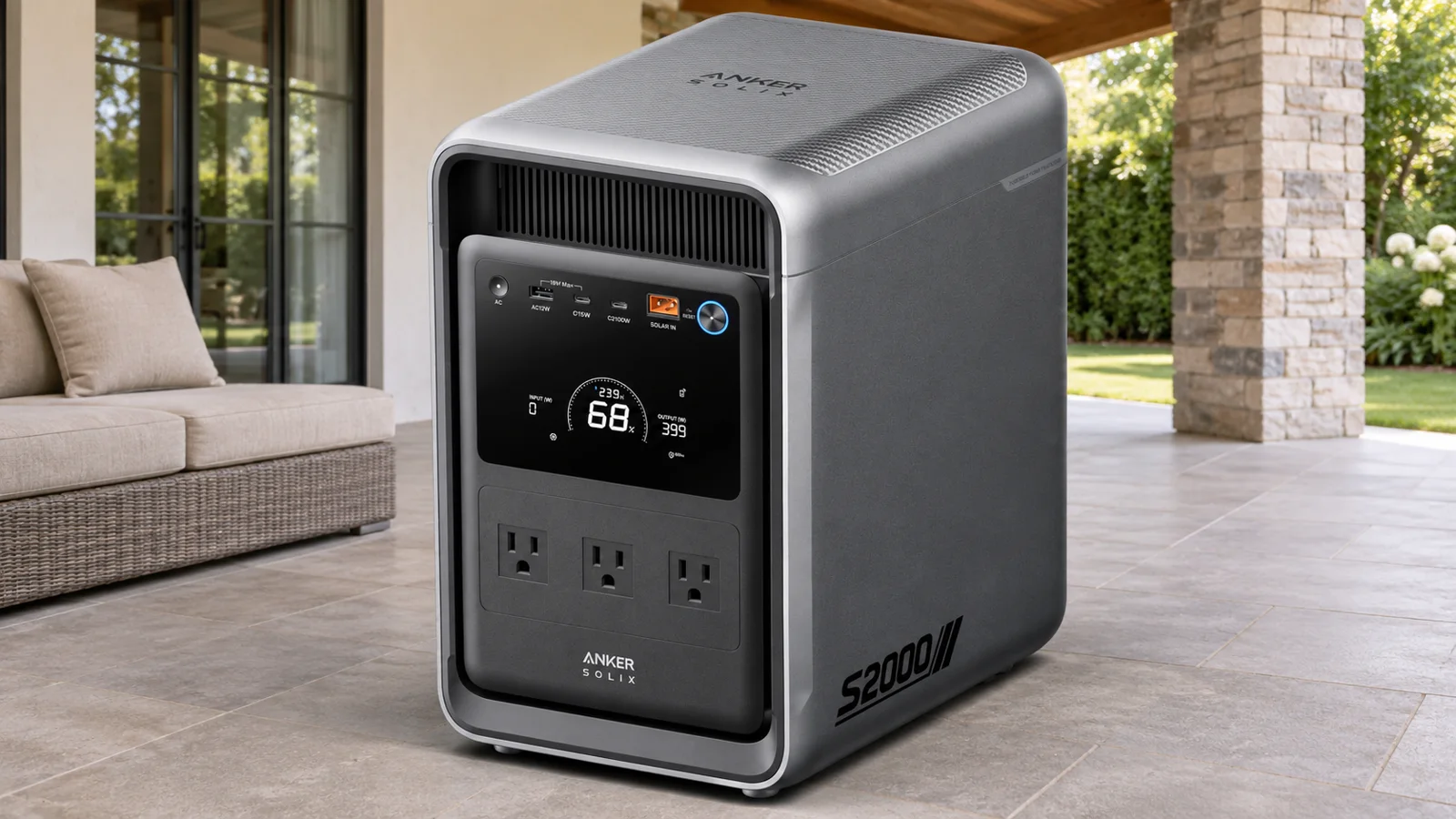
- Capacity
- 2,010 Wh
- Rated output
- 1,500 W
- Chemistry
- See listing
- Value for its size
- Premium price
- Amazon rating
- 4.7 / 5
- Buyer ratings
- 492
Specifications as stated in the Amazon listing. Check current details before buying.
How the score is calculated
This spec- and buyer-rating-based score is not a measure of independently measured performance. Value: Excellent 3, Good 2.2, Fair 1.4, Premium 0.6 points. Amazon rating: 4.0 earns 0, 5.0 earns 2.5, proportional in between. Rating volume: 1.5 × ln(1 + ratings) / ln(5,001), capped at 1.5. Output: 1.5 × rated W / Wh, capped at 1.5; unknown output earns 0.75. Stated LiFePO4: 1 point. Stated cycles, weight and solar input: 0.5/3 each, rounded together to three decimals. Missing value, rating, volume or listing details earn 0 for that criterion. The total is rounded to one decimal.
Read our full ranking methodologyThe short verdict
The Anker SOLIX S2000 combines substantial 2,010Wh storage with 1,500W continuous AC output, a 3,000W peak and unusually low idle draw. It is a strong fit for home backup and extended camping, but its Premium price for this size class and lack of a 12V DC port deserve careful consideration.
Pros
- 2,010Wh capacity supports long outages and multi-night trips
- 1,500W continuous output with 3,000W peak handles many household essentials
- LiFePO4 battery chemistry and a manufacturer-listed 10,000-cycle lifespan
- Up to 400W solar input plus six listed recharge methods
- Low 10W idle draw and sub-10ms UPS switchover
Cons
- Premium price for its 2,000Wh size class
- No 12V DC port
- A 1,500W output ceiling excludes some high-demand appliances
Best for
- Homeowners who need quiet backup power for essential appliances
- Campers and van owners running electronics, cooling and CPAP equipment
- Buyers who value LiFePO4 longevity and app-based power management
Look elsewhere if
- Shoppers seeking the lowest-cost 2,000Wh power station
- Users who need a built-in 12V DC port for vehicle equipment
Full specifications
| Capacity | 2,010 Wh |
|---|---|
| Rated AC output | 1,500 W |
| LiFePO4 stated | See listing |
| Charge cycles | See listing |
| Weight | 35.7 lb |
| Solar input | 400 W |
| Value for its size | Premium price |
Specifications as stated in the Amazon listing. Cycle-life conditions and solar compatibility vary; see the listing.
What can it power?
Choose your devices and daily run time. Battery capacity needed = watts × hours ÷ 0.85. Peak running watts assumes all selected devices run at once.
These are planning estimates, not measured runtimes. Appliance startup surges, fridge duty cycles, CPAP humidifiers and charging losses can change demand. Check your device label and the listing’s surge limit.
Runtime reference · 2,010 Wh at 85% usable energy
| Device | Running watts | Estimated hours |
|---|---|---|
| Phone | 15 W | 113.9 |
| Laptop | 60 W | 28.5 |
| Router | 40 W | 42.7 |
| CPAP | 45 W | 38.0 |
| Mini fridge | 50 W | 34.2 |
| Full fridge | 150 W | 11.4 |
| TV | 100 W | 17.1 |
| LED lights | 20 W | 85.4 |
| Coffee maker | 900 W | 1.9 |
| Microwave | 1000 W | 1.7 |
| Space heater | 750 W | 2.3 |
| E-bike charger | 500 W | 3.4 |
| Drill | 600 W | 2.8 |
Runtime estimates
Estimated usable energy is 85% of rated capacity. Actual runtime varies with load, temperature and battery age. See the device reference above for calculated estimates.
| Device | Estimated runtime |
|---|---|
| Phone charge (15 W) | 114 h |
| Laptop (60 W) | 28 h |
| LED lights + Wi-Fi router (40 W) | 43 h |
| CPAP, heated humidifier (45 W avg) | 38 h |
| Mini fridge/cooler (50 W avg) | 34 h |
| Full-size fridge (150 W avg) | 11 h |
| 55-inch TV (100 W) | 17 h |
| Drip coffee maker (900 W) | 1.9 h |
| Microwave (1,000 W) | 1.7 h |
| Space heater, low (750 W) | 2.3 h |
A blackout does not need to shut down the refrigerator, router, lights and CPAP machine at the same time. The Anker SOLIX S2000 is designed for that kind of layered backup: enough stored energy for household essentials, enough AC output for many appliances, and quiet operation for a bedroom or home office. Its 2,010 Wh battery gives you meaningful headroom rather than just emergency phone charging.
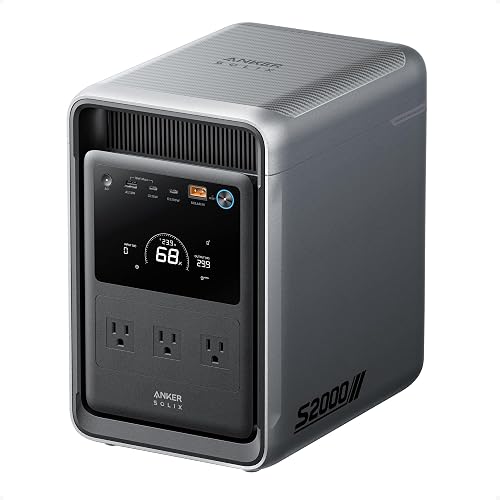
The S2000 is a 2,010 Wh portable power station with 1,500 W of rated AC output and a 3,000 W peak. It uses LiFePO4 cells, accepts up to 400 W of solar input, and includes app controls aimed at home backup. Amazon buyers rate it 4.7 out of 5 from 492 ratings. The trade-off is clear: this is a feature-rich, compact option with a Premium price for its size class, not a bargain pick.
Who the Anker SOLIX S2000 is really for
The S2000 makes the most sense when you want one battery to cover several jobs. During a short outage, it can keep a router, LED lights, phones and a television going while preserving capacity for a refrigerator. During a longer blackout, its 2,010 Wh reserve gives you more flexibility than a small camping station. The listed sub-10ms UPS switchover also suits a home office where a brief interruption could disrupt a desktop setup or networking equipment.
It is equally practical for campsite cooking and van-life electronics, provided your appliances stay within the 1,500 W continuous limit. A CPAP user gets a particularly useful reserve: the listed runtime for a CPAP with heated humidifier is 38 hours. That is enough for multiple nights in the right conditions, though actual results vary with settings and load cycles.
This is less compelling for buyers focused solely on price, or for anyone whose setup depends on a 12V DC output. The S2000 has no 12V DC port, so vehicle-oriented users should account for that limitation before choosing it.
Capacity, output and what it can run
At 2,010 Wh, the S2000 sits in the substantial 2kWh class. Applying the standard 85% usable-efficiency calculation gives a useful picture of its range. Low-draw devices benefit most: a phone is listed at up to 114 hours, while a laptop can run for 28 hours. A combined LED-light and Wi-Fi-router load is listed at 43 hours, making the station well suited to communications and lighting through an outage.
| Load | Listed runtime |
|---|---|
| CPAP with heated humidifier | 38 hours |
| Mini fridge/cooler | 34 hours |
| Full-size refrigerator | 11 hours |
| 55-inch TV | 17 hours |
| Drip coffee maker | 1.9 hours |
| Microwave | 1.7 hours |
| Low space heater | 2.3 hours |
The 1,500 W continuous AC rating covers many everyday appliances, with 3,000 W peak output helping with startup surges. It will not make every high-draw heating appliance practical for long. A microwave or space heater can consume the available energy quickly, so use those loads selectively.
Features and ports: practical power management
Anker gives the S2000 a useful split between front and rear connections. The listing describes seven outlets, with everyday devices on the front and always-on appliances on the rear. That arrangement can make a semi-permanent backup setup tidier. Remember the important omission: there is no 12V DC port, so the station is not a direct match for users who expect a dedicated vehicle-style output.
The battery uses LiFePO4 chemistry, and the manufacturer lists 10,000 cycles plus a 15-year lifespan under regular use. Those figures point to a design intended for repeated backup and camping duty rather than occasional emergency storage. They are manufacturer claims, not a promise that every unit will reach those conditions.
Power management is one of the S2000’s stronger selling points. The app supports one-tap remote control, Time-of-Use Mode for off-peak charging, Storm Guard automatic charging and automatic monthly cycling intended to help extend battery life. Its listed 10 W idle draw is also significant: less stored energy disappears while the station is powered on but supplying little load. At 30 dB, the stated operating noise is suited to a home office or sleeping area.
Charging, solar and long-term ownership
The S2000 supports up to 400 W of solar input, so it can replenish during a multi-day campsite stay or help extend backup capacity during an outage. Solar charging is weather-dependent: panel rating is a maximum input figure, and real charging varies with sunlight, panel angle, temperature and any active load. A 400 W input would theoretically replace 2,010 Wh in a little over five hours at full output, before conversion and sunlight losses; real-world charging normally takes longer.
The listing names six recharge paths: AC and solar, a wall outlet, a generator, solar panels, an alternator charger and a car outlet. Some of those descriptions overlap in everyday use, but the key point is flexibility. You can charge from household power before an outage, solar during a prolonged event, or vehicle-based sources while traveling. Verify the included charging accessories and exact US input details on Amazon before ordering.
For ownership, the low idle draw matters as much as headline capacity. If the station remains on to support a router or monitoring setup, wasting less energy improves practical endurance. The app’s monthly cycling feature and Storm Guard mode add automation, but you should still follow Anker’s storage and charging guidance listed for the current model.
How the S2000 stacks up against alternatives
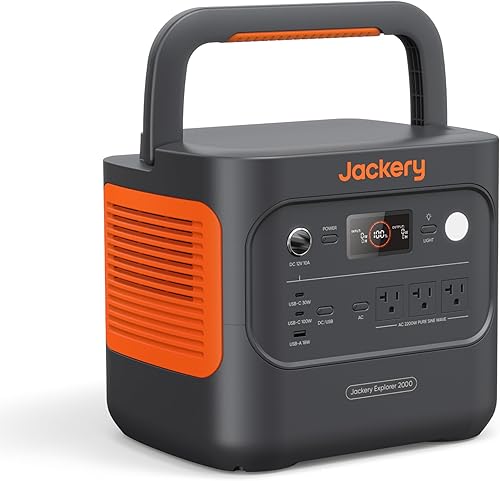
The closest alternatives are tightly grouped around 2,048 Wh. The Jackery Explorer 2000 v2 lists 2,042 Wh and is rated Fair value, while the DJI Power 2000 lists 2,048 Wh and Excellent value. The Anker SOLIX C2000 Gen 2 also lists 2,048 Wh and Fair value. These options are close enough in storage that output ratings, ports, charging details and current pricing should decide the final choice.
The EcoFlow DELTA 3 Max matches the 2,048 Wh class and carries a Good value label. The DABBSSON 2000L also lists 2,048 Wh and Excellent value. Against those models, the S2000’s case rests on its 1,500 W continuous output, 3,000 W peak, 400 W solar input, app automation and 10 W idle draw. Its 4.7 rating from 492 Amazon ratings is encouraging, but the Premium price label means value-conscious shoppers should compare current listings carefully.
For broader buying context, see our best 2,000 W+ power station ranking and our home-backup guide.
Frequently asked questions
How long can the Anker SOLIX S2000 run a refrigerator?
The listed runtime is 11 hours for a full-size refrigerator. That figure uses the stated 85% usable-efficiency calculation and represents a specific modeled load. Refrigerator compressors cycle on and off, so actual duration depends on the appliance, room temperature, door openings and whether other devices share the S2000.
Can the S2000 run a microwave or space heater?
Yes, if the appliance stays within the station's 1,500W continuous AC output and any startup demand fits its 3,000W peak. The listed runtimes are 1.7 hours for a microwave and 2.3 hours for a low space heater. High-wattage heating loads consume the battery rapidly.
Does the Anker SOLIX S2000 have a 12V DC outlet?
No. The product listing specifically says there is no 12V DC port. That matters for vehicle coolers, certain RV accessories and other equipment designed for direct 12V connection. Check the current Amazon listing for the complete US outlet and accessory configuration before purchase.
Can the S2000 be charged with solar panels?
Yes. The S2000 supports up to 400W of solar input. Solar charging speed depends on available sunlight, panel output, positioning and active power use. The listing also names AC, a generator, an alternator charger and a car outlet among its recharge options.
Is the S2000 suitable for CPAP backup?
It is a strong fit on capacity, with a listed 38-hour runtime for a CPAP using a heated humidifier. Actual endurance depends on pressure, humidifier and heated-tube settings, plus any other devices connected. Confirm your CPAP's power requirements and use the appropriate AC connection.
Consider these alternatives

- 2,048 Wh
- Output: see listing
- LiFePO4
Excellent value

