Buying guide
Best 2,000W+ Portable Power Stations
High-wattage picks for serious appliances, power tools and backup—plus clear guidance on capacity, surge and portability.
Quick picks


Amazon prices change constantly: tap the button for today's price.
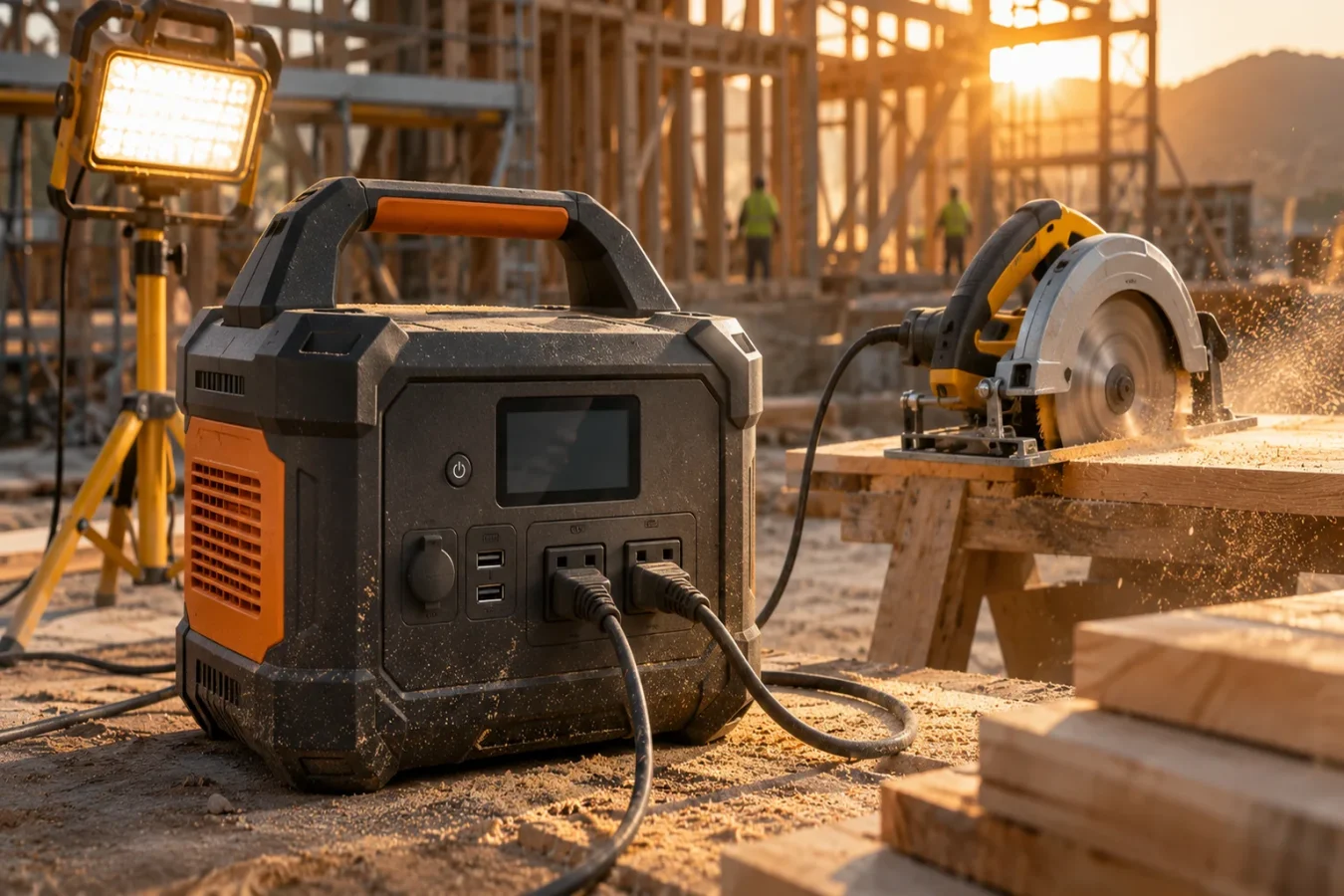
A kettle, microwave or power tool can turn a modest power station into a hard-working one—or trip its inverter. If you want to run those bigger loads during a blackout, at a campsite or on a job site, the key number is continuous AC output. A 2,000 W rating is a useful starting line; higher output gives you more room to run demanding devices or several smaller ones together.
This guide ranks the strongest fits for high-output use, with clear picks for home backup, RVs, tools and portability. You’ll also find a few popular 1,800 W models in a separate near-miss group: capable stations, but below this guide’s 2,000 W continuous-output threshold. For broader comparisons, see our best portable power stations and home backup picks.
Our ranking uses manufacturer-listed capacity, rated output, surge figures where available, portability details, value for its size class and Amazon buyer ratings. It is a specification-based comparison, not a report of physical product testing. Runtime estimates use the practical formula watt-hours × 0.85 ÷ appliance watts; actual results vary with load and operating conditions.
What counts as a 2,000W+ power station?
This roundup uses continuous rated AC output as its cutoff. A station rated at 2,000 W or more can supply that level of power under its stated operating conditions; the capacity in watt-hours tells you how long it can keep doing so. Those are different jobs. Output is the size of the tap; capacity is the size of the reservoir.
Surge is a separate figure for brief startup demands. A refrigerator compressor or power tool may draw more power as it starts than while running. The OUPES Mega 1 lists a 4,500 W peak, while the Anker SOLIX C2000 Gen 2 lists 4,000 W peak. Those figures can help with startup loads, but don’t treat peak output as continuous power. Check an appliance’s running and startup requirements against the station’s ratings.
Four of the candidates here are rated at 1,800 W, so they fall short of the stated threshold even when their surge or boost figures are higher. They remain useful choices for many everyday loads, and we include them as near-misses rather than implying they meet a 2,000 W rating. For the underlying sizing basics, read how to choose a power station and how many watt-hours you need.
1. Anker SOLIX C2000 Gen 2: Best overall
The Anker SOLIX C2000 Gen 2 is the most balanced high-output choice in this lineup. It pairs 2,048 Wh of capacity with 2,400 W rated AC output and a listed 4,000 W peak. That gives it more continuous headroom than the 2,000 W class while keeping capacity near the familiar 2kWh mark. Its Amazon rating is 4.7 out of 5 from 746 ratings, and its value for its size class is Fair.
For an outage, Anker lists up to 230 hours of standby and up to 30.5 hours powering a fridge. These are manufacturer claims, not a promise for every refrigerator or setup. The station can expand to 4kWh with an expansion battery, a useful option if your backup plan needs more than a single charge. Listed recharge options include AC, solar and an 800 W alternator input; the manufacturer gives 58 minutes for a full AC recharge.
At a listed 18.9kg, it’s notably portable for a station with 2,048 Wh capacity, though that is still a substantial lift. This is the best overall pick for buyers who want high continuous output, a surge margin and a practical path to longer backup. Check the current price on Amazon. For more outage planning, see our blackout checklist.
2. EcoFlow DELTA Pro: Best for extended home backup
The EcoFlow DELTA Pro is the capacity-and-output heavyweight here: 3,600 Wh and 3,600 W of rated AC output. That combination suits a household backup plan built around several essential loads, or a job site where tools and charging equipment need more continuous power. Its Amazon rating is 4.6 out of 5 from 681 ratings. Value for its size class is Fair.
EcoFlow says X-Boost can raise output to 4,500 W, and that two units can be paired for 7,200 W. Treat those as manufacturer-described operating modes, not a substitute for checking the exact appliance requirements. The stated capacity also translates into meaningful energy reserve: using the standard 85% runtime estimate, 3,600 Wh could supply a 100 W load for about 30.6 hours, before accounting for real-world variation.
Recharge flexibility is a standout feature. The manufacturer describes five charging methods, including wall, solar, car, EV charging station and a smart outdoor generator. Listed AC recharge times vary by input: 2.7 hours with an 1,800 W wall outlet, or 1.8 hours with a 240V, 3,000 W outlet. Its larger capacity is the reason to choose it over a more portable 2kWh unit. Check the current price on Amazon and compare your backup plan with home backup options.
3. OUPES Mega 1: Best for startup surge
The OUPES Mega 1 meets the cutoff with 2,000 W rated AC output and posts the largest listed peak in this group: 4,500 W. Its 1,024 Wh capacity is much smaller than the 2kWh-class options, so it is better suited to a powerful appliance or tool session than long-duration household backup. Amazon buyers rate it 4.5 out of 5 from 1,500 ratings; value for its size class is Fair.
The manufacturer lists four AC outlets and 13 total outputs, including two 100 W USB-C ports. It also describes expansion to 5,120 Wh with an OUPES B2 extra battery. That turns a relatively compact-capacity station into a more substantial backup system, provided you want the matching expansion route. The stated AC fast-charge claim is 0–80% in 36 minutes, with a slower charging mode also available.
For a quick runtime sense, the standard estimate gives a 1,024 Wh station about 4.4 hours at a steady 200 W load (1,024 × 0.85 ÷ 200). A 1,000 W appliance would draw that energy much faster, and startup surges add another compatibility check. This is the pick for tools and loads where peak headroom matters more than a large built-in energy reserve. Check the current price on Amazon and confirm your device’s startup wattage before ordering.
4. Jackery Explorer 2000 v2: Best for a 2kWh reserve
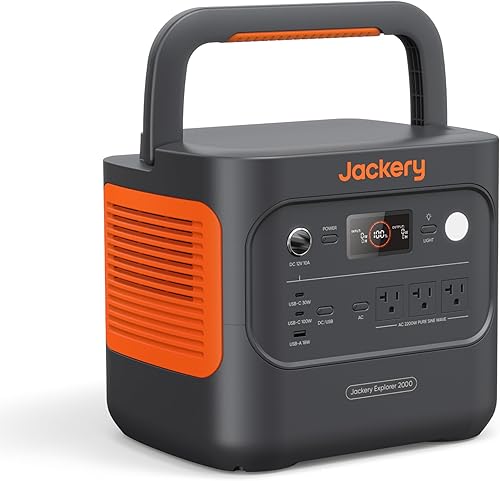
The Jackery Explorer 2000 v2 supplies 2,042 Wh of capacity and 2,200 W rated AC output. It’s a straightforward match for buyers who want a substantial energy reserve without stepping up to the 3,600 Wh EcoFlow. The listed weight is 40 pounds, an important number to consider if you expect to move it often. Its Amazon rating is 4.4 out of 5 from 899 ratings, and its value for its size class is Fair.
Jackery lists three AC ports, 20ms uninterrupted switching and a quiet charging mode below 30dB. The manufacturer gives a recharge time of 66 minutes to 80% with AC fast charging, or 102 minutes to full using Emergency Supercharge mode through the app. Solar charging is also described, with a stated time as low as six hours; actual recharge time depends on the charging setup and conditions.
At a 100 W load, the standard runtime formula estimates around 17.4 hours from 2,042 Wh (2,042 × 0.85 ÷ 100). That makes the capacity useful for a mix of communication gear, lights and intermittent appliance use, but it does not mean a high-wattage appliance can run all night. Choose this model for a substantial 2kWh-class reserve and a listed 40-pound weight. For camping and vehicle setups, compare RV and van-life power stations.
5. Four capable 1,800W near-misses
These models don’t meet this roundup’s 2,000 W continuous-output cutoff, but they can still handle a wide range of loads. The BLUETTI AC180 has 1,152 Wh, 1,800 W rated output and a 2,700 W boost claim. It earns Excellent value for its size class and a 4.5/5 Amazon rating from 1,900 ratings. BLUETTI lists 500 W solar input and 20ms backup switching.
The BLUETTI Elite 100 V2 pairs 1,024 Wh with 1,800 W output and a 2,700 W lifting-power claim. Its listed weight is 25 pounds; value is Good, and its Amazon rating is 4.5/5 from 1,800 ratings. The EcoFlow Delta 3 Classic also offers 1,024 Wh and 1,800 W, with Excellent value and a 4.7/5 rating from 1,300 ratings.
The EcoFlow Delta 3 shares the 1,024 Wh and 1,800 W ratings, and lists expansion up to 5kWh, 13-appliance operation and 4,000 cycles at 80% capacity. It has a 4.7/5 Amazon rating from 1,300 ratings, but carries Premium price value for its size class. These are sensible alternatives when their features fit better than a strict 2,000 W model. Check the current price on Amazon and compare the wider under-$1,000 power station guide.
What can a 2,000W+ station run?
Rated output determines whether an appliance can run; stored capacity determines for how long. A station at 2,000 W can, in principle, supply a load whose running demand is below 2,000 W, as long as any startup surge stays within its peak rating. A microwave, kettle or small air conditioner may fit some high-output models, but appliance wattage varies. Read the appliance label and account for other devices running at the same time.
Power tools add a startup complication. Motors can briefly demand more than their steady running draw, which is why the OUPES Mega 1’s listed 4,500 W peak and the Anker’s 4,000 W peak are relevant. They are not permission to exceed the rated continuous output indefinitely. A station’s peak figure is for short surges; confirm the duration and your tool’s requirements before relying on it.
Capacity gives a useful planning estimate: runtime in hours ≈ watt-hours × 0.85 ÷ load watts. For example, a 2,048 Wh station powering a steady 500 W load estimates roughly 3.5 hours. A 1,024 Wh station at the same load estimates about 1.7 hours. Real loads cycle and inverter efficiency varies, so leave margin. For appliance-by-appliance planning, use our 1,000 Wh runtime guide and the power station versus gas generator comparison.
How to choose—and mistakes to avoid
Start with the biggest appliance you need to run. Check its continuous wattage, then its startup demand if it has a motor or compressor. Add the loads you expect to run simultaneously. Choose a station whose rated output covers that combined demand, with room for startup surges. Don’t select by peak wattage alone.
Next, estimate the energy you need. Add up appliance watts × hours, then allow for conversion losses using the 0.85 factor. A 2,000 W inverter does not guarantee a long runtime: a 1,024 Wh station can empty quickly under a heavy load. Conversely, a large battery cannot run an appliance that exceeds its inverter limit. If you need a longer blackout reserve, consider expansion options such as those described for the OUPES Mega 1, EcoFlow DELTA Pro and Anker SOLIX C2000 Gen 2.
Portability is not an afterthought. The Jackery is listed at 40 pounds, while the Elite 100 V2 is listed at 25 pounds—but the latter has a lower 1,800 W rating and half the approximate capacity of a 2kWh-class unit. Avoid assuming all stations with similar wattage have the same outlets, charging methods or transfer behavior. Confirm the port layout on the Amazon page before ordering. For battery chemistry and solar planning, see LiFePO4 power station picks and our solar charging guide.
Final recommendation: match output to the job
For most buyers who want a genuine 2,000 W+ station without moving into a much larger backup system, the Anker SOLIX C2000 Gen 2 is the strongest all-around choice: 2,400 W rated output, 4,000 W peak, 2,048 Wh capacity and a listed expansion path to 4kWh. Its Fair value rating is not the highest in this group, but its mix of output, capacity and portability claims makes a convincing case.
Choose the EcoFlow DELTA Pro when longer backup and higher continuous output matter more than keeping the system compact. Choose the OUPES Mega 1 when the 4,500 W peak is especially relevant and you can work within its 1,024 Wh built-in capacity. The Jackery Explorer 2000 v2 is a strong alternative for a 2kWh reserve with a clearly listed 40-pound weight. For demanding appliances, always verify running and startup watts before buying.
If your actual loads stay below 1,800 W, don’t pay for output you won’t use: the AC180 and other near-misses may be a better fit. If you need a broader shortlist across output classes, start with our complete ranking; for solar-ready setups, see best solar generators. Check the current price on Amazon, compare the exact ports and charging options, then size the station around the devices you truly need to keep running.
Every model mentioned, at a glance
| Value for its size | Availability | |||||||||
|---|---|---|---|---|---|---|---|---|---|---|
| Anker SOLIX C2000 Gen 2 Best for home backup | 6.0 | 2,048 | 2,400 | Not stated | See listing | See listing | 41.7 | 4.7746 ratings | Fair value | Check price on Amazon |
| EcoFlow DELTA Pro | 5.7 | 3,600 | 3,600 | Not stated | See listing | 400 | See listing | 4.6681 ratings | Fair value | Check price on Amazon |
| OUPES Mega 1 | 5.8 | 1,024 | 2,000 | Not stated | 3500 | See listing | 27.8 | 4.51,500 ratings | Fair value | Check price on Amazon |
| Jackery Explorer 2000 v2 | 5.3 | 2,042 | 2,200 | Not stated | See listing | See listing | 40 | 4.4899 ratings | Fair value | Check price on Amazon |
| BLUETTI AC180 Best overall | 8.2 | 1,152 | 1,800 | Yes | See listing | 500 | See listing | 4.51,900 ratings | Excellent value | Check price on Amazon |
| BLUETTI Elite 100 V2 Best for camping | 6.6 | 1,024 | 1,800 | Not stated | See listing | 1000 | 25 | 4.51,800 ratings | Good value | Check price on Amazon |
| EcoFlow Delta 3 Classic | 7.5 | 1,024 | 1,800 | Not stated | See listing | See listing | See listing | 4.71,300 ratings | Excellent value | Check price on Amazon |
| EcoFlow Delta 3 Best for RV | 5.4 | 1,024 | 1,800 | Not stated | 4000 | 500 | See listing | 4.71,300 ratings | Premium price | Check price on Amazon |
Specifications as stated in the Amazon listing. Missing details: see listing. Scores use specifications and buyer ratings. How we rank.
Frequently asked questions
Is 2,000W enough to run a microwave?
Often, but check the microwave’s input wattage rather than assuming from its cooking-power label. Also consider what else will run at the same time and whether startup demand exceeds the station’s peak rating. A 2,000W continuous-output station has a clear limit; appliances and operating conditions vary. Leave headroom instead of planning to run right at the inverter’s maximum.
Can a 2,000W power station run a kettle?
It depends on the kettle’s rated wattage. Compare that figure with the station’s continuous AC output, and avoid combining the kettle with other large loads if their total exceeds the limit. A kettle also uses energy quickly, so capacity matters: a high-output station can run a powerful kettle, but a smaller battery may not support many boils alongside other appliances.
What does surge power mean?
Surge power is a brief peak intended to accommodate startup demands, such as a motor or compressor drawing extra power as it starts. It is not the same as continuous rated output. For example, the OUPES Mega 1 lists 2,000W rated output and 4,500W peak. Check your device’s startup needs and the station’s operating guidance before relying on a surge figure.
How long will a 2,000Wh power station last?
A useful estimate is capacity in watt-hours × 0.85 ÷ load watts. At a steady 500W load, 2,000Wh estimates about 3.4 hours; at 100W, about 17 hours. Actual runtime varies with inverter losses, appliance cycling and operating conditions. Add together simultaneous loads when estimating, and keep a reserve rather than planning around the exact theoretical result.
Can these stations run a small air conditioner?
Possibly, if the air conditioner’s running wattage stays within the station’s continuous output and its startup demand fits the surge rating. Small AC units vary considerably, so check the unit’s specifications first. Capacity is equally important: even when the inverter can run the AC, a high draw can drain a 1,024Wh battery much sooner than a 2,048Wh or 3,600Wh reserve.
Why include 1,800W models in a 2,000W+ guide?
They are clearly identified as near-misses, not as 2,000W-rated stations. Their 1,800W continuous output can still suit many everyday appliances and tools, and some have higher manufacturer-listed boost or surge figures. Including them gives you useful alternatives if your actual loads fall below 1,800W or a particular model’s capacity, value or portability better matches your needs.

