DJI · Spec-based review
DJI Power 2000: Big Backup for Blackouts and Campsites
A 2,048Wh LFP power station built for serious overnight backup without fuel, fumes or noise.
We may earn a commission from product links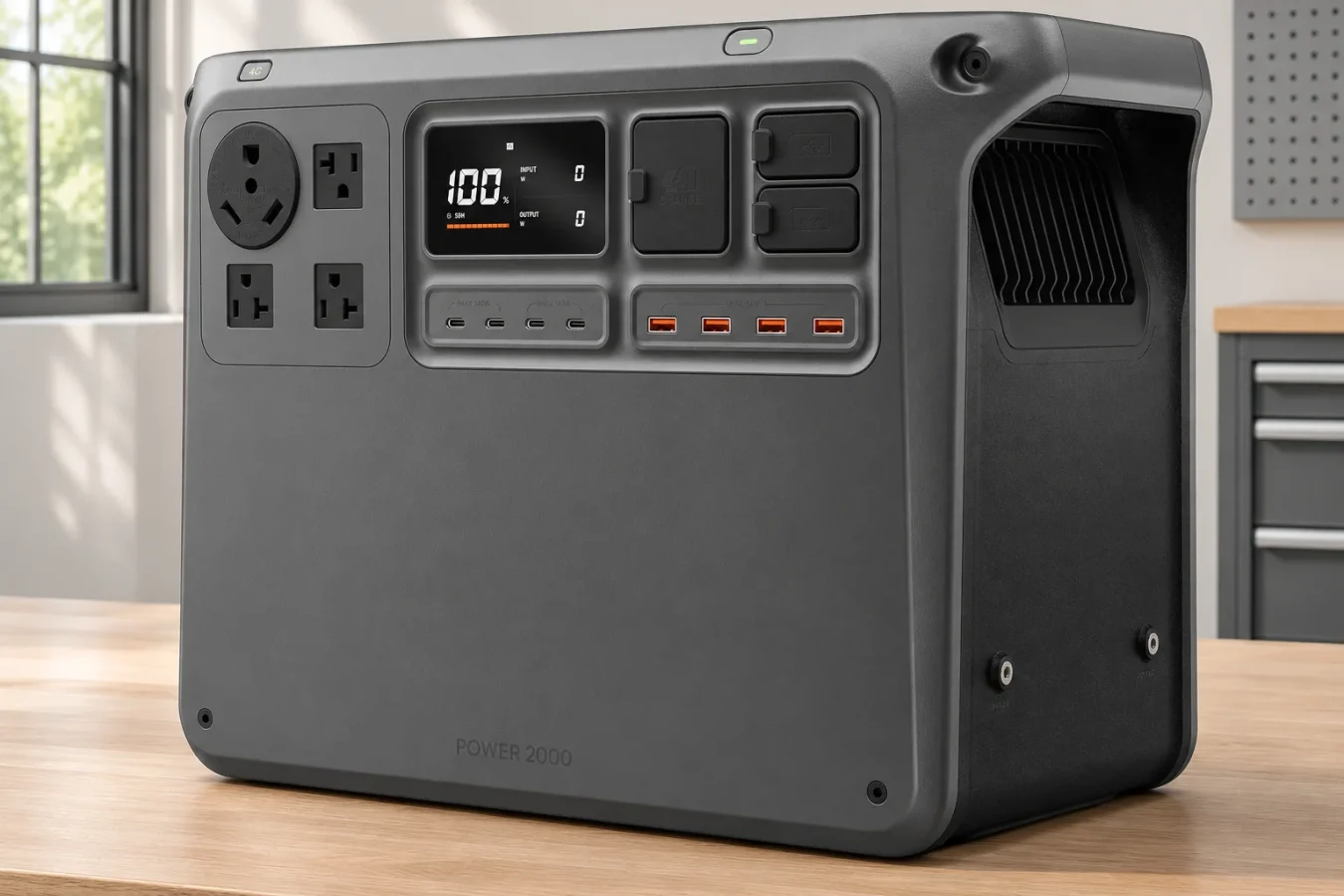

- Capacity
- 2,048 Wh
- Rated output
- See listing
- Chemistry
- LiFePO4
- Value for its size
- Excellent value
- Amazon rating
- 4.4 / 5
- Buyer ratings
- 818
Specifications as stated in the Amazon listing. Check current details before buying.
How the score is calculated
This spec- and buyer-rating-based score is not a measure of independently measured performance. Value: Excellent 3, Good 2.2, Fair 1.4, Premium 0.6 points. Amazon rating: 4.0 earns 0, 5.0 earns 2.5, proportional in between. Rating volume: 1.5 × ln(1 + ratings) / ln(5,001), capped at 1.5. Output: 1.5 × rated W / Wh, capped at 1.5; unknown output earns 0.75. Stated LiFePO4: 1 point. Stated cycles, weight and solar input: 0.5/3 each, rounded together to three decimals. Missing value, rating, volume or listing details earn 0 for that criterion. The total is rounded to one decimal.
Read our full ranking methodologyThe short verdict
The DJI Power 2000 is a strong value in the 2,048Wh class, pairing a large LFP battery with useful runtimes for outages, camping, CPAP use and everyday electronics. Its 4.4-star Amazon rating from 818 ratings is encouraging, but shoppers should confirm the port layout and output details before ordering.
Pros
- Large 2,048Wh capacity suits multi-day and overnight backup
- LiFePO4 chemistry is a sensible choice for long-term ownership
- Excellent value for its 2,048Wh size class
- Calculated runtimes cover phones, CPAP equipment, refrigerators and small appliances
- 4.4 out of 5 stars from 818 Amazon ratings
Cons
- A 2,048Wh unit belongs in the larger, less portable class of power stations
- Solar charging capability is not part of the information available here
- The port layout and output specifications should be confirmed before purchase
Best for
- Homeowners who need overnight backup for lights, Wi-Fi and refrigeration
- Campers and van owners who want several days of device power
- CPAP users who need substantial battery capacity for blackout nights
Look elsewhere if
- Shoppers who only need a compact, lightweight emergency battery
- Buyers who require a documented solar charging setup before purchase
Full specifications
| Capacity | 2,048 Wh |
|---|---|
| Rated AC output | See listing |
| LiFePO4 stated | Yes |
| Charge cycles | See listing |
| Weight | See listing |
| Solar input | See listing |
| Value for its size | Excellent value |
Specifications as stated in the Amazon listing. Cycle-life conditions and solar compatibility vary; see the listing.
What can it power?
Choose your devices and daily run time. Battery capacity needed = watts × hours ÷ 0.85. Peak running watts assumes all selected devices run at once.
These are planning estimates, not measured runtimes. Appliance startup surges, fridge duty cycles, CPAP humidifiers and charging losses can change demand. Check your device label and the listing’s surge limit.
Runtime reference · 2,048 Wh at 85% usable energy
| Device | Running watts | Estimated hours |
|---|---|---|
| Phone | 15 W | 116.1 |
| Laptop | 60 W | 29.0 |
| Router | 40 W | 43.5 |
| CPAP | 45 W | 38.7 |
| Mini fridge | 50 W | 34.8 |
| Full fridge | 150 W | 11.6 |
| TV | 100 W | 17.4 |
| LED lights | 20 W | 87.0 |
| Coffee maker | 900 W | 1.9 |
| Microwave | 1000 W | 1.7 |
| Space heater | 750 W | 2.3 |
| E-bike charger | 500 W | 3.5 |
| Drill | 600 W | 2.9 |
Runtime estimates
Estimated usable energy is 85% of rated capacity. Actual runtime varies with load, temperature and battery age. See the device reference above for calculated estimates.
| Device | Estimated runtime |
|---|---|
| Phone charge (15 W) | 116 h |
| Laptop (60 W) | 29 h |
| LED lights + Wi-Fi router (40 W) | 44 h |
| CPAP, heated humidifier (45 W avg) | 39 h |
| Mini fridge/cooler (50 W avg) | 35 h |
| Full-size fridge (150 W avg) | 12 h |
| 55-inch TV (100 W) | 17 h |
| Drip coffee maker (900 W) | 1.9 h |
| Microwave (1,000 W) | 1.7 h |
| Space heater, low (750 W) | 2.3 h |
When the power goes out at midnight, a phone battery is not enough. You may need lights, Wi-Fi, refrigeration and a CPAP machine running at the same time. During a long campsite weekend, the same reserve can keep laptops, phones and entertainment going without fuel or exhaust.
The DJI Power 2000 is built around a 2,048 Wh LiFePO4 battery. That places it firmly in the serious-backup category rather than the grab-and-go power-bank category. Based on the stated capacity and an 85% usable-efficiency calculation, it can cover substantial household essentials, multiple CPAP nights or a broad mix of camping electronics. Its value rating for this size class is Excellent, and its Amazon score is 4.4 out of 5 from 818 ratings.
Who the DJI Power 2000 Is Really For
This is a practical fit for people preparing for real interruptions, not just occasional phone top-offs. In a blackout, 2,048 Wh gives you room to prioritize essentials: LED lights, a Wi-Fi router, phones and a refrigerator. The calculated runtime for LED lights plus a router is 44 hours, while a full-size refrigerator works out to about 12 hours. Those figures make the DJI Power 2000 particularly relevant during storm season, rolling outages and overnight emergencies.
It also makes sense for campsite kitchens, van builds and work locations where a large energy reserve matters more than minimum size. A laptop can draw from the available energy for about 29 hours, and a phone-charge workload is calculated at 116 hours. CPAP users get an especially useful reserve: about 39 hours with a heated humidifier included in the calculation. That is roughly enough for two nights, depending on actual settings and conversion losses.
Consider a smaller model if your normal job is charging phones, cameras and one laptop. For broader backup, this capacity is the point. Read our best under-$1,000 power station guide for more options in the same shopping tier.
Capacity, Output and What It Can Run
The headline number is 2,048 Wh. Using the standard 85% usable-efficiency calculation, that becomes about 1,741 Wh available for connected devices. Actual results vary with appliance cycling, startup demand, heat and conversion losses, but the estimates below show the station’s practical range.
| Use case | Calculated runtime |
|---|---|
| Phone charge | 116 hours |
| Laptop | 29 hours |
| LED lights and Wi-Fi router | 44 hours |
| CPAP with heated humidifier | 39 hours |
| Mini fridge or cooler | 35 hours |
| Full-size refrigerator | 12 hours |
| 55-inch TV | 17 hours |
| Drip coffee maker | 1.9 hours |
| Microwave | 1.7 hours |
| Space heater on low | 2.3 hours |
High-draw heating appliances consume energy quickly. A microwave or space heater can use the reserve in a small number of hours, while routers, lights and refrigeration stretch it much farther. Before connecting a microwave, heater or coffee maker, confirm the DJI Power 2000’s rated continuous and surge output on Amazon and compare those figures with the appliance requirements.
Features, Ports and Battery Chemistry
The most important confirmed hardware detail is the battery chemistry: LiFePO4, also called LFP. For a large station intended for repeated outage readiness, that chemistry is a sensible choice. It is widely favored for its durable, stable battery design and makes the unit a better candidate for regular cycling than a station purchased only for rare emergencies.
The 2,048 Wh reserve is the feature that changes how you plan. You can charge personal electronics, keep communications online and preserve cold food without immediately choosing which device gets disconnected. At a campsite, it can support a laptop, lighting and a small refrigerator in the same trip. In a home office, it can keep the essential electronics running while you wait for utility service.
Specific port arrangements and output ratings are important when matching a station to appliances. Confirm the port layout on the Amazon page before ordering, especially if you need a particular outlet type, USB connection or simultaneous charging arrangement. Also check the continuous and surge wattage for motor-driven refrigerators and high-demand appliances. Capacity tells you how long the battery may last; wattage determines whether a device can run at all.
Charging, Solar and Long-Term Ownership
The LFP battery gives the DJI Power 2000 a strong foundation for long-term emergency storage and recurring use. Keep it ready for hurricane season, winter outages or job-site duty, and its large capacity can cover more than one kind of need at a time. For best planning, treat the runtime figures as estimates rather than guarantees: a refrigerator cycles on and off, while a heater draws heavily and continuously.
Solar charging is not included in the information available for this model, so do not assume a particular solar input, panel limit or recharge time. If off-grid recharging is central to your plan, confirm solar compatibility and the supported input details on Amazon before buying. That matters for van builds and extended campsites, where a power station’s ability to replenish during daylight can be as important as its stored energy.
For ownership planning, calculate your priority load first. A 2,048 Wh battery is excellent for low- and medium-draw essentials, but high-wattage heating appliances consume the reserve quickly. Store the unit where it can be accessed during an outage, maintain a simple list of the appliances you expect to connect, and check the current price on Amazon because value can change as promotions and availability shift.
How It Stacks Up Against the Alternatives
The closest competitors all sit at the same stated capacity: 2,048 Wh. The Anker SOLIX C2000 Gen 2 is rated Fair value for its size class, while the EcoFlow DELTA 3 Max is rated Good value. The DABBSSON 2000L and Growatt Infinity 2000 Pro are both rated Excellent value, matching the DJI’s value assessment. The Segway Cube 2000 is rated Good value.
Because these models share 2,048 Wh, the real buying decision comes down to output capability, charging options, port selection, physical design, software and current price. The DJI has a clear use-case advantage on paper for buyers who want a large LFP reserve and strong calculated runtimes across household and camping loads. However, a higher or lower wattage rating can matter more than battery capacity when you need to start a compressor or run a microwave.
Check each alternative’s continuous and surge wattage alongside its input options before choosing. For broader context, compare it with our best 2,000 W-plus power station guide. Check the current price on Amazon, then weigh the Excellent value label against the exact ports and output your setup requires.
Frequently asked questions
How long can the DJI Power 2000 run a CPAP machine?
The calculated runtime is about 39 hours for a CPAP with a heated humidifier. That estimate uses 85% usable battery efficiency and represents roughly two nights for many users. Actual runtime depends on pressure, humidity settings, mask configuration and whether other devices share the station.
Can the DJI Power 2000 run a refrigerator during a blackout?
Yes, the calculated runtime is about 12 hours for a full-size refrigerator, with about 35 hours for a mini fridge or cooler. Refrigerators cycle, so real results depend on ambient temperature, food load and compressor behavior. Confirm the station’s surge and continuous output ratings before connecting a refrigerator.
Is the DJI Power 2000 a good camping power station?
It is a strong match for campers who need substantial energy for laptops, phones, lighting, a cooler and entertainment. The calculated runtime is 44 hours for LED lights plus a Wi-Fi router and 29 hours for a laptop. Its 2,048Wh capacity is more than necessary for minimal charging needs.
Does the DJI Power 2000 use an LFP battery?
Yes. The DJI Power 2000 uses LiFePO4, also called LFP, battery chemistry. That makes it appealing for buyers who expect to keep the unit ready for repeated outages, camping trips or job-site use. Confirm the manufacturer’s current care and charging guidance on Amazon before placing a long-term storage plan around it.
Can it run a microwave or space heater?
The calculated energy runtimes are about 1.7 hours for a microwave and 2.3 hours for a space heater on low. Those figures describe energy consumption, not guaranteed compatibility. Check the appliance wattage against the DJI Power 2000’s continuous and surge output ratings before connecting either high-draw device.


