ALLPOWERS · Spec-based review
ALLPOWERS Volix P300: Compact Backup With LiFePO4 Power
A compact 256Wh battery backup for quiet camping, short outages, and everyday device charging.
We may earn a commission from product links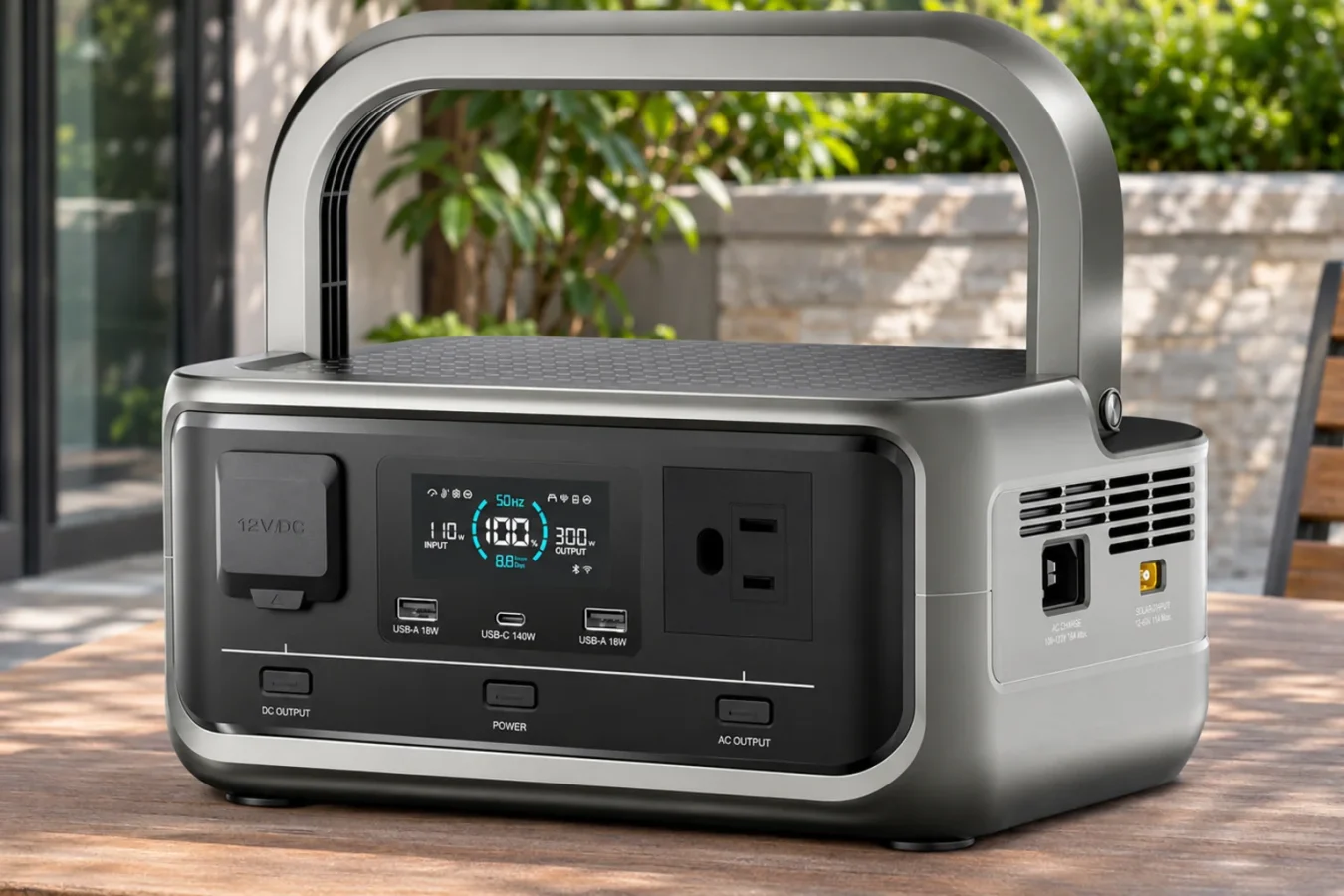

- Capacity
- 256 Wh
- Rated output
- 300 W
- Chemistry
- LiFePO4
- Value for its size
- Excellent value
- Amazon rating
- 3.5 / 5
- Buyer ratings
- 84
Specifications as stated in the Amazon listing. Check current details before buying.
How the score is calculated
This spec- and buyer-rating-based score is not a measure of independently measured performance. Value: Excellent 3, Good 2.2, Fair 1.4, Premium 0.6 points. Amazon rating: 4.0 earns 0, 5.0 earns 2.5, proportional in between. Rating volume: 1.5 × ln(1 + ratings) / ln(5,001), capped at 1.5. Output: 1.5 × rated W / Wh, capped at 1.5; unknown output earns 0.75. Stated LiFePO4: 1 point. Stated cycles, weight and solar input: 0.5/3 each, rounded together to three decimals. Missing value, rating, volume or listing details earn 0 for that criterion. The total is rounded to one decimal.
Read our full ranking methodologyThe short verdict
The ALLPOWERS Volix P300 is a sensible small power station with a 300W AC output, LiFePO4 chemistry, UPS capability, and excellent value for its size class. Its 256Wh battery is best for electronics, lights, routers, CPAP use, and modest cooling loads—not sustained high-wattage appliances.
Pros
- 256Wh capacity and 300W rated AC output suit common personal electronics
- LiFePO4 battery is rated for over 4,000 cycles while retaining 70% capacity
- Sub-20ms UPS switchover can help protect a router or computer during outages
- Fast wall charging reaches a full charge in about 1.3 hours
- Excellent value for its size class, with a five-year warranty
Cons
- The 300W output limits demanding appliances and most power tools
- 256Wh is enough for short backup periods, not extended blackouts
- An Amazon rating of 3.5 out of 5 from 84 ratings calls for realistic expectations
Best for
- Weekend campers who need quiet power for electronics, lights, and a small cooler
- Apartment dwellers who want short-duration router, laptop, and phone backup
- CPAP users who need a compact battery for occasional overnight use
Look elsewhere if
- Families seeking multi-day refrigerator or whole-home backup
- Job-site users running high-draw tools or appliances above 300W
Full specifications
| Capacity | 256 Wh |
|---|---|
| Rated AC output | 300 W |
| LiFePO4 stated | Yes |
| Charge cycles | 4000 |
| Weight | See listing |
| Solar input | See listing |
| Value for its size | Excellent value |
Specifications as stated in the Amazon listing. Cycle-life conditions and solar compatibility vary; see the listing.
What can it power?
Choose your devices and daily run time. Battery capacity needed = watts × hours ÷ 0.85. Peak running watts assumes all selected devices run at once.
These are planning estimates, not measured runtimes. Appliance startup surges, fridge duty cycles, CPAP humidifiers and charging losses can change demand. Check your device label and the listing’s surge limit.
Runtime reference · 256 Wh at 85% usable energy
| Device | Running watts | Estimated hours |
|---|---|---|
| Phone | 15 W | 14.5 |
| Laptop | 60 W | 3.6 |
| Router | 40 W | 5.4 |
| CPAP | 45 W | 4.8 |
| Mini fridge | 50 W | 4.4 |
| Full fridge | 150 W | 1.5 |
| TV | 100 W | 2.2 |
| LED lights | 20 W | 10.9 |
| Coffee maker | 900 W | Exceeds rated output |
| Microwave | 1000 W | Exceeds rated output |
| Space heater | 750 W | Exceeds rated output |
| E-bike charger | 500 W | Exceeds rated output |
| Drill | 600 W | Exceeds rated output |
Runtime estimates
Estimated usable energy is 85% of rated capacity. Actual runtime varies with load, temperature and battery age. See the device reference above for calculated estimates.
| Device | Estimated runtime |
|---|---|
| Phone charge (15 W) | 15 h |
| Laptop (60 W) | 3.6 h |
| LED lights + Wi-Fi router (40 W) | 5.4 h |
| CPAP, heated humidifier (45 W avg) | 4.8 h |
| Mini fridge/cooler (50 W avg) | 4.4 h |
| Full-size fridge (150 W avg) | 1.5 h |
| 55-inch TV (100 W) | 2.2 h |
A brief outage hits at the worst moment: the Wi-Fi router drops during a work call, the phone is at 12%, and the refrigerator is suddenly silent. The ALLPOWERS Volix P300 is built for that smaller, more common emergency. It can keep essential electronics going without engine noise or fumes, while its compact 256 Wh battery also fits naturally into a campsite, cabin, or van setup.
This is a 300 W portable power station using a LiFePO4 battery. That combination favors efficient electronics, lighting, communications gear, and modest cooling loads. It is not a substitute for a large home-backup battery, but the capacity, UPS function, quick wall charging, and strong value rating make it an appealing under-$300 option. Check the current price on Amazon before ordering.
Who the ALLPOWERS Volix P300 Is Really For
The Volix P300 makes the most sense when portability and quiet operation matter more than long runtimes. Weekend campers can use it for phones, laptops, string lights, and a small cooler without bringing fuel or dealing with exhaust. In an apartment, it can provide a useful bridge through a short outage: keep the router online, charge phones, and power a laptop while the utility works to restore service.
It also has a credible CPAP role. The listed runtime for a CPAP with heated humidifier is 4.8 hours, so users should match that figure against their own sleep duration and machine settings. A full night may require disabling the humidifier or choosing a larger station. For job sites, the 300 W ceiling is the key boundary. It can support lower-draw electronics and some small accessories, but it is not aimed at sustained operation of demanding saws, heaters, compressors, or other high-load equipment.
The 3.5-out-of-5 Amazon rating from 84 ratings is a reason to keep expectations practical. The strongest case here is a compact, quiet backup for essentials—not an all-purpose generator.
Capacity, Output, and What It Can Run
With 256 Wh of capacity and a 300 W rated AC output, the Volix P300 sits in the small power-station class. Using 85% usable efficiency, the practical runtime estimate is calculated as capacity multiplied by 0.85, then divided by the device wattage. Real results vary with device draw, startup surges, battery condition, and conversion losses, but these estimates give the right planning range.
| Use | Estimated runtime |
|---|---|
| Phone charging | 15 hours |
| Laptop | 3.6 hours |
| LED lights plus Wi-Fi router | 5.4 hours |
| CPAP with heated humidifier | 4.8 hours |
| Mini fridge or cooler | 4.4 hours |
| Full-size refrigerator | 1.5 hours |
| 55-inch TV | 2.2 hours |
The mini-fridge estimate is especially relevant for camping and van use, while the full-size refrigerator figure shows why this is a short-term outage tool rather than a complete blackout solution. Confirm the appliance’s running and startup requirements before connecting it; a motor can demand more power when it starts.
Features, Ports, and Battery Chemistry
The most important feature is the battery itself: LiFePO4, also called LFP. This chemistry is valued for durability and safety characteristics compared with older lithium-ion designs. ALLPOWERS rates the battery for more than 4,000 cycles while retaining 70% capacity. That does not guarantee a particular service life in every household, but it supports regular use better than a station intended only for occasional emergency charging.
The Volix P300 also includes an instant UPS function with a sub-20ms switchover. That is useful for a Wi-Fi router, computer, or other sensitive electronics during brief power interruptions. It is not the same as uninterrupted power for every device, so important equipment should still be configured according to its manufacturer’s requirements.
Its 300 W AC output is appropriate for the listed personal electronics, lights, television, and small cooling equipment. Built-in safety protections include over-current and short-circuit prevention. The package includes the power station, an AC charging cable, and a user manual. The unit is described as operating quietly, making it more suitable than a fuel generator for tents, cabins, bedrooms, and indoor-adjacent emergency use. Confirm the port layout on the Amazon page before ordering.
Charging, Solar, and Long-Term Ownership
Wall charging is the quickest clearly defined option: a full charge takes about 1.3 hours. That matters during rolling outages or before leaving for a trip. The station can also charge from a car outlet, which is useful on road trips and in a van. Solar charging is supported with separately sold solar panels, giving the P300 an off-grid charging path, although panel sizing and solar charge time depend on the panel, sunlight, and connection details.
Because the battery stores 256 Wh, charging from a modest source takes less energy than refilling a larger 1,000 Wh station. The trade-off is equally straightforward: the smaller battery empties sooner under the same load. At 100 W, for example, the physics-based estimate is about 2.2 hours using 85% usable efficiency; at 300 W, it is about 0.7 hours before considering startup behavior and output limits.
The LiFePO4 battery rating and five-year warranty add confidence for ownership, particularly if the station will see repeated camping trips or frequent backup use. Store and recharge it according to the manufacturer’s guidance, and keep loads within the 300 W rating. Check the current price on Amazon, since value depends on the live offer.
How It Stacks Up Against the Alternatives
The closest direct comparison is the ALLPOWERS P300 at 256 Wh and 300 W. It shares the same capacity class and carries an Excellent value label, making it the natural choice for shoppers prioritizing battery chemistry, UPS support, and compact backup capability.
The Anker SOLIX 521 also has 256 Wh, but its value label is Premium price. The VTOMAN FlashSpeed 300 drops to 230 Wh and is labeled Fair value, so the Volix P300 offers more stored energy in this comparison. For a little more capacity, the Anker SOLIX C300 provides 288 Wh and carries a Premium price label, while the Anker SOLIX C300 DC also provides 288 Wh with a Good value label.
These alternatives are close enough that output needs and charging design should guide the final decision. If 256 Wh is sufficient, the Volix P300’s Excellent value classification is compelling. If longer runtimes matter more than compact sizing, move up to a larger station rather than expecting a few extra watt-hours to transform outage performance. For broader buying advice, see the best portable power stations under $300.
Frequently asked questions
Can the ALLPOWERS Volix P300 run a refrigerator?
It can support a full-size refrigerator for an estimated 1.5 hours, assuming the refrigerator’s running and startup demands stay within the station’s 300W rating. A mini fridge or cooler is a better match, with an estimated runtime of 4.4 hours. Check the appliance requirements before connecting it.
How long will the Volix P300 run a CPAP?
The estimated runtime is 4.8 hours for a CPAP with a heated humidifier. Actual runtime depends on pressure, humidifier temperature, mask conditions, and other settings. If you need a full night of operation, compare your required sleep duration with this estimate and consider a larger battery.
Does the Volix P300 support UPS backup?
Yes. The station has a UPS function with a sub-20ms switchover. That makes it suitable for helping keep a Wi-Fi router, computer, or similar electronics powered during brief interruptions. Confirm that your specific equipment is compatible with the UPS operating mode.
Can it charge from solar panels?
Yes, solar charging is supported with separately sold solar panels. The exact charge time depends on panel output, sunlight, angle, temperature, and connection details. Review the current Amazon page and the manufacturer’s charging guidance to confirm compatible panels before buying.
Is 300W enough for a portable power station?
For phones, laptops, LED lights, routers, a television, and a modest cooler, 300W is a useful output rating. It is not intended for sustained high-draw appliances or demanding power tools. Stay below the rated output and account for startup surges from motor-driven equipment.


