Anker SOLIX · Spec-based review
Anker SOLIX C1000: Serious Backup in a Compact Class
A 1,056Wh power station with fast charging, strong output and useful emergency runtime.
We may earn a commission from product links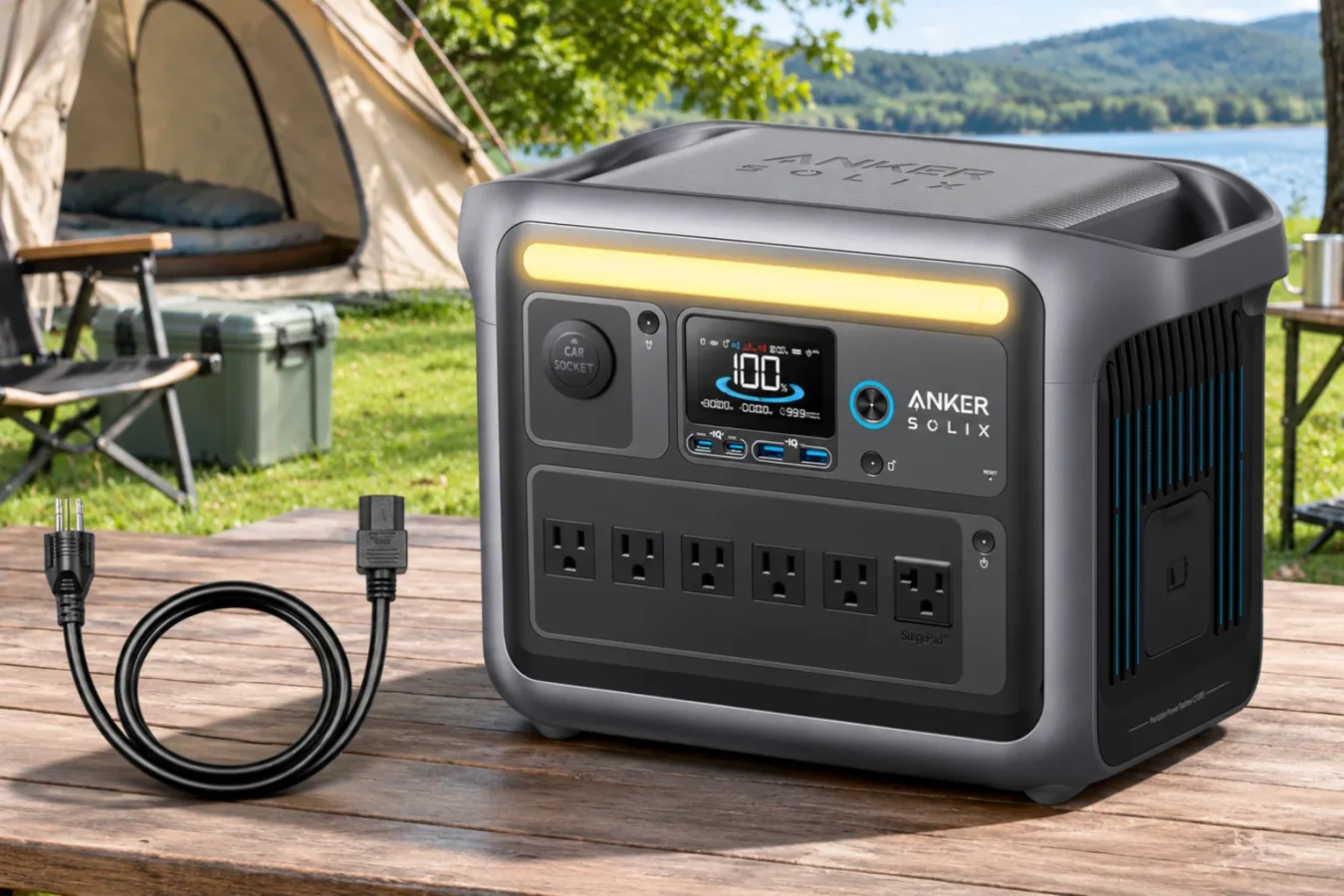

- Capacity
- 1,056 Wh
- Rated output
- See listing
- Chemistry
- See listing
- Value for its size
- Good value
- Amazon rating
- 4.7 / 5
- Buyer ratings
- 2,100
Specifications as stated in the Amazon listing. Check current details before buying.
How the score is calculated
This spec- and buyer-rating-based score is not a measure of independently measured performance. Value: Excellent 3, Good 2.2, Fair 1.4, Premium 0.6 points. Amazon rating: 4.0 earns 0, 5.0 earns 2.5, proportional in between. Rating volume: 1.5 × ln(1 + ratings) / ln(5,001), capped at 1.5. Output: 1.5 × rated W / Wh, capped at 1.5; unknown output earns 0.75. Stated LiFePO4: 1 point. Stated cycles, weight and solar input: 0.5/3 each, rounded together to three decimals. Missing value, rating, volume or listing details earn 0 for that criterion. The total is rounded to one decimal.
Read our full ranking methodologyThe short verdict
The Anker SOLIX C1000 is a well-rounded 1,056Wh power station for camping, blackout essentials, CPAP nights and job-site electronics. Its 2,400W SurgePad output, fast AC recharge and strong buyer rating make it a convincing under-$1,000 option; check the current price on Amazon.
Pros
- 1,056Wh capacity supports meaningful overnight and outage use
- 2,400W SurgePad output can handle many demanding appliances
- 80% AC recharge in 43 minutes and 100% in 58 minutes
- Nine ports let you power several devices at once
- Good value for its size class with a 4.7/5 Amazon rating from 2,100 ratings
Cons
- A 1,056Wh battery still runs space heaters and microwaves only briefly
- Its capacity class is more portable than a large home-backup system, but not pocket-sized
- The strongest value depends on the current Amazon price
Best for
- Weekend campers who want refrigerator, lighting and device power
- Homeowners covering short outages and essential electronics
- CPAP users who need overnight backup away from the grid
Look elsewhere if
- Whole-home backup requiring long runtimes for high-wattage appliances
- Buyers who need a very small station for phones and laptops only
Full specifications
| Capacity | 1,056 Wh |
|---|---|
| Rated AC output | See listing |
| LiFePO4 stated | See listing |
| Charge cycles | See listing |
| Weight | See listing |
| Solar input | 600 W |
| Value for its size | Good value |
Specifications as stated in the Amazon listing. Cycle-life conditions and solar compatibility vary; see the listing.
What can it power?
Choose your devices and daily run time. Battery capacity needed = watts × hours ÷ 0.85. Peak running watts assumes all selected devices run at once.
These are planning estimates, not measured runtimes. Appliance startup surges, fridge duty cycles, CPAP humidifiers and charging losses can change demand. Check your device label and the listing’s surge limit.
Runtime reference · 1,056 Wh at 85% usable energy
| Device | Running watts | Estimated hours |
|---|---|---|
| Phone | 15 W | 59.8 |
| Laptop | 60 W | 15.0 |
| Router | 40 W | 22.4 |
| CPAP | 45 W | 19.9 |
| Mini fridge | 50 W | 18.0 |
| Full fridge | 150 W | 6.0 |
| TV | 100 W | 9.0 |
| LED lights | 20 W | 44.9 |
| Coffee maker | 900 W | 1.0 |
| Microwave | 1000 W | 0.9 |
| Space heater | 750 W | 1.2 |
| E-bike charger | 500 W | 1.8 |
| Drill | 600 W | 1.5 |
Runtime estimates
Estimated usable energy is 85% of rated capacity. Actual runtime varies with load, temperature and battery age. See the device reference above for calculated estimates.
| Device | Estimated runtime |
|---|---|
| Phone charge (15 W) | 60 h |
| Laptop (60 W) | 15 h |
| LED lights + Wi-Fi router (40 W) | 22 h |
| CPAP, heated humidifier (45 W avg) | 20 h |
| Mini fridge/cooler (50 W avg) | 18 h |
| Full-size fridge (150 W avg) | 6.0 h |
| 55-inch TV (100 W) | 9.0 h |
| Drip coffee maker (900 W) | 60 min |
| Microwave (1,000 W) | 54 min |
| Space heater, low (750 W) | 1.2 h |
A storm knocks out power just as the refrigerator starts warming, your phone is at 12%, and the Wi-Fi router dies. The Anker SOLIX C1000 is built for that uncomfortable middle ground: larger than a weekend gadget bank, smaller than a serious whole-home battery. Its 1,056 Wh capacity can cover essential electronics, medical equipment and selected kitchen appliances without fuel, fumes or engine noise.
This is a portable power station with 2,400 W SurgePad output, nine ports, rapid AC charging and app-based charging controls. It qualifies for the under-$1,000 category and carries a 4.7 out of 5 Amazon rating from 2,100 ratings. For camping, blackout preparation, van trips and light job-site duty, the C1000 offers a practical blend of stored energy and appliance capability.
Who the Anker SOLIX C1000 Is Really For
The C1000 makes sense for people who need real backup energy but do not want a large, infrastructure-heavy system. Weekend campers can run lights, phones, laptops and a cooler from one battery. During a short blackout, it can keep a router, television, refrigerator and medical equipment going in rotation. CPAP users get a useful overnight cushion, especially when the heated humidifier is managed carefully.
It is also a strong fit for a van or mobile workspace where quiet power matters. Nine ports give multiple users room to connect devices, while the app lets you customize charging speed and view real-time stats. The 1,056 Wh capacity places it in a versatile middle class: substantial enough for emergency essentials, yet more manageable for travel than multi-kilowatt systems.
This is not the right tool for running every major household load through a long outage. High-draw heating and cooking appliances consume stored energy quickly. For longer emergencies, pair it with disciplined load planning and a recharge strategy. For a broader shortlist, see the best portable power stations under $1,000.
Capacity, Output and What It Can Run
The 1,056 Wh battery delivers about 898 Wh of practical energy when applying an 85% usable-efficiency estimate. That is enough for many low-wattage devices over long periods, but high-power appliances remain short-duration loads. The 2,400 W SurgePad output expands the appliance range considerably, with the manufacturer positioning it for 99% of appliances. Check each appliance’s running and startup wattage before connecting it.
| Device | Estimated runtime |
|---|---|
| Phone charge | 60 hours |
| Laptop | 15 hours |
| LED lights + Wi-Fi router | 22 hours |
| CPAP with heated humidifier | 20 hours |
| Mini fridge/cooler | 18 hours |
| Full-size refrigerator | 6.0 hours |
| 55-inch TV | 9.0 hours |
| Drip coffee maker | 60 minutes |
| Microwave | 54 minutes |
| Space heater, low | 1.2 hours |
These are energy-use estimates, not guarantees: refrigerator compressors cycle, while heaters can draw continuously. The takeaway is simple. The C1000 excels at electronics, communications, lighting and moderate refrigeration; it is not an economical long-term source for electric heat.
Features and Ports That Matter in Practice
The C1000 combines a 1,056 Wh battery with nine ports, allowing several devices to operate simultaneously. That matters during a blackout when one person needs a phone charger, another needs a laptop, and the router or lights must stay online. It also reduces the need for a separate power strip, though every connected load still counts against the station’s total output.
Its 2,400 W SurgePad capability is the headline output feature. That gives the unit room for many appliances that would overwhelm smaller camping stations, although appliance startup demands and continuous wattage still deserve attention. A microwave or coffee maker can run, but their runtime is measured in minutes rather than hours because heating elements consume energy quickly.
The Anker app adds control rather than merely convenience. You can set charging speeds for different situations and see real-time stats. That is useful when charging from a limited source or trying to stretch a battery through an outage. The included box contents are the power station, an AC charging cable, a car charging cable and a user manual. Confirm the port layout on the Amazon page before ordering.
Charging, Solar and Long-Term Ownership
Fast AC charging is one of the C1000’s strongest practical advantages. UltraFast mode reaches 80% in 43 minutes and 100% in 58 minutes, according to the manufacturer. That changes how you can use it during an outage: a short return of grid power can restore much of the battery before the next interruption. The app lets you customize charging speed, which is helpful when protecting a limited circuit or coordinating charging with other equipment.
Solar recharging is supported, giving campers and blackout planners another way to replenish stored energy away from an outlet. Solar performance naturally depends on sunlight, panel setup and conditions, so treat it as an ongoing recharge method rather than a guaranteed clock. The included car charging cable adds another practical option for travel and emergency recovery.
Anker rates the battery for over 3,000 cycles and describes a 10-year lifespan. In practice, that supports frequent camping use as well as occasional emergency storage. Keep the station ready, avoid wasting its capacity on unnecessary high-draw loads, and follow the manufacturer’s storage guidance. For solar planning, see our solar charging guide.
How It Stacks Up Against Similar Power Stations
The closest alternatives sit in the same energy class. The Jackery Explorer 1000 v2, BLUETTI Elite 100 V2, OUPES Mega 1, EcoFlow Delta 3 Classic and EcoFlow Delta 3 each list 1,024 Wh, compared with the C1000’s 1,056 Wh. That is a small capacity difference, so output, charging behavior, app experience and current value should drive the decision.
On value labels, the C1000 is rated Good value for its size class. The Jackery Explorer 1000 v2 and EcoFlow Delta 3 carry Premium price labels, while the BLUETTI Elite 100 V2 is also Good value. The OUPES Mega 1 is Fair value, and the EcoFlow Delta 3 Classic is Excellent value. These labels are useful starting points, but check the current price on Amazon before choosing.
The C1000’s 2,400 W SurgePad output gives it a clear appliance-oriented profile. Buyers comparing several 1,024 Wh units should also check their continuous and surge ratings, included cables and port arrangement. For a wider ranking, visit our best portable power stations guide.
Frequently asked questions
How long will the Anker SOLIX C1000 run a CPAP?
The estimated runtime is 20 hours for a CPAP with a heated humidifier. Actual duration varies with pressure settings, humidifier use and the machine's power draw. That estimate gives most users a useful overnight margin, but confirm your CPAP's wattage and allow extra room for conversion losses.
Can the Anker SOLIX C1000 run a refrigerator?
Yes, it can support a full-size refrigerator, with an estimated runtime of 6.0 hours. Refrigerators cycle rather than drawing continuously, so real duration depends on temperature, door openings and compressor behavior. A mini fridge or cooler has an estimated runtime of 18 hours.
How quickly does the C1000 recharge from AC power?
UltraFast AC charging reaches 80% in 43 minutes and full charge in 58 minutes. The Anker app allows charging-speed adjustments, which can help when using a limited circuit or coordinating the station with other household loads during an outage.
What appliances can the C1000 power?
The 2,400W SurgePad output is designed to handle many appliances, including a drip coffee maker, microwave and low-setting space heater. Estimated runtimes are 60 minutes, 54 minutes and 1.2 hours respectively. Check both running and startup wattage before connecting any appliance.
Is the Anker SOLIX C1000 good for camping?
Yes. Its 1,056Wh capacity suits weekend campsites, coolers, lights, laptops and communication gear, while the car charging cable adds travel flexibility. It is larger than a simple phone-and-laptop battery, but that extra capacity is useful when several campers share one power source.


