OUPES · Spec-based review
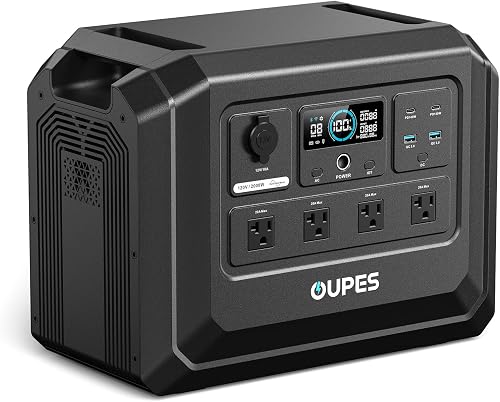
OUPES Mega 1 Lite: Big Output, Portable Backup
A 1,024Wh LiFePO4 power station with 2,000W AC output for outages, campsites and demanding gear.
We may earn a commission from product links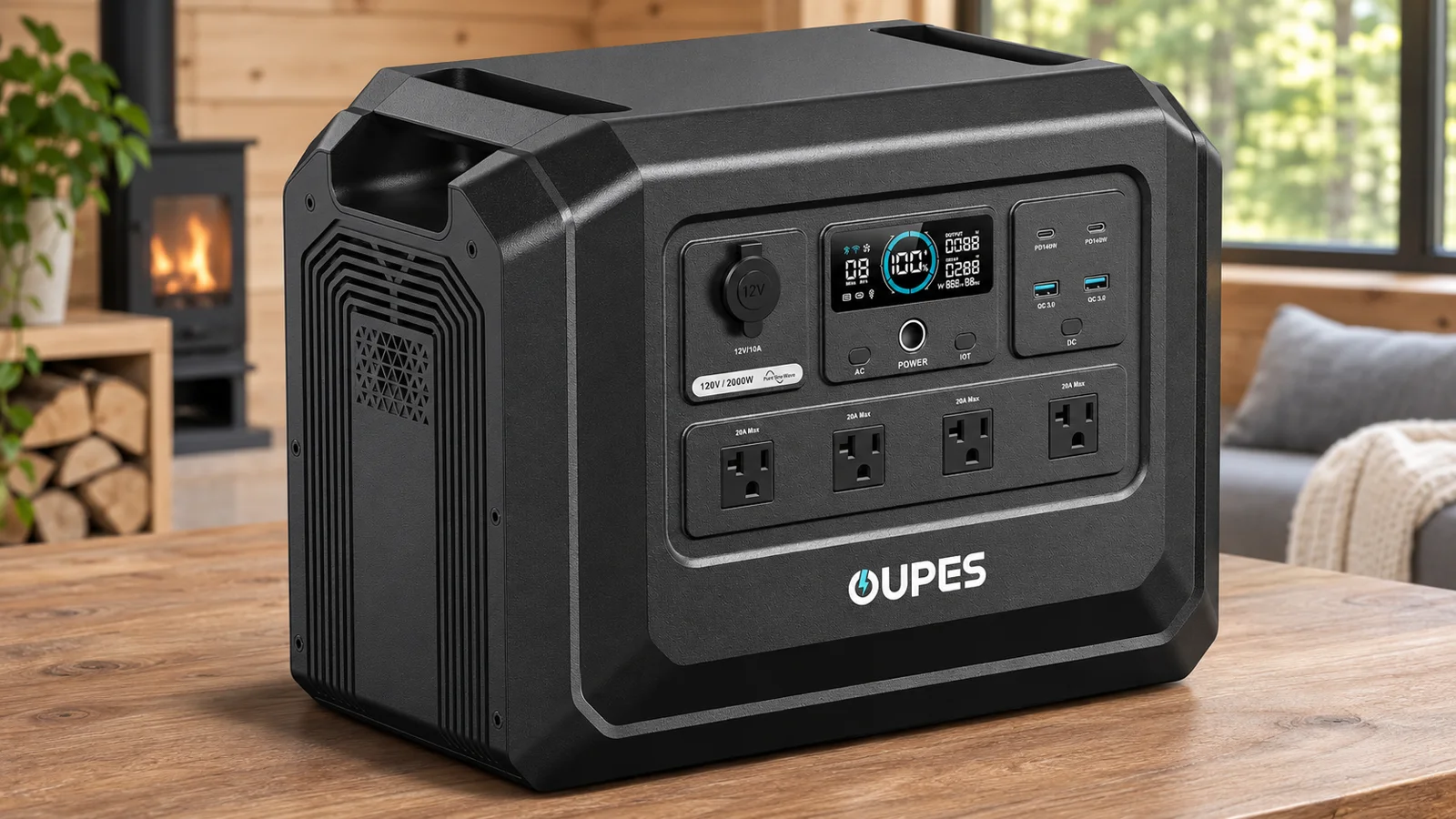
- Capacity
- 1,024 Wh
- Rated output
- 2,000 W
- Chemistry
- See listing
- Value for its size
- Fair value
- Amazon rating
- 4.6 / 5
- Buyer ratings
- 76
Specifications as stated in the Amazon listing. Check current details before buying.
How the score is calculated
This spec- and buyer-rating-based score is not a measure of independently measured performance. Value: Excellent 3, Good 2.2, Fair 1.4, Premium 0.6 points. Amazon rating: 4.0 earns 0, 5.0 earns 2.5, proportional in between. Rating volume: 1.5 × ln(1 + ratings) / ln(5,001), capped at 1.5. Output: 1.5 × rated W / Wh, capped at 1.5; unknown output earns 0.75. Stated LiFePO4: 1 point. Stated cycles, weight and solar input: 0.5/3 each, rounded together to three decimals. Missing value, rating, volume or listing details earn 0 for that criterion. The total is rounded to one decimal.
Read our full ranking methodologyThe short verdict
The OUPES Mega 1 Lite is a strong all-purpose option when you need 1,024Wh of capacity and 2,000W AC output without moving into a much larger power station class. Its fast charging, UPS mode, dual 140W USB-C ports and LiFePO4 battery make it especially useful for home backup and mobile work. Its Fair value rating means it deserves a close comparison before you check the current price on Amazon.
Pros
- 2,000W rated AC output handles demanding appliances and tools
- 1,024Wh capacity covers overnight electronics and shorter refrigerator backup
- Very fast 1,400W AC charging is advertised at 46 minutes from empty to full
- Dual 140W USB-C ports can charge laptops without bulky adapters
- LiFePO4 chemistry and a claimed 3,500-plus cycles to 80% capacity
Cons
- Fair value rather than an obvious capacity-per-dollar standout
- A 26.7-pound chassis is portable, but not especially light for casual carry
- A 1,024Wh battery cannot run high-draw heating appliances for long
Best for
- Weekend campers who need to run cooking gear and electronics
- Homeowners who want router, CPAP and refrigerator backup
- Remote workers who need high-output charging away from the grid
Look elsewhere if
- Shoppers who only need a lightweight phone-and-lights power bank
- Households seeking multi-day whole-home backup from one battery
Full specifications
| Capacity | 1,024 Wh |
|---|---|
| Rated AC output | 2,000 W |
| LiFePO4 stated | See listing |
| Charge cycles | 3500 |
| Weight | 26.7 lb |
| Solar input | 800 W |
| Value for its size | Fair value |
Specifications as stated in the Amazon listing. Cycle-life conditions and solar compatibility vary; see the listing.
What can it power?
Choose your devices and daily run time. Battery capacity needed = watts × hours ÷ 0.85. Peak running watts assumes all selected devices run at once.
These are planning estimates, not measured runtimes. Appliance startup surges, fridge duty cycles, CPAP humidifiers and charging losses can change demand. Check your device label and the listing’s surge limit.
Runtime reference · 1,024 Wh at 85% usable energy
| Device | Running watts | Estimated hours |
|---|---|---|
| Phone | 15 W | 58.0 |
| Laptop | 60 W | 14.5 |
| Router | 40 W | 21.8 |
| CPAP | 45 W | 19.3 |
| Mini fridge | 50 W | 17.4 |
| Full fridge | 150 W | 5.8 |
| TV | 100 W | 8.7 |
| LED lights | 20 W | 43.5 |
| Coffee maker | 900 W | 1.0 |
| Microwave | 1000 W | 0.9 |
| Space heater | 750 W | 1.2 |
| E-bike charger | 500 W | 1.7 |
| Drill | 600 W | 1.5 |
Runtime estimates
Estimated usable energy is 85% of rated capacity. Actual runtime varies with load, temperature and battery age. See the device reference above for calculated estimates.
| Device | Estimated runtime |
|---|---|
| Phone charge (15 W) | 58 h |
| Laptop (60 W) | 15 h |
| LED lights + Wi-Fi router (40 W) | 22 h |
| CPAP, heated humidifier (45 W avg) | 19 h |
| Mini fridge/cooler (50 W avg) | 17 h |
| Full-size fridge (150 W avg) | 5.8 h |
| 55-inch TV (100 W) | 8.7 h |
| Drip coffee maker (900 W) | 58 min |
| Microwave (1,000 W) | 52 min |
| Space heater, low (750 W) | 1.2 h |
A blackout hits during dinner. The refrigerator stays cold for a while, the router keeps working, and you can still make coffee without dragging a gas generator onto the patio. At a campsite, the same battery can power a laptop, lights, cooler and cooking equipment from one compact unit.
The OUPES Mega 1 Lite combines a 1,024 Wh battery with 2,000 W of rated AC output and 4,500 W of surge capacity. It also brings LiFePO4 cells, dual 140 W USB-C ports, app control and a claimed sub-20ms UPS switchover. That makes it a flexible middle ground for emergency backup, camping and mobile work.
Who the OUPES Mega 1 Lite Is Really For
This is for people who need more than emergency phone charging but do not want a giant home battery. A 1,024 Wh station is a practical size for a weekend campsite, a van workspace, tailgating, or a short outage. The 2,000 W inverter expands the useful appliance range considerably: coffee makers, microwaves, hair dryers and many power tools fit the intended workload better than they would on a small 300 W or 500 W unit.
It also suits backup users with specific priorities. The advertised UPS switchover of under 20 milliseconds is aimed at keeping a CPAP machine, router or computer running through a sudden interruption. App control adds convenience when the station is tucked beside a desk or behind household equipment. At 26.7 pounds, it is movable between a trunk, campsite and home office, though it is not a featherweight grab-and-go battery.
For broader buying context, compare it with our best portable power stations under $1,000 guide.
Capacity, Output and What It Can Run
The 1,024 Wh battery gives the Mega 1 Lite useful overnight endurance, while the 2,000 W rated AC output handles short bursts from higher-draw appliances. Its 4,500 W surge rating helps with startup demands, although runtime still depends on the appliance’s continuous wattage. The figures below use 85% usable efficiency, so they are practical estimates rather than a promise for every device.
| Device | Estimated runtime |
|---|---|
| Phone charge | 58 hours |
| Laptop | 15 hours |
| LED lights plus Wi-Fi router | 22 hours |
| CPAP with heated humidifier | 19 hours |
| Mini fridge or cooler | 17 hours |
| Full-size refrigerator | 5.8 hours |
| 55-inch TV | 8.7 hours |
High-draw appliances consume the battery quickly: a drip coffee maker gets about 58 minutes, a microwave about 52 minutes, and a low space heater about 1.2 hours. That is excellent for short tasks, not all-day electric heating.
Features and Ports That Matter
The most useful connectivity feature is the pair of 140 W USB-C PD ports. They can charge compatible laptops and phones directly, avoiding bulky AC adapters and reducing conversion losses. OUPES also describes the station as having nine versatile ports, giving it the flexibility to power several device types at once.
For home backup, the under-20ms UPS switchover is the headline feature. It is designed for sensitive electronics such as computers, routers and CPAP machines, where a brief interruption can be inconvenient or disruptive. Check your CPAP’s power requirements and any manufacturer guidance before relying on backup power overnight.
Smart app control lets you monitor real-time power usage, adjust charging speed between fast and slow modes, and switch output ports remotely. That is useful when you want to limit noise or conserve battery while equipment remains connected. The LiFePO4 battery chemistry is another strong point: it is associated with long service life, and OUPES claims more than 3,500 cycles to 80% capacity. Confirm the port layout on the Amazon page before ordering.
Charging, Solar and Long-Term Ownership
AC charging is the Mega 1 Lite’s standout speed feature. OUPES advertises a 1,400 W input and a 0-to-100% recharge time of 46 minutes. That matters after a short outage or a busy day at camp: you can restore the battery quickly instead of planning around a long overnight recharge. The app can also switch between the 1,400 W fast-charge setting and a 700 W slower setting, giving you more control over charging behavior.
Solar charging is presented as an option for off-grid use, but panel compatibility, connectors and the exact charging configuration should be confirmed on the Amazon page before purchase. Solar output varies with panel size, sunlight, temperature and wiring, so advertised best-case times are not the same as a guaranteed field schedule.
For long-term ownership, the LiFePO4 chemistry and claimed 3,500-plus cycles to 80% capacity are reassuring. The battery’s 1,024 Wh capacity also means less frequent deep cycling when it is used for modest loads such as networking gear, lights or phones. Check the current price on Amazon, then compare the value rating with similarly sized models.
How It Stacks Up Against the Alternatives
The comparison set is unusually close: every alternative below has 1,024 Wh of capacity. The key differences are output, brand positioning and value class. The Jackery Explorer 1000 v2 carries a Premium price classification, while the BLUETTI Elite 100 V2 is rated Good value. Both are direct capacity comparisons, so the Mega 1 Lite’s 2,000 W output is an important part of its case.
The OUPES Mega 1 is another 1,024 Wh, Fair value option from the same brand family. The EcoFlow Delta 3 Classic is rated Excellent value, making it a particularly important benchmark for shoppers focused on value. The EcoFlow Delta 3 also has 1,024 Wh but carries a Premium price classification.
Choose the OUPES when its 2,000 W output, dual 140 W USB-C ports, UPS function and fast charging line up with your needs. For a wider shortlist, see our best 2,000 W portable power stations ranking.
Frequently asked questions
How long will the OUPES Mega 1 Lite run a CPAP?
The estimated runtime is about 19 hours for a CPAP with a heated humidifier, using 85% usable battery efficiency. Actual runtime varies with pressure settings, humidifier temperature, mask heating and the CPAP’s power draw. Confirm your machine’s requirements before planning a full night or multi-night backup.
Can it run a refrigerator during a blackout?
Yes, it is designed for appliances within its 2,000W rated AC output and 4,500W surge capacity. The estimated runtime for a full-size refrigerator is 5.8 hours. Refrigerator compressors cycle on and off, so actual duration depends on room temperature, appliance efficiency and how often the compressor starts.
Is the OUPES Mega 1 Lite suitable for camping?
Yes. Its 1,024Wh capacity can cover phones, laptops, lights, a router, a cooler and short cooking tasks. At 26.7 pounds, it is manageable for vehicle-based camping, RV trips and tailgating, but it is heavier than compact power banks intended mainly for phones and small electronics.
Does it support UPS backup for a computer or router?
The Mega 1 Lite advertises a UPS switchover of under 20 milliseconds. That is intended to keep devices such as routers and computers running during a sudden power interruption. Connect only equipment within the station’s output limits, and confirm any device-specific backup requirements before depending on it for critical work.
How quickly does it recharge from AC power?
OUPES advertises a 1,400W AC input and a 46-minute recharge from 0% to 100%. The companion app can adjust charging between 1,400W fast charging and 700W slow charging. Household circuit capacity, temperature and charging conditions can affect the real result, so allow some margin in outage planning.


