Brand profile
BLUETTI Portable Power Stations: Lineup, Specs & Values
From lightweight weekend power to serious blackout backup, BLUETTI’s tracked lineup covers the useful middle ground.
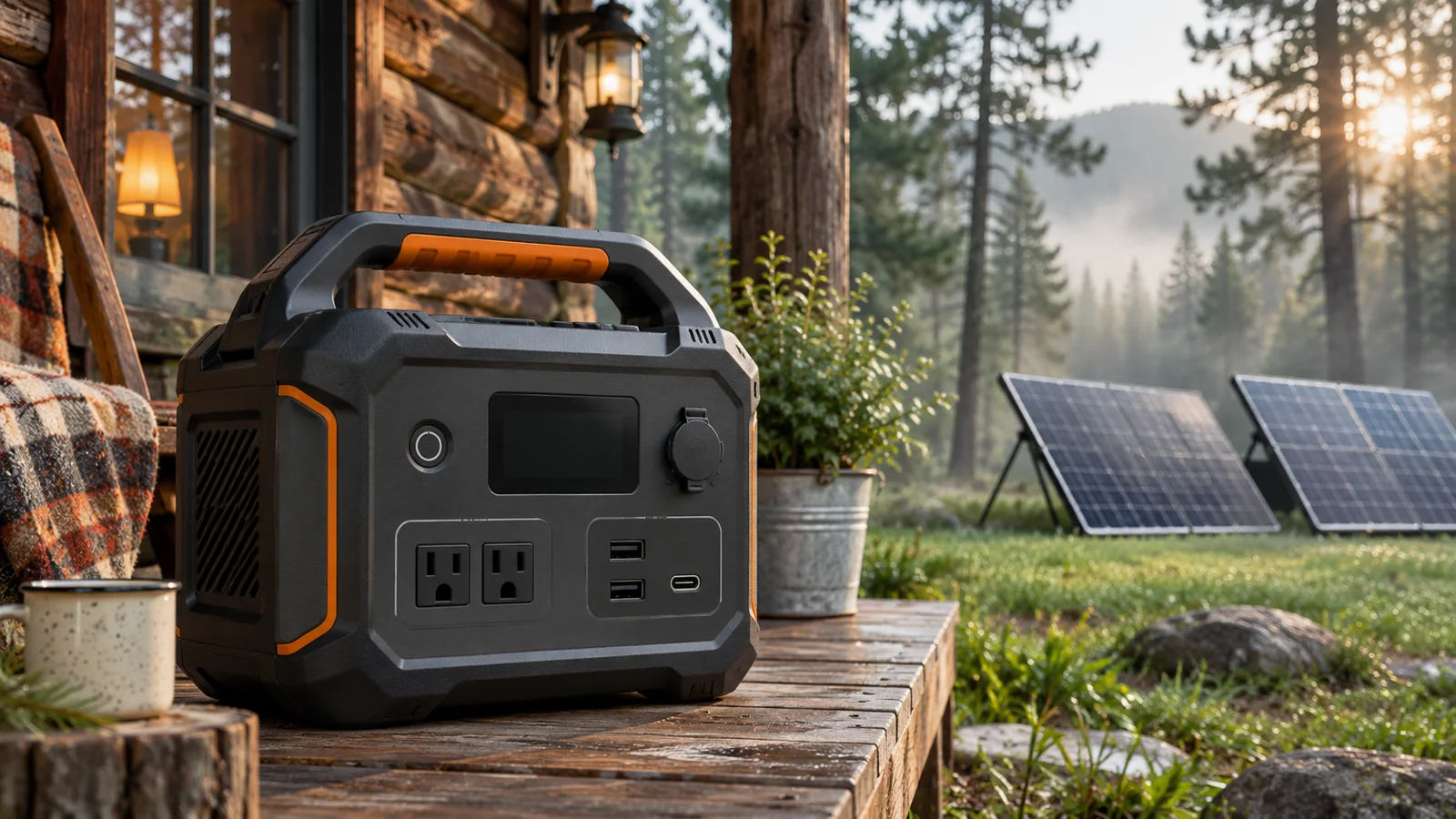
BLUETTI’s current lineup here breaks into three practical sizes. The compact Elite 30 V2 carries 288 Wh and delivers 600 W, making it a small emergency and camping companion. The AC180 and Elite 100 V2 move into the roughly 1,000 Wh class, where you get enough stored energy for laptops, lights, routers, small appliances, and some medical equipment. Both also offer a substantial 1,800 W AC output.
The headline numbers matter, but they do not tell the whole buying story. Capacity controls runtime; inverter output controls which appliances can start and run. For a rough estimate, multiply watt-hours by 0.85 and divide by the device’s watts. That puts the AC180 at about 980 watt-hours of usable AC energy and the Elite 100 V2 at about 870 watt-hours before device-specific variables. Check the current price on Amazon, then compare the model’s size class, charging options, port arrangement, and your actual loads.
BLUETTI’s lineup by size: compact, mid-size, and high-output
The Elite 30 V2 is the small option: 288 Wh, a 600 W AC inverter, nine outlets, and a 9.5-pound weight. It belongs in a day-trip kit, car-camping setup, or emergency drawer where portability matters more than overnight runtime. Its LFP battery chemistry is a useful durability-focused feature, while the premium value rating means buyers should have a clear reason to choose its compact format. See the full BLUETTI Elite 30 V2 review.
The Elite 100 V2 and AC180 are the versatile middle tier. Their 1,024 Wh and 1,152 Wh capacities are close, but both offer 1,800 W rated AC output. The Elite 100 V2 lists 11 ports, a 25-pound weight, and a 30 dB operating level. The AC180 lists nine outlets, up to 500 W solar input, and a 2,700 W boosted mode. Read the BLUETTI AC180 review and BLUETTI Elite 100 V2 review before choosing between them.
Which BLUETTI suits your situation?
Choose the Elite 30 V2 for phones, lights, camera batteries, laptops, and other modest loads. A 288 Wh battery provides roughly 245 Wh through AC after the 0.85 conversion assumption. A 60 W laptop, for example, works out to about four hours in idealized runtime math, with real results varying by charging behavior and the power station’s own overhead. The 600 W inverter handles more than tiny USB gear, but this is not the right tool for sustained high-draw appliances.
The AC180 is the strongest fit for a blackout kit, camping group, or job site needing more headroom. Its 1,800 W output can support demanding tools and appliances within that limit, while the listed 20 ms UPS behavior is aimed at keeping essentials such as a router or computer from dropping out. The Elite 100 V2 fits remote work, RV use, and quiet home-office backup especially well. Its 25-pound body, hidden handle, 30 dB operation, 11 ports, and instant outage switching make it the more transport- and workspace-oriented choice.
Value for its size: what you are paying for
BLUETTI’s value picture changes sharply by tier. The AC180 earns an Excellent value rating for its size class. Its 1,152 Wh capacity, 1,800 W output, 500 W solar input, 2,700 W boosted mode, and fast AC charging make a broad feature package. Its 4.5-star Amazon rating from 1,900 ratings also gives buyers a substantial body of owner feedback to examine.
The Elite 100 V2 is rated Good value. It gives up some capacity compared with the AC180 but adds a lighter 25-pound format, 11 ports, quiet 30 dB operation, and fast charging claims of 70 minutes by 1,000 W solar charging or 1,200 W TurboBoost AC charging. The Elite 30 V2 is rated Premium price for its size class. Its appeal is concentrated: 9.5 pounds, 600 W output, LFP chemistry, and nine outlets. For a small grab-and-go unit, that can be worthwhile; for maximum watt-hours, the larger models make more sense. Check the current price on Amazon before deciding whether portability justifies the premium.
Strengths and trade-offs buyers should understand
All three models are positioned around useful AC power, but their strengths differ. The Elite 30 V2 is easiest to carry and simplest to size for low-wattage electronics. Its trade-off is obvious: 288 Wh disappears quickly with heaters, cooking appliances, or repeated high-power charging. The AC180 offers the largest capacity in this group, the highest listed solar-input figure, and a UPS feature suited to outage-sensitive electronics. Its trade-off is a larger package than the compact model.
The Elite 100 V2 emphasizes a tidy balance of output and mobility. Its 1,800 W rating is far above what most laptops and small devices need, leaving useful starting headroom for some appliances. Its 1,024 Wh capacity still limits long runtimes: using the 0.85 rule, a 100 W load works out to roughly 8.7 hours before other losses. The charging claims are impressive, but solar results depend on sunlight and panel conditions. Confirm the port layout and charging accessories on the Amazon page before ordering.
How BLUETTI compares with other brands
BLUETTI’s tracked models sit in the same practical shopping lanes as products from Anker SOLIX, EcoFlow, and Jackery. The key comparison is not brand reputation alone; it is capacity paired with inverter output, charging speed, weight, and port selection. The AC180 and Elite 100 V2 are especially relevant against other roughly 1,000 Wh stations because their 1,800 W AC ratings offer more appliance headroom than many smaller units. The Elite 30 V2 belongs in comparisons with compact stations where carrying weight and physical convenience matter more than all-night runtime.
For camping, compare the Elite 30 V2 with similarly compact choices in our small and lightweight power station guide. For outage preparation, the AC180 and Elite 100 V2 deserve attention in the home backup guide. Buyers focused on panels can use the solar generator guide, while shoppers specifically seeking LFP chemistry should read the best LiFePO4 power stations guide. Compare actual loads rather than choosing by watt-hour number alone.
Every model mentioned, at a glance
| Value for its size | Availability | |||||||||
|---|---|---|---|---|---|---|---|---|---|---|
| BLUETTI AC180 Best overall | 8.2 | 1,152 | 1,800 | Yes | See listing | 500 | See listing | 4.51,900 ratings | Excellent value | Check price on Amazon |
| BLUETTI Elite 100 V2 Best for camping | 6.6 | 1,024 | 1,800 | Not stated | See listing | 1000 | 25 | 4.51,800 ratings | Good value | Check price on Amazon |
| BLUETTI Elite 30 V2 Best budget | 5.8 | 288 | 600 | Yes | See listing | See listing | 9.5 | 4.51,200 ratings | Premium price | Check price on Amazon |
Specifications as stated in the Amazon listing. Missing details: see listing. Scores use specifications and buyer ratings. How we rank.
Frequently asked questions
Which BLUETTI model is best for camping?
The Elite 30 V2 is the easiest to carry at 9.5 pounds and supplies 600W from a 288Wh LFP battery. Choose the AC180 or Elite 100 V2 when you need substantially more runtime or 1,800W AC output.
Is the BLUETTI AC180 good for power outages?
It is well suited to essential backup loads, with 1,152Wh capacity, 1,800W rated AC output, a listed 20 ms UPS function, and up to 500W solar input. Size it against your refrigerator, router, medical device, or other specific loads.
How long can a BLUETTI 1,000Wh station run a device?
Use watt-hours × 0.85 ÷ watts. The Elite 100 V2 works out to about 870 usable watt-hours through AC, so a 100W device would have a rough runtime of 8.7 hours before additional variables.
Which BLUETTI has the best value?
The AC180 is rated Excellent value for its size class. The Elite 100 V2 is rated Good value, while the compact Elite 30 V2 carries a Premium price rating for its size class. Check the current price on Amazon because rankings can change.
What should I double-check before buying?
Confirm the US port layout, included charging cables, solar-panel compatibility, charging requirements, and whether the dimensions and weight suit your storage and transport plans. Then compare the station’s output with the startup and running watts of every appliance you need to power.


