Buying guide
Best Small & Lightweight Portable Power Stations
Compact power for laptops, CPAP machines, drones, campsites, day trips and short outages.
Quick picks


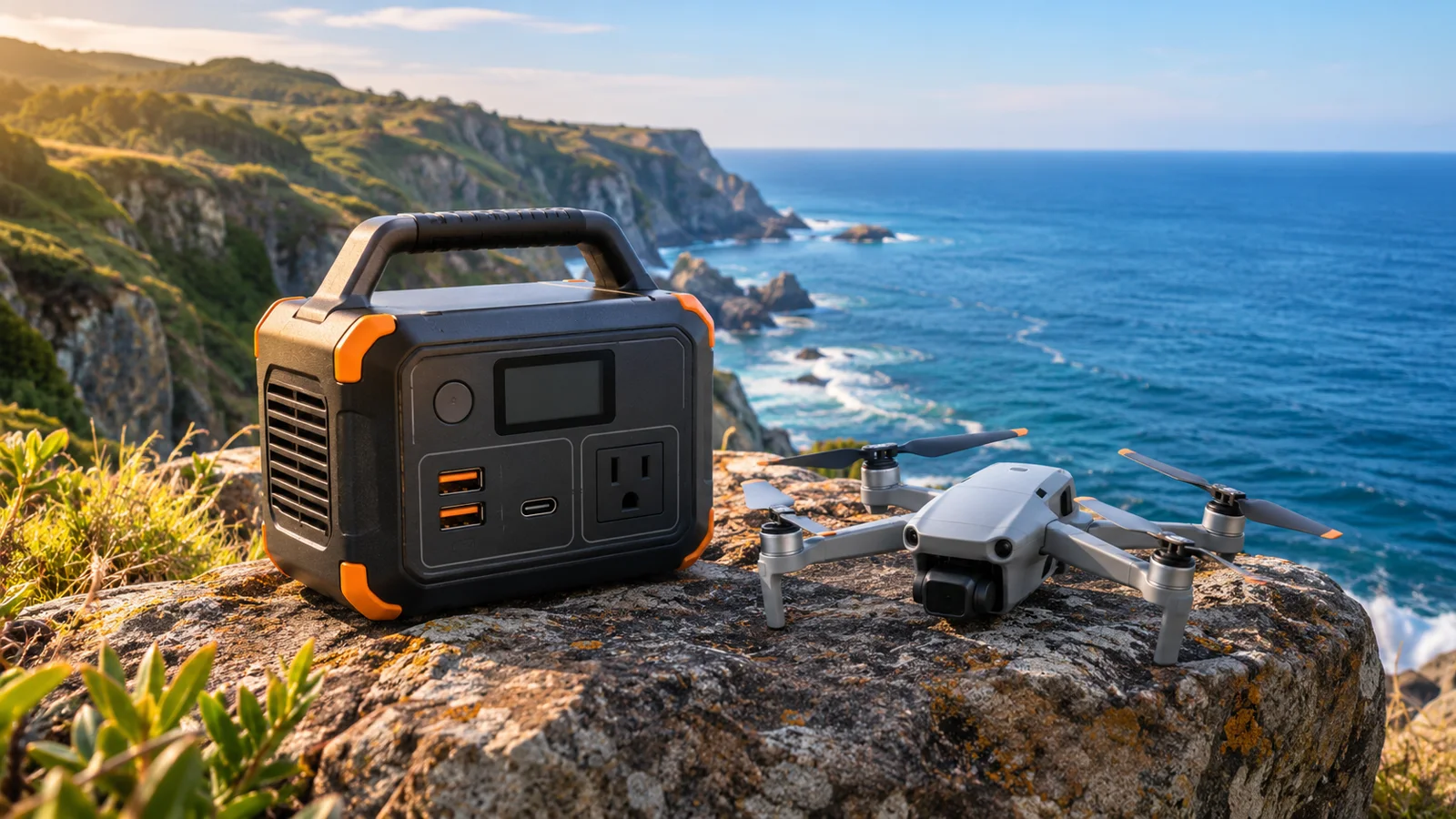
Best for laptop and drone work
Anker SOLIX
Anker SOLIX C300
- 288 Wh
- Output: see listing
Premium price

Best for longer trips
EcoFlow
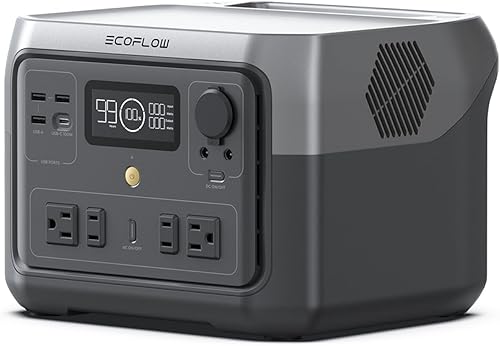
EcoFlow River 2 Max 500
- 499 Wh
- Output: see listing
- LiFePO4
Excellent value

Amazon prices change constantly: tap the button for today's price.
A small power station earns its keep when your phone is dying at a trailhead, your laptop battery is blinking red at a campsite, or a brief outage turns the kitchen into a scramble for charging cables. The models in this guide stay below roughly 600 Wh, so they are easier to move than full-size home-backup units while still offering useful AC power, USB charging and—in several cases—solar compatibility.
You will find a clear pick for each common job: the best overall compact station, the best for CPAP, the best for laptops and drones, the best ultra-compact option, and the best larger small station for camping or emergency reserve. Runtime estimates use the practical formula of battery capacity × 0.85 ÷ device wattage. Your actual result varies with conversion losses, device behavior and whether the AC inverter is running.
We ranked these models from manufacturer-listed specifications, stated features, value labels and the volume and strength of Amazon buyer ratings. We did not rely on physical product use. Because listings and availability change, check the current Amazon page for the latest price, US plug configuration, included accessories and airline or transport restrictions.
The best small power stations, ranked
Our top ranking balances capacity, output, useful ports, portability, battery chemistry, stated recharge features and buyer-rating volume. Capacity matters first: 150 Wh is suited to phones, tablets, lights and short laptop sessions, while 288–296 Wh is a more flexible sweet spot for weekend gear, CPAP planning and several devices at once. The 499 Wh EcoFlow is the outlier for people willing to carry more for significantly longer runtime.
| Model | Capacity | Key output or feature | Value |
|---|---|---|---|
| BLUETTI Elite 30 V2 | 288 Wh | 600 W AC, 9 outlets, 9.5 lb | Premium price |
| Anker SOLIX C300 | 288 Wh | 300 W, seven ports, 140 W USB-C | Premium price |
| MARBERO 296 Wh 350 W | 296 Wh | 350 W peak, CPAP listing | Excellent value |
| EcoFlow River 2 Max 500 | 499 Wh | 300 W AC, 6.0kg | Excellent value |
| Jackery Explorer 300 | 292 Wh | Strong buyer rating volume | Fair value |
For a broader market view, see our best portable power stations ranking and the more budget-focused best portable power stations under $300.
Best overall: BLUETTI Elite 30 V2
The BLUETTI Elite 30 V2 is the most ambitious small model here. Its 288 Wh LiFePO4 battery is paired with a 600 W AC inverter and nine outlets, while the manufacturer-listed weight is only 9.5 pounds. That combination gives it more headroom for awkward loads than most similarly sized stations. A 600 W inverter does not create extra battery energy, but it can accommodate more demanding equipment than a 150 W or 300 W unit when the appliance stays within the station’s limits.
It is a strong fit for a day at a job site, a camera or drone kit, short emergency charging, and campsite electronics. Using the standard estimate, 288 Wh provides about 245 Wh of usable AC energy before dividing by the device’s wattage. A 60 W laptop would therefore draw roughly four hours in idealized calculation, with real-world performance depending on the charger and inverter.
The trade-off is its Premium price label, so this is not the automatic choice for the smallest budget. Still, the 4.5 Amazon rating from 1,200 ratings adds meaningful buyer feedback volume. Choose it when output capability and compact weight matter more than getting the lowest-cost watt-hour. For battery chemistry context, compare the best LiFePO4 power stations.
Best for laptops, drones and solar trips: Anker SOLIX C300
The Anker SOLIX C300 is the most versatile tech-oriented pick. Its 288 Wh battery supports 300 W output with a 600 W surge figure, and the seven-port layout includes two AC outlets, a 120 W car socket, two 140 W USB-C ports, a 15 W USB-C port and a 12 W USB-A port. Those high-output USB-C connections are especially useful for modern laptops, camera batteries and drone chargers because they can avoid the extra losses of an AC brick.
Anker lists recharge to 80% in 50 minutes from a wall outlet and compatibility with a 100 W Anker solar panel. It also lists 25dB operation from 3.3 feet, a LiFePO4 battery designed for 3,000 cycles, a five-year warranty and a 5-year warranty statement in the product details. Verify the current Amazon listing for the exact US support terms and included accessories.
At 288 Wh, the practical AC energy estimate is about 245 Wh. That works out to roughly three hours for an 80 W drone or editing setup, or about four hours for a 60 W laptop, before real-world losses beyond the standard estimate. Its Premium price label makes it a feature-first purchase. The 4.6 rating from 1,900 ratings is encouraging. For solar planning, see how to charge a power station with solar panels.
Best for CPAP and value: MARBERO 296Wh 350W
The MARBERO 296 Wh 350 W is a practical value pick for emergency kits, camping and CPAP users. Its 296 Wh capacity is among the largest in the compact 288 Wh class, and the listing describes a 350 W peak output, an AC outlet, multiple outputs and LED flashlights. The product title specifically mentions CPAP, which makes it easier to identify for shoppers building a sleep-apnea backup kit. Confirm your machine’s required wattage and whether it needs a heated humidifier before choosing any station.
The usable-energy estimate is about 252 Wh. At a continuous 60 W load, that is approximately 4.2 hours by the standard formula; at 30 W, approximately 8.4 hours. A CPAP’s real draw can vary substantially, especially with heated humidity, so these figures are planning estimates rather than a guarantee of a full night. Direct DC operation may also change the result, depending on the device and the compatible cable.
Its Excellent value label is the strongest in this roundup, though the Amazon rating is 4.3 from 1,400 ratings—solid, but below the leaders. The listing includes solar-generator language, but verify the exact solar input, cable and US accessories on Amazon rather than assuming a panel is included. For more medical-device guidance, read our CPAP power-station guide.
Best for longer camping trips: EcoFlow River 2 Max 500
The EcoFlow River 2 Max 500 stretches the definition of small, but its 499 Wh capacity is a major advantage when a day trip becomes a weekend. The listed weight is 6.0kg, and the station includes a 300 W AC output, USB-C and other charging ports. EcoFlow also lists a 1000 W capability figure, but buyers should distinguish that from the stated 300 W AC output when deciding which appliances are suitable.
The 499 Wh LiFePO4 battery gives an estimated 424 Wh of usable AC energy. That is about seven hours for a 60 W laptop, about eight hours for a 50 W cooler, or about 1.4 hours for a 300 W load using the standard formula. Actual runtime depends on cycling equipment, inverter operation and startup demands. The larger reserve is useful for cameras, phones, lights and laptops sharing one station at camp.
EcoFlow lists one-hour AC charging, more than ten years of use for its LiFePO4 cells, advanced battery-management protection and up to 220 W solar input. Its Excellent value label makes the larger capacity especially compelling. The 4.6 Amazon rating from 1,400 ratings adds confidence in the listing’s broad appeal. If you are outfitting a van or RV, compare it with the best power stations for RV and van life.
Best compact all-rounders: Jackery, Anker C300 DC and Anker 521
The Jackery Explorer 300 remains a straightforward choice for buyers who want a familiar 292 Wh format. Its Amazon rating is 4.6 from 11,300 ratings, the largest feedback pool among these candidates. That capacity represents about 248 Wh of estimated usable AC energy—roughly four hours at 60 W or eight hours at 30 W. Its Fair value label places it behind the strongest value picks, but the large rating base and simple positioning make it easy to shortlist. Verify current port and recharge details on Amazon.
The Anker SOLIX C300 DC is better aimed at USB-C and DC equipment. It offers 288 Wh, 300 W output, two 140 W two-way USB-C ports, a 100 W USB-C port, a 15 W USB-C port, two USB-A ports and a 120 W car socket. Anker lists a 30% smaller design than similar stations, LiFePO4 chemistry, a three-year warranty and optional solar compatibility. No wall charger is listed in the box contents, so confirm what comes with the current US package. Its Good value label and 4.5 rating from 1,700 ratings are attractive.
The Anker SOLIX 521 offers 256 Wh, 300 W output, two AC outlets, six-port charging and 60 W USB-C PD. Its LiFePO4 battery is listed at 3,000-plus cycles, with a five-year support statement. The 4.4 rating from 3,100 ratings is respectable, but its Premium price label makes it a feature and longevity purchase rather than a bargain.
Best ultra-compact choice: MARBERO 150Wh
The MARBERO 150 Wh is the right scale for a small emergency drawer, short picnic, roadside kit or day hike where phones, lights and a tablet matter more than appliances. Its 150 Wh battery pairs with a 150 W AC output and four USB ports, four DC ports and built-in LED flashlights. The listing also describes wall, car and solar recharge options, with a solar panel not included. Check the current page for the exact connector and US accessory details.
MARBERO lists enough energy to charge a phone many times, a laptop three times and a CPAP for 3 to 3.5 hours, but those are manufacturer-listed claims. Using the common 0.85 runtime estimate, the station offers about 128 Wh of usable AC energy. That means approximately two hours at 60 W, 4.3 hours at 30 W or less than one hour at 150 W. For CPAP, the listing’s own estimate is more useful than assuming a universal wattage; humidifier settings can alter consumption.
Its Good value label and 4.3 Amazon rating from 1,400 ratings make it a sensible low-capacity choice. The limitation is obvious: 150 Wh disappears quickly under AC loads. Pick it for personal electronics, lighting and short backup needs. For capacity planning, use our watt-hour sizing guide before moving up to a larger station.
How to choose a small power station
Start with the device that matters most, not the station’s biggest headline wattage. Add the watts of equipment you may run simultaneously, then choose an AC output above that total. A 60 W laptop is easy territory for a 150 W model; a high-draw tool or heating appliance may exceed a compact station entirely. Surge ratings help with brief startup demands, but they do not increase battery capacity or permit continuous use above the rated output.
Next, estimate energy. Multiply watt-hours by 0.85, then divide by the device’s watts. A 288 Wh station yields about 245 Wh for an AC load under this rule. A 60 W laptop therefore gets about four hours; a 10 W light gets about 24 hours in the same simplified calculation. USB-C and DC output can be preferable for electronics because they may avoid running the AC inverter.
LiFePO4 chemistry is attractive for buyers prioritizing longevity, and several candidates list it explicitly. Port layout matters just as much: laptop workers may value 140 W USB-C, while CPAP users should confirm cable compatibility and humidifier requirements. Finally, consider carrying weight, solar compatibility, recharge speed and value for the size class. See our complete buying guide and our LiFePO4 comparison.
Travel, flights and common mistakes to avoid
Airline rules are based conceptually on watt-hours, not the marketing phrase “solar generator.” Batteries around the 100 Wh threshold receive especially close scrutiny, and larger batteries may require airline approval or may not be accepted at all. Rules differ by carrier, country and battery configuration. A 150 Wh, 256 Wh, 288 Wh or larger power station should never be assumed flight-safe. Check the airline’s current policy before buying, and ask whether the unit must travel in carry-on baggage or is prohibited entirely.
Do not pack a station for a flight based only on its physical size. Do not assume a solar panel is included because “solar generator” appears in a title. Do not confuse peak watts with continuous AC output. Do not size a CPAP from capacity alone; heated humidification can change consumption sharply. Do not forget that a 300 W station cannot run a 500 W appliance simply because the battery has enough watt-hours.
For blackouts, recharge the station before storm season and keep the right cables with it. For drones, laptops and camera batteries, count every charging cycle you expect between wall outlets. For a campsite, decide whether you need AC at all. Direct USB-C or DC power can preserve energy. If your needs are hurricane-focused, use our hurricane and blackout checklist.
Final recommendation
For most buyers, the BLUETTI Elite 30 V2 is the clearest overall pick because its 288 Wh capacity, 600 W AC output, nine outlets and 9.5-pound listed weight give it unusual flexibility in a small footprint. Choose the Anker SOLIX C300 instead when high-output USB-C, seven-port flexibility and solar compatibility matter more than its Premium price label.
CPAP shoppers should begin with the MARBERO 296 Wh 350 W, then verify their machine’s wattage, humidifier use and cable needs. The MARBERO 150 Wh is the economical compact answer for phones, lights and short trips, while the EcoFlow River 2 Max 500 is the better choice when you want nearly 500 Wh without jumping to a full-size home-backup station.
Jackery’s large rating volume, Anker’s USB-C-focused options and the value-oriented MARBERO models all have a place. Check the current price on Amazon, confirm the exact US listing and compare your real load against both wattage and watt-hours. For a wider shortlist, visit our small power-station guide and our camping roundup.
Every model mentioned, at a glance
| Value for its size | Availability | |||||||||
|---|---|---|---|---|---|---|---|---|---|---|
| BLUETTI Elite 30 V2 Best budget | 5.8 | 288 | 600 | Yes | See listing | See listing | 9.5 | 4.51,200 ratings | Premium price | Check price on Amazon |
| Anker SOLIX C300 Best lightweight | 4.5 | 288 | See listing | Not stated | 3000 | 100 | See listing | 4.61,900 ratings | Premium price | Check price on Amazon |
| MARBERO 296Wh 350W | 6.5 | 296 | 350 | Not stated | See listing | See listing | See listing | 4.31,400 ratings | Excellent value | Check price on Amazon |
| EcoFlow River 2 Max 500 | 7.9 | 499 | See listing | Yes | See listing | 220 | 13.2 | 4.61,400 ratings | Excellent value | Check price on Amazon |
| MARBERO 150Wh | 5.7 | 150 | 150 | Not stated | See listing | See listing | See listing | 4.31,400 ratings | Good value | Check price on Amazon |
| Jackery Explorer 300 | 5.2 | 292 | See listing | Not stated | See listing | See listing | See listing | 4.611,300 ratings | Fair value | Check price on Amazon |
| Anker SOLIX C300 DC | 6.4 | 288 | 300 | Not stated | See listing | 100 | See listing | 4.51,700 ratings | Good value | Check price on Amazon |
| Anker SOLIX 521 | 5.5 | 256 | 300 | Yes | See listing | See listing | See listing | 4.43,100 ratings | Premium price | Check price on Amazon |
Specifications as stated in the Amazon listing. Missing details: see listing. Scores use specifications and buyer ratings. How we rank.
Frequently asked questions
What size portable power station is best for a day trip?
A 150Wh station is usually suitable for phones, tablets, lights and limited laptop charging. A 256Wh to 296Wh model gives more flexibility for several devices, a drone battery or a short CPAP session. Estimate usable energy as capacity multiplied by 0.85, then divide by the device's wattage. Choose more capacity if wall outlets will be unavailable for a full day.
Can a small power station run a CPAP all night?
Possibly, but it depends heavily on the CPAP's draw, pressure settings, heated humidifier and whether you use AC or compatible DC power. A 150Wh MARBERO listing states 3 to 3.5 hours for CPAP, while larger 288Wh to 296Wh stations provide more planning margin. Confirm your machine's requirements and perform your own runtime check before relying on one during an outage.
Can I take a portable power station on an airplane?
Do not assume so. Airlines regulate batteries by watt-hours, and policies vary by carrier and route. Compact power stations commonly exceed the threshold that receives routine approval, so they may require advance permission or be prohibited. Check the airline's current dangerous-goods policy before travel. Ask specifically about carry-on placement, watt-hour limits and whether the battery must be removed or declared.
Are LiFePO4 power stations better for small devices?
LiFePO4 chemistry can be appealing when you prioritize durability and long service life, but it does not automatically make a station more powerful or provide longer runtime at the same watt-hours. Several models here list LiFePO4 batteries and additional longevity claims. Compare capacity, output, ports, weight, recharge options and support terms rather than choosing chemistry alone.
How long will a 288Wh power station run a laptop?
Using the standard estimate, 288Wh multiplied by 0.85 gives about 245Wh of usable AC energy. A 60W laptop would therefore run for roughly four hours. A USB-C connection may produce a different result because it can avoid the AC inverter. Actual runtime depends on the laptop's charger, workload, battery state, display brightness and whether other devices share the station.
Do solar-generator power stations include solar panels?
Not necessarily. Product titles often use “solar generator” to describe a battery station that can work with a separately purchased panel. The Anker SOLIX C300 listing specifies compatibility with a 100W Anker panel, while other listings provide different solar details. Check the current Amazon box contents, solar input limits, connector and panel compatibility before assuming you can recharge from sunlight.
