Brand profile
MARBERO Portable Power Stations: Lineup, Specs & Value
Small, practical power stations for personal electronics, CPAP nights, camping, and short emergency interruptions.
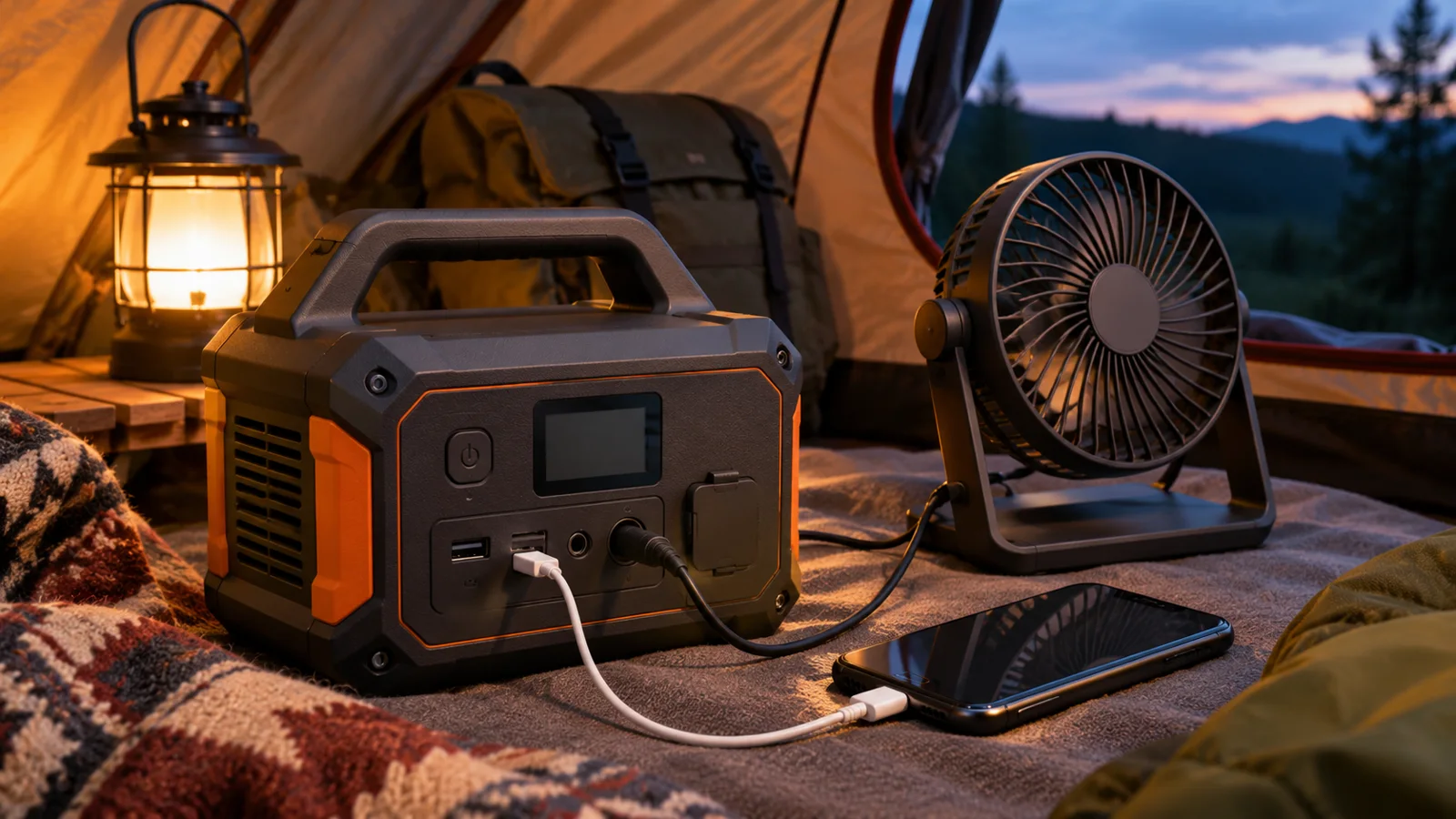
MARBERO’s tracked lineup is compact and easy to understand: one 150 Wh model for light personal power and one 296 Wh model for a larger reserve with a higher-output AC section. Both sit in the small portable-power category rather than the whole-home-backup class. That makes them appealing for car camping, roadside emergencies, short blackouts, and keeping a few essentials running without hauling a large battery.
The key buying decision is capacity versus output. The 150 Wh unit prioritizes multiple low-power connections, while the 296 Wh 350 W model gives you nearly twice the battery capacity and a more capable AC rating. Both listings mention solar charging, LED lighting, and emergency use. For a wider comparison, see our guide to the best portable power stations under $300 and our practical watt-hour sizing guide.
The MARBERO lineup: two compact size tiers
MARBERO’s range is currently divided into two useful small-station tiers. The MARBERO 150 Wh is the lighter-duty choice, with a 150 Wh battery and an AC section described as 100 W continuous with 150 W peak output. Its four DC ports, three standard USB ports, QC3.0 USB port, and built-in flashlights make it particularly suited to phones, tablets, USB accessories, small 12V devices, and other modest loads.
The MARBERO 296 Wh 350 W steps up the reserve and AC capability. Its 296 Wh capacity is nearly double the smaller model’s, and the 350 W rating gives it more headroom for laptop chargers and other compact AC electronics. Neither model is intended to replace a large backup battery for refrigerators, space heaters, microwaves, or other high-draw appliances. Think personal power, not whole-room power.
Both models qualify for the under-$300 tier, making them relevant for shoppers who want basic emergency readiness without moving into larger, heavier classes.
Who should buy each MARBERO model?
Choose the MARBERO 150 Wh if your priority is a compact electronics kit. It suits a camper who mainly needs phone charging, a USB lantern, or a small DC accessory. The manufacturer’s feature details also identify CPAP use at roughly 3 to 3.5 hours, so it can be relevant for a short overnight or backup window—provided your machine’s actual draw and settings fit that estimate. It is also a sensible car-emergency companion because the charging package includes a car adapter.
Choose the MARBERO 296 Wh 350 W when you want more breathing room. A laptop, phones, lights, and small accessories can share a larger energy reserve, and the higher AC rating accommodates more compact plug-in equipment. Using the standard 85% efficiency estimate, 296 Wh provides about 252 Wh of usable energy; at 100 W, that is roughly 2.5 hours before allowing for device-specific behavior. At the full 350 W rating, the simple estimate is about 39 minutes.
For a CPAP buyer, compare the machine’s wattage and humidifier settings carefully. Heated humidification can change the requirement substantially.
Value for its size: strong capacity at the small end
The 150 Wh MARBERO earns a Good value for its size class rating. Its appeal is not just the battery capacity; it combines several connection types in one compact power source. Four DC ports and four USB outlets in total give it a practical multi-device layout for a campsite or blackout drawer, while the two lighting modes—steady and SOS flashing—add useful emergency functionality.
The 296 Wh 350 W model earns an Excellent value for its size class rating. The larger battery and higher AC output make it the stronger capacity-per-size option in this lineup. That extra reserve matters during a short outage, when a phone, laptop, modem, or CPAP machine may need repeated attention rather than a single charge.
Value still depends on matching the station to the load. A small battery can be excellent value for personal electronics and disappointing for heating, cooling, or kitchen appliances. Check the current price on Amazon, then compare the usable watt-hours, output rating, charging method, and intended devices—not just the headline capacity.
Strengths and trade-offs in the specifications
MARBERO’s clearest strength is practical versatility in a small format. The 150 Wh model includes wall and car charging, solar input support from 15V to 24V at 1.2A, battery-management controls, cooling vents, and built-in lighting. Solar charging is also mentioned for the 296 Wh model, which can be useful at a campsite or during an extended outage when grid power is unavailable.
The trade-off is limited energy and output. The 150 Wh unit is best kept below its 100 W continuous AC capability, despite the 150 W peak figure. The 296 Wh station’s 350 W class is more flexible, but it still cannot provide the sustained output demanded by large appliances. Battery runtime also falls as loads rise: using 296 Wh × 0.85, a 50 W device gets roughly 5 hours in a simple estimate, while a 150 W load gets about 1.7 hours.
Solar charging requires suitable panel compatibility and favorable sunlight. Confirm the port layout, included charging accessories, and solar-input details on the Amazon page before ordering.
How MARBERO compares with other brands
MARBERO competes most directly with compact offerings from Jackery, Anker SOLIX, BLUETTI, and EcoFlow. Those brands offer models across much wider capacity ranges, so shoppers seeking longer outage coverage or higher-wattage appliances may find a better fit by moving up a class. For example, a buyer comparing small stations can look at Jackery Explorer 300 or Anker SOLIX 521 alongside the MARBERO 296 Wh model.
MARBERO’s advantage is straightforward sizing and a feature set aimed at personal electronics, camping, and basic emergency use. The 150 Wh model’s many USB and DC connections are especially useful when several low-power devices need charging at once. The 296 Wh model makes more sense when capacity and AC headroom matter more than the smallest possible battery.
Buyers wanting larger reserves should compare models such as EcoFlow RIVER 2 Max 500 or BLUETTI AC180, while shoppers focused on very small, lightweight power can also consider Anker SOLIX C200 DC. Always compare output type, usable capacity, charging options, and current Amazon pricing for the exact use case.
Every model mentioned, at a glance
| Value for its size | Availability | |||||||||
|---|---|---|---|---|---|---|---|---|---|---|
| MARBERO 296Wh 350W | 6.5 | 296 | 350 | Not stated | See listing | See listing | See listing | 4.31,400 ratings | Excellent value | Check price on Amazon |
| MARBERO 150Wh | 5.7 | 150 | 150 | Not stated | See listing | See listing | See listing | 4.31,400 ratings | Good value | Check price on Amazon |
Specifications as stated in the Amazon listing. Missing details: see listing. Scores use specifications and buyer ratings. How we rank.
Frequently asked questions
Which MARBERO power station is better for camping?
The 150Wh model fits light camping with phones, USB lights, and small DC devices. Choose the 296Wh 350W model if you expect to charge a laptop, run more devices, or want a larger reserve between recharges.
Can a MARBERO power station run a CPAP machine?
The 150Wh model’s feature details estimate about 3 to 3.5 hours of CPAP operation. Actual runtime depends on the machine, pressure, power supply, and whether heated humidification is enabled. Check your CPAP’s wattage before buying.
How long will the MARBERO 296Wh model run a device?
A useful estimate is 296Wh × 0.85 ÷ device watts. That works out to about 5 hours at 50W, 2.5 hours at 100W, or 39 minutes at 350W. Real runtime varies with conversion losses and device behavior.
Do MARBERO stations support solar charging?
Solar charging is mentioned for both tracked models. The 150Wh model identifies a 15V to 24V, 1.2A solar-input range. Confirm panel compatibility, connectors, and whether the needed cable is included before ordering.
Are MARBERO stations suitable for a whole-home blackout?
They are better suited to phones, laptops, lights, small DC equipment, and short CPAP backup than to whole-home loads. Refrigerators, heaters, air conditioners, microwaves, and similar appliances generally require substantially more capacity and output.

