Brand profile
DJI Portable Power Stations: Lineup, Specs & Values
A focused two-model lineup, from serious weekend backup to multi-day household power.
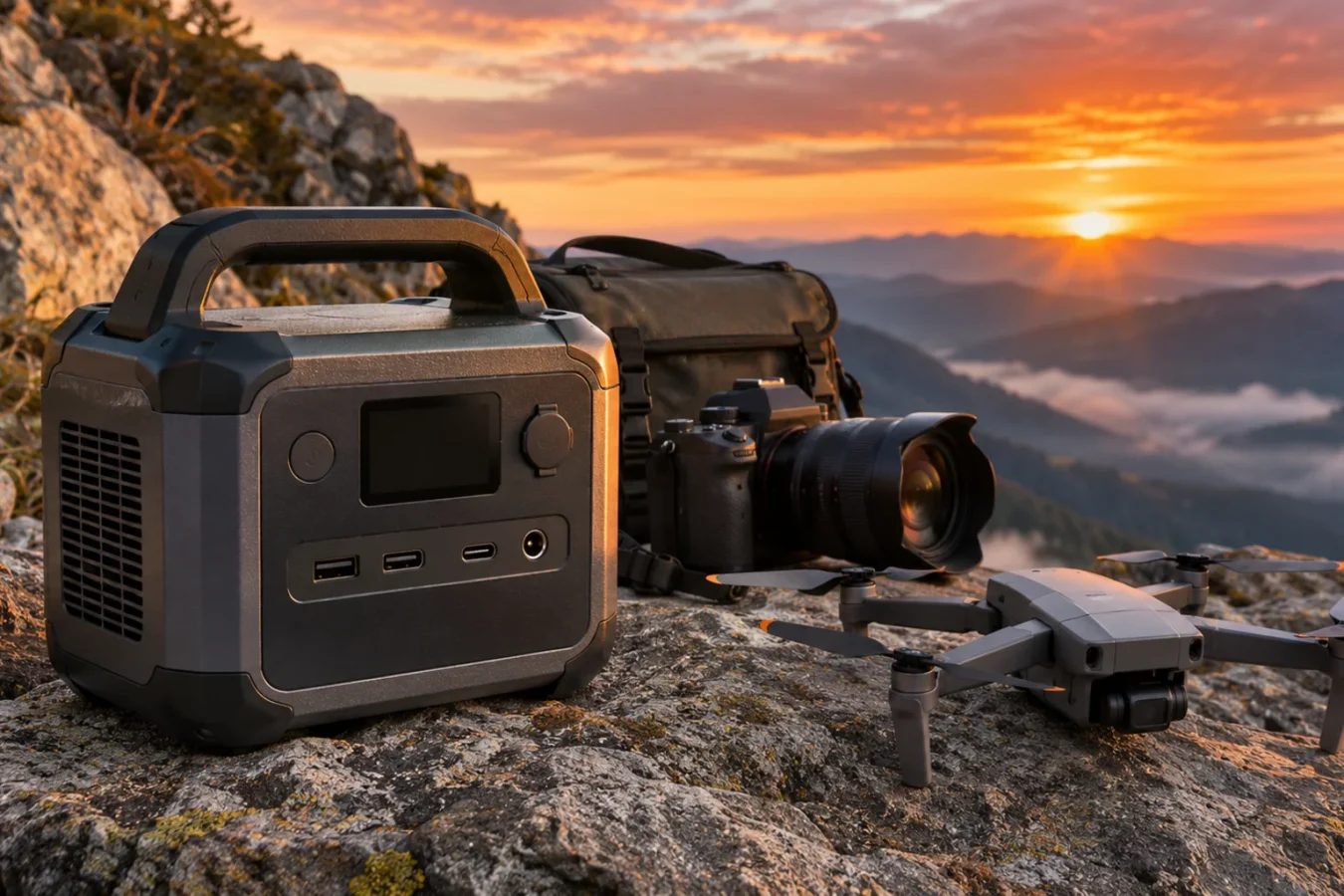
DJI’s portable power station lineup is easy to understand: two LiFePO4 models, separated mainly by stored energy. The DJI Power 1000 V2 stores 1,024 Wh, while the DJI Power 2000 doubles that capacity to 2,048 Wh. Both qualify for the under-$1,000 tier, giving DJI a clear position for buyers who want substantial battery storage without moving into the largest home-backup systems.
Capacity is the headline difference, but it is not the only buying question. A 1,024 Wh station is a practical fit for electronics, smaller appliances, and selected overnight needs. The 2,048 Wh model gives you substantially more breathing room during an outage, at a campsite, or in a van. Check the current price on Amazon, then confirm the port layout, output ratings, charging options, and physical size before ordering.
The DJI lineup by size tier
The DJI range currently tracked here has a straightforward two-step structure. The Power 1000 V2 sits in the roughly 1,000 Wh class with 1,024 Wh of capacity and an LFP battery. Its calculated usable-energy estimate is about 870 Wh after applying the standard 85% conversion factor. That makes it the more manageable choice for shorter outages, road trips, camping, and selected CPAP or medical-device setups, provided the device’s power requirements fit the station’s output specifications.
The Power 2000 moves to 2,048 Wh and the same LFP chemistry. Its calculated usable-energy estimate is about 1,741 Wh—almost twice the practical energy reserve of the smaller model. That extra capacity matters when several people need power, when a refrigerator or other household load must run for longer, or when recharging opportunities are limited. For broader market context, compare the 1000 V2 with the EcoFlow Delta 3 and BLUETTI AC180. The Power 2000 belongs in comparisons with models such as the Jackery Explorer 2000 v2.
Who should buy each DJI model?
Choose the DJI Power 1000 V2 if you want a substantial but more compact energy reserve for occasional blackouts, car camping, remote work, or a van setup. It is also the natural starting point for buyers who want LFP chemistry and do not routinely need two days of stored energy. At 4.3 out of 5 from 1,200 Amazon ratings, it has a sizable body of buyer feedback behind it. Use the runtime rule—watt-hours multiplied by 0.85, divided by device watts—to estimate your own load. For example, a 100 W device works out to roughly 8.7 hours before other losses and cycling considerations.
Choose the DJI Power 2000 when capacity is the priority. It suits longer outages, family camping, van-life energy needs, and buyers who want more reserve for multiple devices. Its 4.4 out of 5 rating from 818 Amazon ratings is strong, though the smaller model has more ratings. A CPAP user should calculate the machine’s actual draw and account for humidity settings, heated tubing, and night length rather than relying on capacity alone. For more sizing guidance, see how many watt-hours you need.
Value for its size class
On the value labels tracked for this lineup, the DJI Power 1000 V2 earns a Good value rating for its size class. That is a sensible fit for a 1,024 Wh LFP station aimed at buyers who want meaningful backup capacity without stepping up to the larger model. Check the current price on Amazon, then compare the total package: capacity, battery chemistry, output requirements, and the connections you actually need.
The DJI Power 2000 earns an Excellent value rating for its size class. Its 2,048 Wh capacity gives it a particularly strong capacity-per-product comparison within this tracked lineup. The advantage is not merely a bigger number. Nearly twice the calculated usable energy can reduce how often you must ration devices during a blackout or recharge at a campsite. Still, capacity alone does not guarantee suitability. Output wattage, surge capability, recharge speed, and port selection can decide whether a station runs your specific appliance. Compare both DJI models with the best portable power stations under $1,000 before buying.
Strengths and trade-offs in the listed specs
Both DJI stations use LiFePO4 battery chemistry, a major selling point for buyers who prefer LFP-based portable power stations. LFP is widely valued for its stable chemistry and strong long-term potential, although real-world service life depends on charging habits, storage, temperature, and load. The lineup’s other strength is clarity: buyers can choose between 1,024 Wh and 2,048 Wh without navigating a long series of overlapping capacities.
The trade-off is that the two tracked models do not provide the same level of choice by size. If you need a smaller station for lightweight travel, compare the Anker SOLIX C300 or EcoFlow RIVER 2 Pro. If you need substantially more stored energy for home backup, look at the EcoFlow DELTA Pro or BLUETTI AC180 as part of a wider comparison. The DJI titles do not establish solar-input specifications, so do not assume a particular panel setup. Confirm solar compatibility, input limits, AC output, surge rating, port layout, and recharge times on Amazon before ordering.
How DJI compares with other brands
DJI’s advantage here is a concentrated lineup with clear capacity steps and LFP chemistry across both tracked models. That makes the brand easy to evaluate if you already know you want either a roughly 1,000 Wh or roughly 2,000 Wh station. The Power 1000 V2 competes in the same broad shopping conversation as products from EcoFlow, BLUETTI, Anker SOLIX, and Jackery. Brand differences can come down to the details that matter after capacity: available ports, output limits, solar charging, app controls, recharge behavior, and physical handling.
The Power 2000’s Excellent value label makes it especially interesting for buyers comparing larger stations on stored energy. The Power 1000 V2’s Good value label suits shoppers who would rather avoid paying for capacity they will rarely use. Neither model should be selected by watt-hours alone. Match the station to the starting and running watts of every essential device, then leave a margin for startup surges. For emergency planning, pair this comparison with our home-backup guide and the hurricane and blackout checklist. Finally, check the current price on Amazon because value can change as pricing moves.
Every model mentioned, at a glance
| Value for its size | Availability | |||||||||
|---|---|---|---|---|---|---|---|---|---|---|
| DJI Power 1000 V2 | 5.9 | 1,024 | See listing | Yes | See listing | See listing | See listing | 4.31,200 ratings | Good value | Check price on Amazon |
| DJI Power 2000 | 6.9 | 2,048 | See listing | Yes | See listing | See listing | See listing | 4.4818 ratings | Excellent value | Check price on Amazon |
Specifications as stated in the Amazon listing. Missing details: see listing. Scores use specifications and buyer ratings. How we rank.
Frequently asked questions
Which DJI portable power station has the most capacity?
The DJI Power 2000 has 2,048Wh, twice the 1,024Wh capacity of the DJI Power 1000 V2.
Are DJI’s tracked power stations LiFePO4?
Yes. Both the DJI Power 1000 V2 and DJI Power 2000 are listed with LiFePO4, also called LFP, battery chemistry.
How long can the DJI Power 1000 V2 run a device?
Use the estimate of 1,024Wh × 0.85 ÷ device watts. That gives about 870Wh of usable energy before additional variables such as startup demand and operating conditions.
Is the DJI Power 2000 a good blackout choice?
It is the stronger DJI choice when you need more reserve during an outage. Its approximately 1,741Wh usable-energy estimate can support longer or broader loads, but verify appliance wattage, surge requirements, and output specifications first.
Does DJI list solar charging for these models?
Solar input specifications are not included in the tracked product titles. Confirm solar compatibility, input limits, and the required accessories on the Amazon page before ordering.
Shop the models in this guide

- 1,024 Wh
- Output: see listing
- LiFePO4
Good value

- 2,048 Wh
- Output: see listing
- LiFePO4
Excellent value